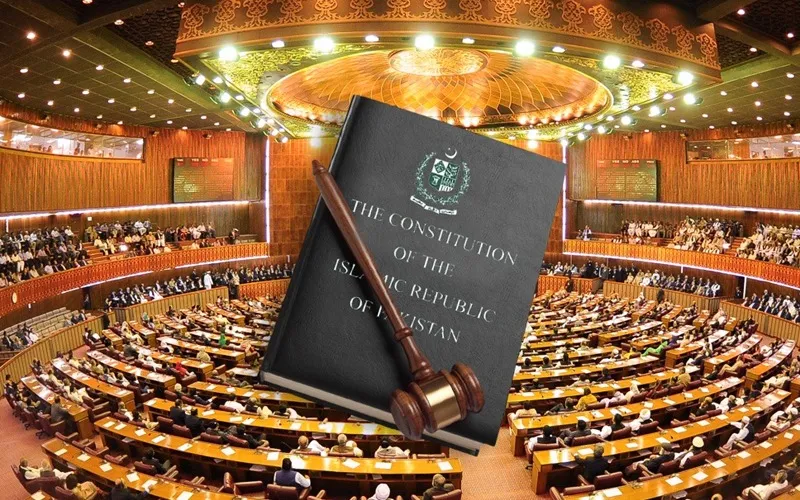
A proposal under discussion as part of Pakistan’s upcoming 28th Constitutional Amendment to raise the minimum voting age from 18 to 25 has triggered sharp backlash from opposition parties, legal experts, and civil society groups, who warn it could disenfranchise tens of millions of young voters across the country.
The debate surfaced publicly after Rana Sanaullah, adviser to the prime minister on political and public affairs, confirmed in an interview with Geo News that the idea is actively being deliberated, though not yet formalised as government policy.
Sanaullah argued that the proposal is rooted in consistency within the electoral framework. He said that if an individual cannot contest elections before the age of 25, there is a case to either lower the contesting age or raise the voting age.
According to him, 25 is widely regarded as the age at which a person attains sufficient political maturity for representation. He stressed that the matter remains a discussion rather than an approved reform.
Opposition Pushback and Youth Disenfranchisement Concerns
The proposal has drawn immediate resistance from Pakistan Tehreek-e-Insaf, which sees the move as politically motivated. PTI Information Secretary Sheikh Waqas Akram questioned the logic behind declaring 18-year-olds mature enough to marry, work, and serve in the armed forces, yet supposedly unfit to vote.
He described the proposal as an attempt by the ruling elite to limit youth participation in democratic decision-making, adding that young voters would continue to support PTI regardless of any age-related barriers imposed.
The criticism is reinforced by demographic data from the Pakistan Bureau of Statistics, which shows that citizens aged 18 to 24 number approximately 30.1 million, making them one of the largest and most politically influential voting blocs in the country.
Historical Context and Constitutional Hurdles
Pakistan’s voting age was reduced from 21 to 18 in 2002 during the military government of Pervez Musharraf through an amendment to Article 106(2) of the Constitution. Any attempt to reverse that change would require a two-thirds majority in Parliament, making it both politically and procedurally difficult.
Also read: Pakistan Citizenship Amendment Bill 2025 Approved by NA Interior Committee
Legal experts note that such a reversal would not only be controversial but could also face constitutional challenges, particularly if it were perceived as undermining representative democracy.
Broader Constitutional Changes Under Consideration
The voting age debate is unfolding alongside reports that the 28th Constitutional Amendment may introduce far-reaching changes to Pakistan’s federal structure, potentially revisiting key elements of the 18th Amendment passed in 2010.
Law Minister Azam Nazeer Tarar has stated that no amendment would move forward without consultation among coalition partners. Meanwhile, Bilawal Bhutto-Zardari, chairman of the Pakistan Peoples Party, has publicly denied receiving any formal proposal.
Despite these assurances, insiders within the ruling alliance say significant constitutional restructuring is under discussion.
According to PPP sources, proposed changes may roll back provincial authority over curriculum development, population welfare, and control of mines and minerals.
There are also indications that the federal government wants provinces to shoulder more responsibility for funding the Benazir Income Support Programme.
NFC Award and Federal–Provincial Tensions
Another sensitive issue linked to the amendment is the National Finance Commission Award, which governs the distribution of federal resources. Under Article 160(3A), introduced through the 18th Amendment, provinces are guaranteed no less than 57.5 percent of the divisible pool.
Leaders within the Pakistan Muslim League (N) reportedly view the current arrangement as financially unsustainable for the Centre.
Ahmed Bilal Mehboob, president of the Pakistan Institute of Legislative Development and Transparency, has suggested the federal government may seek flexibility in Clause 3A to adjust provincial shares based on resource availability.
At the same time, MQM-Pakistan is advocating for stronger constitutional protections for local government systems, adding another layer of complexity to the amendment package.
Why the Voting Age Debate Matters
Raising the voting age to 25 would reshape Pakistan’s electoral landscape by excluding a substantial segment of first-time and young voters at a time when youth engagement is already a defining feature of national politics.
Analysts warn that such a move could deepen political polarisation and weaken democratic participation, especially in urban and digital-savvy constituencies.
As deliberations continue, the proposed change has become a focal point in a much larger struggle over constitutional authority, federalism, and the future direction of Pakistan’s democracy.
About Tamoor Ahmed

Tamoor Ahmad has been covering politics since 2022.
