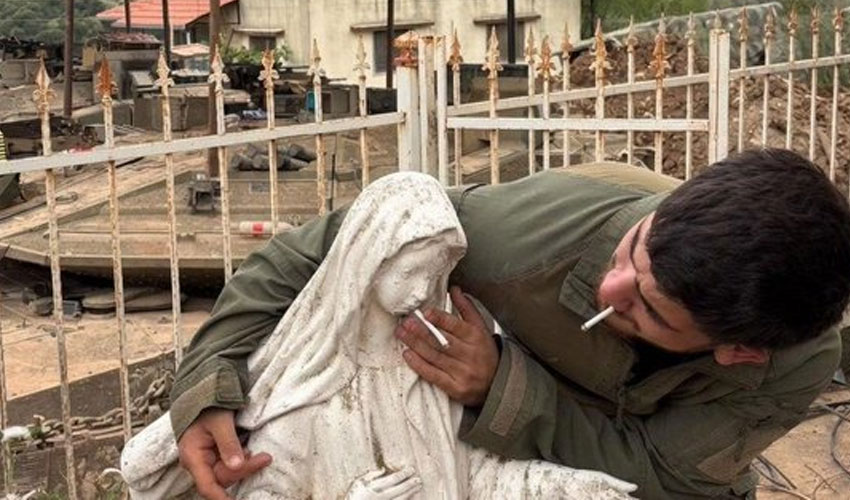
The Israeli military has launched an internal investigation after a controversial image circulated online showing a soldier allegedly placing a cigarette in the mouth of a statue of the Virgin Mary in southern Lebanon.
According to reports, the incident took place several weeks ago in the Christian-majority village of Debel, but the photograph began spreading widely on social media on Wednesday, triggering strong criticism from users and rights observers.
The image shows a soldier in uniform smoking while placing another cigarette into the statue’s mouth, an act that has been widely condemned as disrespectful to religious symbols and offensive to Christian communities in the region.
IDF Promises Disciplinary Action
The Israel Defense Forces (IDF) confirmed that it is aware of the incident and has opened an inquiry.
The military said it takes the matter seriously and promised disciplinary action if wrongdoing is confirmed. Officials did not immediately disclose the identity of the soldier or unit involved.
The case has added to growing scrutiny over conduct by troops deployed in southern Lebanon amid ongoing cross-border tensions.
Repeated Allegations of Damage to Religious Sites
This is not the first such incident reported from the area. Local media and social media accounts have previously circulated claims of vandalism and damage to religious symbols during military operations.
In a separate case last month, another Israeli soldier was reportedly photographed damaging a statue of Jesus in the same village of Debel. That incident also drew widespread condemnation.
Residents and Lebanese media outlets have further alleged that military operations in the area resulted in damage to civilian infrastructure, including homes, roads, olive trees, and solar panels linked to local water systems.
The Israeli military has said its operations are focused on Hezbollah positions and infrastructure, but independent verification of battlefield incidents remains limited due to restricted access to affected areas.
Religious Concerns and Regional Sensitivities
The latest incident has renewed concerns among religious groups about the protection of Christian symbols and sites during armed conflict in Lebanon and the broader region.
Rights observers have previously documented tensions involving Christian clergy and pilgrims in different parts of the occupied territories, although details vary across reports.
Earlier footage from Jerusalem showed a French nun being pushed during a confrontation near the Old City, prompting police action and the arrest of a suspect. The incident added to wider debates about respect for religious figures and places of worship during periods of heightened tension.
Previous Disciplinary Actions
Israeli authorities have previously taken disciplinary steps in similar controversies. Following the destruction of the Jesus statue in Debel, official statements condemned the act and confirmed that two soldiers were removed from combat duties and sentenced to short jail terms.
In another earlier incident, Israel’s leadership issued an apology after reports that a senior religious figure was briefly prevented from accessing the Church of the Holy Sepulchre during Palm Sunday observances.
Wider Context of Military Scrutiny
The latest investigation comes amid ongoing international criticism of Israeli military operations in Gaza and the occupied West Bank, where human rights groups have raised concerns over civilian casualties and damage to religious and civilian infrastructure.
Cases such as the killing of journalist Shireen Abu Akleh during a 2022 raid in the West Bank continue to be cited by observers calling for greater accountability and transparency.
Reports from Gaza also indicate significant damage to religious sites, including mosques and churches, during the ongoing conflict, further intensifying global scrutiny.
As investigations continue, the incident in Debel is expected to add to already heightened regional sensitivities surrounding military conduct and religious respect in conflict zones.
About Tamoor Ahmed

Tamoor Ahmad has been covering politics since 2022.
