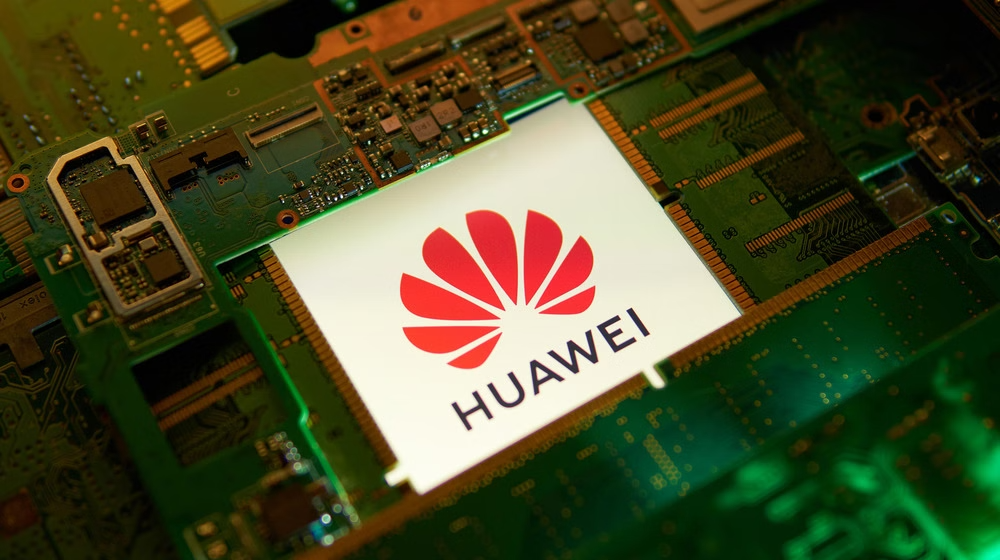
Jensen Huang, the chief executive of Nvidia, has warned that it would be a negative outcome for the United States if Chinese AI firm DeepSeek launches its upcoming artificial intelligence model entirely on Huawei hardware.
Huang said such a move could signal a broader shift in global AI development away from US technology, potentially weakening America’s long-standing dominance in advanced computing and artificial intelligence.
DeepSeek V4 Draws Industry Attention
DeepSeek’s next-generation model, DeepSeek V4, is expected to launch later this month and is already being closely watched across the AI industry. Reports suggest the model may run on Huawei’s Ascend AI chips, rather than relying on Nvidia’s graphics processing units that currently power many of the world’s leading AI systems.
However, some indications suggest DeepSeek V4 could still support Nvidia’s Blackwell architecture, leaving open the possibility of a hybrid approach rather than a complete break from US chip technology.
A Potential Break From the US Chip Ecosystem
If DeepSeek deploys a flagship AI model fully on Huawei hardware, it would mark one of the first major AI systems to operate outside the US-led chip ecosystem. Such a development could reshape assumptions about which countries control the infrastructure behind next-generation artificial intelligence.
For Nvidia and other American chipmakers, the shift would represent more than a commercial loss — it would signal a structural change in how and where advanced AI is built.
China’s AI Strategy Goes Beyond Hardware
While Huawei’s AI chips are widely considered to lag behind top US alternatives in raw computing performance, Chinese companies are increasingly compensating through scale, software optimization, and system-level innovation.
Techniques such as Mixture-of-Experts architectures allow AI models to run more efficiently by activating only parts of a network at a time, reducing reliance on the most powerful chips. Combined with China’s large pool of AI engineers and lower-cost energy resources, these methods support massive computing clusters that can offset hardware limitations.
Rising Policy Pressure Between the US and China
The issue comes amid intensifying US-China tensions over advanced technology. American lawmakers have pushed for tighter restrictions on Chinese AI firms and semiconductor access, while recent supply-chain decisions have pointed to a more mixed and evolving policy stance.
Huang’s comments reflect growing concern within the US tech industry that export controls alone may not be enough to preserve long-term leadership in artificial intelligence.
The AI Battle Moves Beyond Chips
The global AI race is increasingly about more than raw chip performance. Software efficiency, scaling strategies, talent, and ecosystem control are becoming decisive factors in determining which countries and companies lead the next phase of AI development.
If DeepSeek successfully launches a competitive AI model on Huawei chips, it could represent a turning point, showing that cutting-edge AI can emerge outside traditional US hardware dominance — a shift with major implications for the future of global technology leadership.
