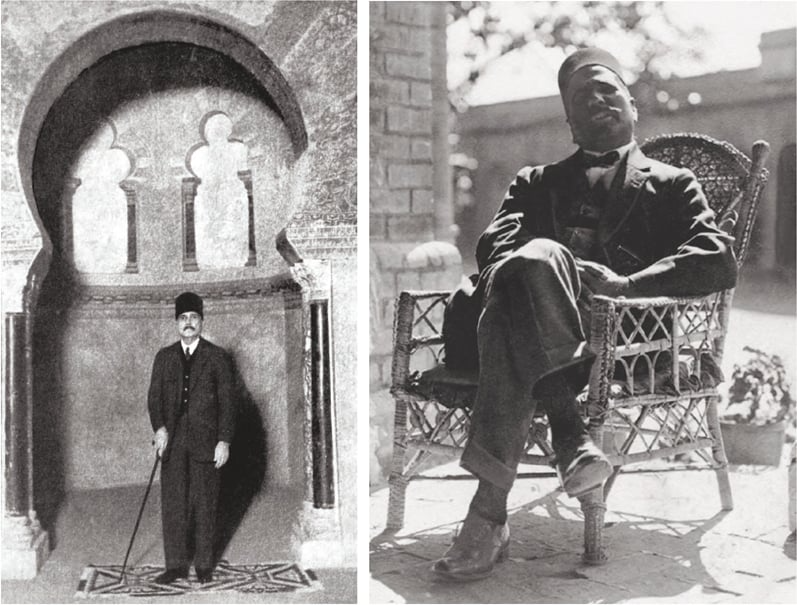
The life of Allama Iqbal is often remembered through his poetry and philosophy, but his physical journey across Lahore reveals an equally fascinating layer of history. From student hostels to bustling bazaars and finally his own home, each location reflects a different phase of his intellectual and personal evolution.
Early days at Government College Lahore
Iqbal arrived in Lahore in 1895 after completing his intermediate studies in Sialkot. He enrolled at Government College University Lahore, where he lived in the student hostel known as the Quadrangle, later renamed Iqbal Hostel.
Room No. 1 is preserved today as a tribute to his student life, marking the beginning of his academic journey. During this period, he completed his BA and later pursued law and philosophy, shaping his early intellectual foundations.
Bhati Gate and the heart of old Lahore
After completing his studies, Iqbal moved into the vibrant inner city near Bhati Gate, one of the cultural centers of old Lahore.
He lived in a small flat in Koocha Jalootian and spent time interacting with local thinkers in what is now remembered as “Tharra Iqbal.” This informal gathering spot became a place where ideas, poetry, and political thoughts were exchanged in the lively atmosphere of the walled city.
Nearby connections to Anarkali Bazaar also placed him at the center of Lahore’s intellectual and commercial life.
Also read: The mysterious love story of Emma Wegenast and Allama Iqbal
Academic and teaching career in Lahore
Iqbal later joined Oriental College Lahore as an Arabic reader and briefly taught English at Islamia College before becoming a professor of philosophy at Government College.
These roles strengthened his academic influence and placed him among Lahore’s most respected intellectual figures of the time.
Cambridge years and European influence
In 1905, Iqbal traveled to England and studied at University of Cambridge, living at Portugal Place near Trinity College.
During this period he was exposed to Western philosophy and political thought, which later influenced his own ideas on identity and nationhood. He also studied law in London and was called to the Bar.
Heidelberg and Munich academic journey
Iqbal continued his academic work in Germany at Heidelberg and Munich, where he completed research that earned him a PhD on the development of metaphysics in Persia from Ludwig Maximilian University of Munich.
This phase deepened his philosophical thinking and broadened his intellectual outlook.
Return to Lahore and life in Urdu Bazaar and Anarkali
After returning in 1908, Iqbal lived briefly in Urdu Bazaar before moving to a residence in Anarkali Bazaar. He spent nearly 14 years in this bustling commercial area, balancing his legal practice, teaching, and literary work.
This period is considered one of his most productive phases, where he developed much of his poetry and philosophical writing while remaining closely connected to Lahore’s intellectual circles.
Also read: India to remove Allama Iqbal chapter from the curriculum
McLeod Road years and national recognition
In 1922, Iqbal moved to McLeod Road, where he lived for over a decade. This residence became a hub of political and intellectual activity, frequented by major figures of the time.
It was during this period that he articulated ideas that later contributed to the concept of a separate homeland for Muslims in South Asia. He was also knighted during this time, becoming Sir Muhammad Iqbal.
Final residence at Javed Manzil
In 1935, Iqbal moved to his own home on what is now Allama Iqbal Road, naming it Javed Manzil after his son.
This house became his final residence, where he spent his last years until his death in 1938. Today it stands as a preserved heritage site reflecting his final chapter in Lahore.
A layered legacy across Lahore
The journey of Allama Iqbal across Lahore is not just a biography of places but a reflection of intellectual growth, cultural engagement, and philosophical evolution.
From student life at Government College to the intellectual streets of Bhati Gate and Anarkali, and finally to Javed Manzil, each location adds depth to his legacy as a poet, thinker, and public intellectual.
His life in Lahore remains deeply embedded in the city’s cultural memory, offering insight into both the man and the environment that shaped his ideas.
