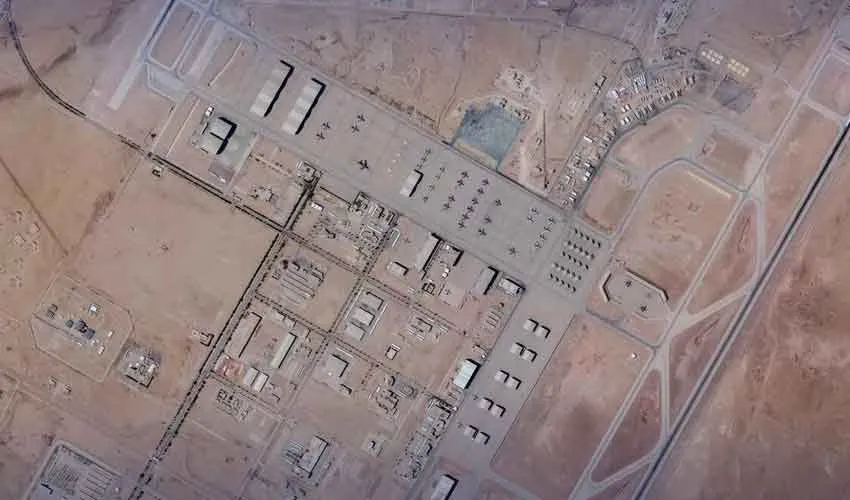
Iran is reported to have quietly obtained a Chinese-built spy satellite, significantly expanding its intelligence-gathering capabilities and enabling surveillance of US military bases across the Middle East during the recent conflict, according to the Financial Times.
The report claims that the satellite, known as TEE-01B, was constructed and launched by Earth Eye Co and later acquired by the Islamic Revolutionary Guard Corps Aerospace Force in late 2024.
The spacecraft was reportedly launched from China, with ownership transferred to Iran shortly afterward, based on leaked Iranian military documents cited by the newspaper.
According to the report, Iranian military commanders tasked the satellite with monitoring key US military installations. Evidence cited includes time-stamped coordinates, satellite imagery, and orbital data indicating surveillance activity in March, before and after drone and missile strikes attributed to Iran or its allies.
The satellite allegedly captured images of Prince Sultan Air Base on March 13, 14, and 15. On March 14, Donald Trump publicly confirmed that US aircraft stationed at the base had been hit.
The report further claims that the satellite also tracked Muwaffaq Salti Air Base, areas near the United States Fifth Fleet base in Manama, Bahrain, and Erbil Airport, coinciding with attacks claimed by the IRGC in those regions.
As part of the alleged arrangement, the IRGC was granted access to commercial ground stations operated by Emposat, a Beijing-based satellite control and data services provider with infrastructure spanning Asia, Latin America, and other regions.
Neither Reuters nor independent sources were able to verify the claims. Requests for comment sent to the White House, CIA, Pentagon, China’s foreign and defense ministries, Earth Eye Co, and Emposat reportedly went unanswered.
If confirmed, the report would underscore deepening military-technology cooperation between Iran and China and highlight growing concerns over the use of commercial satellite systems in modern warfare and regional security conflicts.
