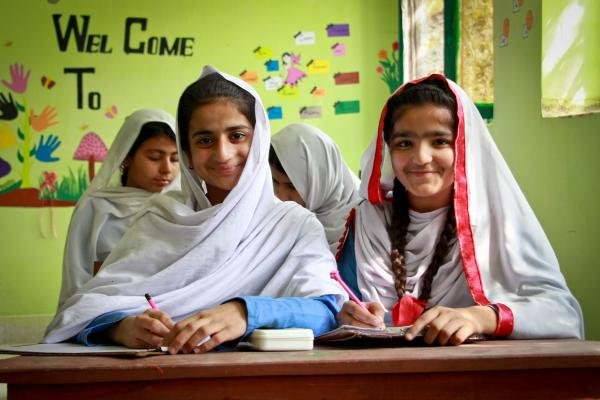
Baluchistan is Pakistan’s province with the lowest literacy rate. This could be attributed to a lack of connectivity in this province, which covers 44 percent of the country’s land area, as well as security concerns or a lack of political will or desire to improve the province’s situation. According to studies, 70% of Baloch people live in poverty and cannot afford to take their children to Quetta for a good education.
This paved the way for a modest number of teachers to emerge from the province, especially women and teachers from remote areas. School dropout is at an all-time high, especially in primary institutions. The percentage of transition from primary to middle school is only 23%. (Sami, 2011). According to the Federal Bureau of Statistics, the net enrolment ratio (NER) at secondary level falls to 14 percent for age groups 14 to 15, and 6 percent for age groups 13 to 14 (PSLM Survey 2010-11). Students in the provinces, according to Ms. Naghmana Ambreen (Coordinator Annual Status of Education Report (ASER)), struggle to read simple Urdu words or execute fundamental arithmetic operations.
Even though Article 25-A of the Pakistani Constitution, which was added by the 18th Amendment, mandates universal education for children up to the age of 16, a considerable portion of Baluchistan’s population remains illiterate. Denying children their access to education is thus a violation of the Pakistani Constitution’s fundamental rights for children.
Baluchistan likewise lags behind the more populated provinces in terms of literacy rates, and it leads the way when it comes to gender disparities in literacy. Baluchistan makes up almost 43 percent of Pakistan’s land, and despite its natural resources, its educational facilities are grossly inadequate. According to the National Economic Survey 2005-06, Punjab has 48 percent of Pakistan’s educational institutions, Sind has 22 percent, KPK has 17 percent, and Baluchistan has only 5 percent.
Teachers are assigned to their appropriate places in Baluchistan by district authorities. Thus, district authorities in Baluchistan have complete authority over the appointment, hiring, and transfer of teachers in their respective areas. However, as is common in many parts of the country, many appointments are made on the basis of nepotism. People who barely passed their matriculation or board tests are recruited because they have “contacts” at higher positions. Furthermore, transfers are done because of personal animosities between district administration and some instructors. This is especially difficult on instructors who have taught in a specific location for a long time and are well familiar with how a particular school is handled.
Furthermore, most instructors are employed with ‘strings attached’. The government gives them a lot of money, but most of them will not take the job unless they are guaranteed fewer working hours and more vacation time. According to reputable inside sources, partiality pervades the selection process and is a far more favored strategy over merit-based recruiting. Furthermore, due to a scarcity of teachers, the few that are available are given extra perks, despite their little education and experience. As a result, there is not only a scarcity of qualified Baluch teachers, but those that are available are being replaced by less qualified ones.
Due to a significant shortage of instructors in Baluchistan, candidates nominated for teaching positions have no prior teaching experience. Most of Baluchistan’s teachers were appointed after receiving support from provincial and national officials. There is a significant disparity between the number of competent instructors available and the demand for trained teachers. As a result, semiprofessional instructors are hired who either lack the desire or are ill-equipped to fulfil their tasks properly.
The bulk of government school instructors, according to popular belief, have barely completed college and are not even qualified with an official degree. Due to the security situation, many instructors in Baluchistan have been evacuated from distant locations to cities. According to Abbasi (2013), the instructors who remain in the countryside are severely irresponsible in their tasks. As a result, pupils are increasingly turning to informal methods of education, particularly at the primary level, such as Kachhi education. Teachers are also hesitant to come from the most literate region, Punjab, for fear of their lives. Although the province’s teacher-to-student ratio is a healthy [1:21], this is not a real reflection of the province’s structure due to a significantly higher concentration of instructors in metropolitan regions.
There is no core policy framework in Pakistan that is specifically focused on Teacher Professional Development. There is a significant disparity between how the United Nations MDG Declaration demands teacher proficiency and how teachers are prepared in Pakistan. “Our instructors are not properly trained,” according to Mr. Munir Ahmad (former Education Minister of Baluchistan). Instead of taking a totalitarian approach to kids, they should concentrate on learning.” (Dawn, 2013) According to Baloch Students Action Committee Spokesman Dr. Abubakar Baloch, “matriculation passed, and incompetent instructors have been admitted by the provincial administration, and they are being sent to remote parts of Baluchistan such as Panjgur, Gwadar, Washuk, Hub, and Chaghi, among others.” They spend most of their time in the provincial capital of Quetta and Karachi enjoying their salaries, and rarely travel to rural areas to attend lessons.”
In my opinion, The Government of Pakistan should take necessary steps for the welfare of Baluchistan, and the government to oversee the educational institutions Nepotism should be avoided while recruiting, instead of hiring those who have no knowledge, skill, and ability they must focus on qualified, certified and skillful people. Government should take steps to get rid of parasitic people from our community. The Ministry of Education should take a keen interest and consider that situation his responsibility for the betterment of Baloch youth.
