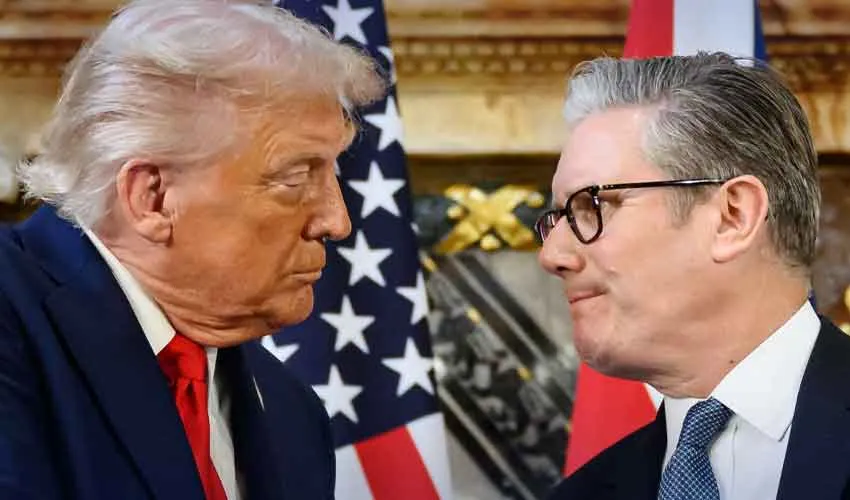
The United Kingdom has formally declined to participate in a US-led military blockade of Iran through the Strait of Hormuz, declaring its opposition to further escalation after diplomatic efforts between Washington and Tehran collapsed.
British officials said UK naval assets and personnel would not be deployed to restrict access to Iranian ports, drawing a clear line between safeguarding maritime security and enforcing coercive military measures. The decision places London at odds with the United States at a moment of heightened regional volatility.
A government spokesperson reaffirmed Britain’s commitment to “freedom of navigation and the opening of the Strait of Hormuz,” stressing that disruption to the waterway would have serious consequences for the global economy and household energy costs.
Roughly 20 per cent of the world’s oil and liquefied natural gas supplies transit the strait each day.
UK maintains defensive presence, rejects blockade role
While ruling out involvement in any blockade, the UK will continue its existing military deployments in the Gulf, including minesweepers and anti-drone systems designed to protect commercial shipping. Officials emphasised that these measures are defensive in nature and aimed solely at ensuring safe passage, not at enforcing sanctions or restricting trade.
Senior figures in London have warned that a blockade could sharply intensify tensions with Iran and risk drawing the region into a wider conflict.
Washington presses ahead after failed negotiations
The US announced the blockade after marathon talks with Iran in Islamabad failed to yield a breakthrough. President Donald Trump said Washington would begin blocking “any and all ships” entering or leaving Iranian ports via the Strait of Hormuz.
US Central Command said enforcement would target vessels linked to Iran operating in the Arabian Gulf and Gulf of Oman, while ships travelling to and from non-Iranian ports would not be impeded. Commercial operators, it added, would receive formal notifications before the measures take effect.
Dispute over allied support
Trump has claimed that several allied nations would assist the operation, suggesting NATO partners could help secure the strait. He specifically named the UK, saying Britain would contribute minesweepers — an assertion British officials have not confirmed.
Prime Minister Keir Starmer has repeatedly ruled out direct military involvement and called for de-escalation, warning that further confrontation could undermine regional stability and global markets.
Diplomatic push to protect shipping lanes
Instead of joining the blockade, the UK is seeking to build an international coalition focused on protecting maritime traffic. In discussions with French President Emmanuel Macron, Starmer stressed the need for coordinated action to uphold international law and keep shipping routes open.
Downing Street said Britain was “urgently engaging with France and other partners” to safeguard freedom of navigation.
London has also voiced concern over reports that Iran has begun charging transit fees of up to $2 million (£1.5 million) for tankers crossing the strait, insisting the waterway “must not be subject to tolls or unilateral restrictions”.
Oil markets rattle as crisis deepens
The confrontation has sent shockwaves through energy markets. Brent crude surged above $100 a barrel following the US announcement, reflecting fears of prolonged supply disruption and higher fuel costs worldwide.
UK Chancellor Rachel Reeves is expected to raise the issue during an upcoming visit to Washington for IMF meetings, where she is likely to press for diplomatic efforts to reopen the route and stabilise prices.
Political fallout and fragile ceasefire
Trump’s comments have also strained transatlantic relations. He criticised Britain’s stance and likened Starmer’s approach to that of Neville Chamberlain, invoking Britain’s pre-second world war policy of appeasement. The remarks were condemned in London, with Health Secretary Wes Streeting calling them “incendiary, provocative and outrageous”.
The crisis follows the collapse of a fragile two-week ceasefire after 21 hours of US-Iran negotiations ended without agreement. US Vice President JD Vance said Iran’s refusal to abandon nuclear ambitions had been a central obstacle.
Starmer has continued diplomatic outreach, including talks with Haitham bin Tariq Al Said, urging restraint and a return to negotiations. He has also toured several Gulf states to strengthen regional coordination as pressure mounts to prevent a broader conflict.
