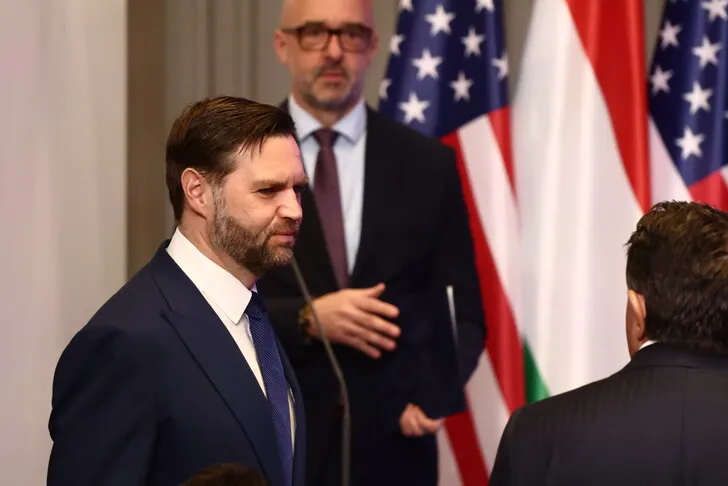
US Vice President JD Vance departed Islamabad on Sunday after marathon negotiations between the United States and Iran ended without an agreement, following more than 21 hours of high-stakes talks mediated by Pakistan.
Speaking before leaving Pakistan, Vance acknowledged that the talks had failed to bridge fundamental differences, saying Iran had declined to accept core US demands—most notably a binding commitment not to pursue nuclear weapons.
“The bad news is that we have not reached an agreement,” Vance said. “And I think that’s bad news for Iran much more than it’s bad news for the United States of America. We’ve made very clear what our red lines are.”
Nuclear weapons at the heart of the deadlock
Vance said he remained in close contact with US President Donald Trump throughout the negotiations, speaking with him at least half a dozen times. He identified Iran’s nuclear programme as the central obstacle.
“We need to see an affirmative commitment that Iran will not seek a nuclear weapon and will not seek the tools that would enable them to quickly achieve one,” he said. “That is the core goal of the president of the United States, and that’s what we sought through these negotiations.”
Iran’s semi-official Tasnim News Agency reported that “excessive” US demands had prevented an agreement, adding that the talks had ended without a breakthrough.
However, earlier in the day, Iran’s government said on X that negotiations would continue, with technical teams from both sides expected to exchange documents—highlighting uncertainty over whether dialogue may yet resume.
Historic but inconclusive talks
The Islamabad meetings marked the first direct US–Iran talks in more than a decade and the highest-level engagement since the 1979 Islamic Revolution. The outcome is widely seen as critical to the future of a fragile two-week ceasefire and the reopening of the Strait of Hormuz, a chokepoint for roughly 20% of global energy supplies.
Iran has blocked the strait since the conflict began, driving global oil prices sharply higher and contributing to economic instability worldwide. Thousands of people have been killed during the fighting, according to regional officials.
During the talks, Vance—alongside US Special Envoy Steve Witkoff and senior adviser Jared Kushner—met Iranian Parliament Speaker Mohammad Baqer Qalibaf and Foreign Minister Abbas Araqchi for two hours before a pause, according to Pakistani mediators.
Tense atmosphere and symbolic gestures
Pakistani sources described fluctuating moods during the discussions. “There were mood swings from both sides—the temperature went up and down during the meeting,” one official said.
Iranian delegates arrived dressed in black, mourning the late Supreme Leader Ayatollah Ali Khamenei and others killed during the war. Iranian officials said the delegation carried shoes and bags belonging to students killed in a US bombing of a school adjacent to a military compound. The Pentagon has said the strike is under investigation, though Reuters has reported US military investigators believe American forces were likely responsible.
Strait of Hormuz emerges as flashpoint
As negotiations unfolded, the US military said it was “setting the conditions” to begin clearing the Strait of Hormuz. It said two US warships had transited the waterway and preparations were under way to clear mines. Iran’s state media denied that any US vessels had passed through the strait.
Iranian officials have demanded the release of frozen assets held abroad, control over the strait, war reparations and a region-wide ceasefire, including in Lebanon. Tehran has also sought the right to collect transit fees from shipping passing through Hormuz.
US officials have denied agreeing to release frozen Iranian funds, despite claims from Iranian sources that such concessions had been discussed.
Pakistan’s pivotal mediation role
For Pakistan, hosting the talks marked a dramatic diplomatic turnaround. Islamabad, a city of more than two million people, was placed under heavy security, with thousands of paramilitary personnel and army troops deployed.
Pakistan’s role as mediator has drawn international attention, particularly given that the country was considered a diplomatic outcast just a year ago.
Despite the failure to reach a deal, diplomats say the talks clarified positions and underscored the high stakes involved. With nuclear non-proliferation, global energy security and regional stability all on the line, observers warn that the collapse of negotiations could have far-reaching consequences—unless diplomacy resumes before the ceasefire unravels.
