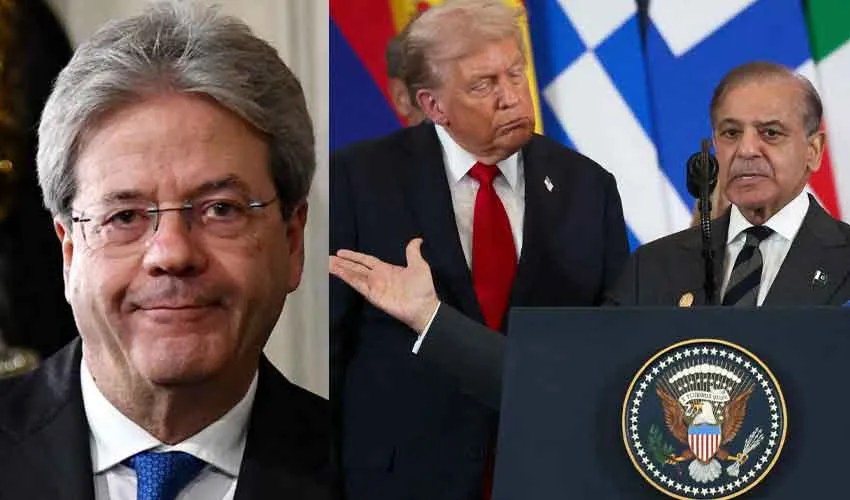
Pakistan’s pivotal role in brokering the ceasefire between the United States and Iran has sparked growing international calls for recognition, with prominent global figures suggesting that the country’s top leadership be nominated for the Nobel Peace Prize.
The diplomatic breakthrough, which helped end a conflict that had raged for more than a month and threatened to destabilize the entire Middle East, has been widely attributed to the coordinated efforts of Prime Minister Shehbaz Sharif and Chief of Army Staff General Syed Asim Munir.
Following diplomatic efforts that helped secure a ceasefire between the two adversaries, strong suggestions have emerged from multiple quarters regarding a Nobel Peace Prize nomination for Pakistan’s leadership.
Notable voices have urged the global community to formally recognize the efforts that helped bring an end to a war that had already claimed thousands of lives and caused widespread destruction across the region.
Former Italian Prime Minister Leads the Call
Former Italian Prime Minister Paolo Gentiloni emerged as one of the most prominent voices advocating for Pakistan’s recognition. In a statement that has gained significant international attention, Gentiloni said that Pakistan should be awarded the Nobel Peace Prize for its role in securing the ceasefire. His remarks add to a growing chorus of international support acknowledging Pakistan’s contribution to regional peace efforts.
Forse merita il Nobel. Il Pakistan.
— Paolo Gentiloni (@PaoloGentiloni) April 8, 2026
Gentiloni, who served as Italy’s prime minister from 2016 to 2018 and later as European Commissioner for Economy, carries significant diplomatic weight. His endorsement of Pakistan’s mediation efforts has been widely circulated in diplomatic circles and international media.
The Ceasefire: A Diplomatic Breakthrough
The development follows reports that the United States and Iran agreed to a ceasefire explicitly at the request of Prime Minister Shehbaz Sharif. Pakistan’s involvement has been widely seen as a key factor in creating a viable pathway for dialogue between the two sides after weeks of escalating tensions that had pushed the region to the brink of all-out war.
The conflict, which erupted on February 28, had already caused severe disruptions to global energy markets, displaced hundreds of thousands of civilians, and drawn in multiple regional powers. The ceasefire agreement, announced last week, includes a two-week pause in US strikes against Iran, subject to Tehran immediately reopening the Strait of Hormuz and ceasing attacks against US, Israeli, and regional targets.
Coordinated Leadership: Prime Minister and Army Chief
Notable figures have specifically highlighted the complementary roles played by Prime Minister Shehbaz Sharif and General Syed Asim Munir in mediating the ceasefire. Their efforts, according to diplomats familiar with the negotiations, contributed to saving millions of lives by helping bring an end to a war that had the potential to spiral into a wider regional conflagration.
Leaders from around the world have also appreciated Pakistan’s diplomatic role, commending both the prime minister and the army chief for their coordinated and effective efforts. The civilian-military partnership demonstrated during the mediation process has been cited as a model of unified national policy.
Pakistan’s Unique Position as Mediator
Pakistan’s emergence as a mediator between the United States and Iran is rooted in its unique diplomatic position. Islamabad maintains functional relationships with both Washington and Tehran, a rarity among nations in the region. While Pakistan has historically been a close ally of the United States, it also shares a long border with Iran and has maintained diplomatic channels even during periods of tension.
Additionally, Pakistan’s status as a nuclear-armed nation and its significant military capabilities lend weight to its diplomatic initiatives. When Pakistan speaks, both Washington and Tehran have reasons to listen.
How Pakistan Brokered the Deal
According to diplomatic sources, Pakistan’s mediation efforts intensified after the conflict showed no signs of abating in its second month. Prime Minister Shehbaz Sharif reportedly reached out to both US President Donald Trump and Iranian Supreme Leader Ayatollah Ali Khamenei through back channels, proposing a framework for de-escalation.
General Asim Munir, the Chief of Army Staff, is understood to have played a crucial role in communicating with Iranian military leadership, leveraging the personal relationships and trust built through years of border coordination and intelligence sharing. Pakistan’s Inter-Services Intelligence (ISI) also reportedly facilitated secure communications between the two sides.
The breakthrough came when Iran submitted a 10-point proposal to the United States via Pakistani intermediaries. US President Donald Trump described the proposal as a “workable basis for negotiations”, leading to the current two-week ceasefire.
Global Appreciation for Peace Efforts
Beyond individual endorsements, leaders across the world have expressed appreciation for Pakistan’s mediation. They have emphasized the importance of diplomatic engagement in resolving conflicts and preventing further escalation in volatile regions.
China was among the first major powers to welcome the ceasefire and praise Pakistan’s role. The Chinese Foreign Ministry issued a statement commending Islamabad’s “constructive and responsible” approach to regional peace and stability.
Turkey, Saudi Arabia, and the United Arab Emirates have also reportedly conveyed their appreciation to Pakistani leadership through diplomatic channels. The United Nations Secretary-General has welcomed the ceasefire and acknowledged the role of all parties involved in brokering the agreement.
The Nobel Peace Prize: Process and Precedent
The Nobel Peace Prize is awarded annually by the Norwegian Nobel Committee to individuals or organizations that have “done the most or the best work for fraternity between nations, for the abolition or reduction of standing armies, and for the holding and promotion of peace congresses.”
Nominations for the prize can be submitted by a wide range of qualified individuals, including members of national parliaments and governments, university professors, former laureates, and members of the Norwegian Nobel Committee itself. The deadline for nominations for any given year is typically January 31, meaning that any nomination for Pakistan’s leadership would likely be considered for the 2026 award.
If nominated and selected, Prime Minister Shehbaz Sharif and General Asim Munir would join a distinguished list of peace laureates that includes figures such as Mother Teresa, Nelson Mandela, Malala Yousafzai, and Barack Obama.
Historical Precedents for Mediation Recognition
There are strong historical precedents for awarding the Nobel Peace Prize to mediators and peace brokers. Former US President Jimmy Carter won the prize in 2002 for his decades of work mediating international conflicts.
Former Finnish President Martti Ahtisaari won in 2008 for his efforts to resolve conflicts in several regions. The Tunisian National Dialogue Quartet won in 2015 for building a peaceful political process after the country’s revolution.
Pakistan itself has produced one Nobel Peace Prize laureate: Malala Yousafzai, who won in 2014 at the age of 17 for her advocacy of girls’ education. A prize for Pakistan’s leadership in mediating the US-Iran ceasefire would represent a different category of achievement: state-led diplomatic intervention to prevent wider war.
Challenges to a Nomination
Despite the growing calls, several challenges could complicate any Nobel Peace Prize nomination for Pakistan’s leadership. The ceasefire remains fragile, with negotiations scheduled to resume in Islamabad on April 10. Should the talks fail and hostilities resume, the diplomatic achievement would be significantly diminished.
Additionally, the Nobel committee has historically been cautious about awarding prizes for ongoing or incomplete peace processes. The 1994 prize to Yasser Arafat, Shimon Peres, and Yitzhak Rabin came after the Oslo Accords but before the ultimate failure of the peace process. Some have argued that the prize should be awarded only after durable peace has been achieved.
Furthermore, Pakistan’s complex internal dynamics, including ongoing political tensions and human rights concerns, could potentially influence international perceptions of any nomination.
Domestic Reaction in Pakistan
Within Pakistan, the news of international calls for Nobel recognition has been met with widespread enthusiasm. Political leaders from across the spectrum have congratulated Prime Minister Shehbaz Sharif and General Asim Munir on their diplomatic achievement. Media outlets have run extensive coverage of the international appreciation.
However, some domestic critics have questioned whether the ceasefire will hold and whether Pakistan should be seeking recognition before the outcome of the Islamabad negotiations is known. Others have pointed out that while Pakistan facilitated the ceasefire, the agreement ultimately reflects the strategic calculations of Washington and Tehran rather than any fundamental shift in their respective positions.
What Comes Next
The immediate focus now shifts to the April 10 negotiations in Islamabad, where US and Iranian representatives are expected to meet for direct or facilitated talks. The success or failure of those negotiations will likely determine whether the current two-week ceasefire evolves into a more durable arrangement.
For Pakistan, continued engagement in the peace process carries both opportunities and risks. Success would cement Islamabad’s reputation as a regional peace broker and potentially open new avenues for economic cooperation and investment. Failure could expose Pakistan to criticism and potentially draw it deeper into the conflict.
