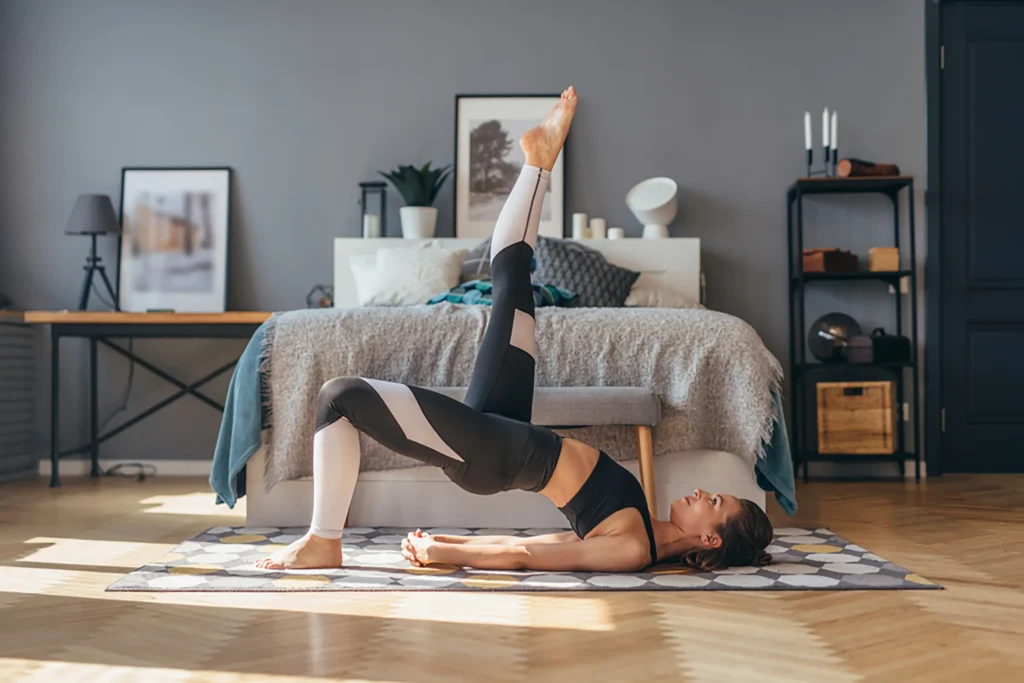
If you find yourself lying awake after a long, exhausting day, the solution may not be medication or screen time—but gentle movement. The right bedtime exercises can help quiet your thoughts, release muscle tension, and prepare your body for deep, restful sleep.
Light physical activity before bed works differently than intense workouts. Instead of energizing your body, these slow, calming movements signal your nervous system to wind down, reduce stress hormones, and naturally improve sleep quality.
Here are five simple, equipment-free exercises you can do right before bedtime.
1. Deep Breathing Stretch
Sit or lie down in a comfortable position.
Inhale slowly through your nose, hold for a few seconds, then exhale gently through your mouth.
This breathing pattern helps lower anxiety, slows your heart rate, and shifts your body into a relaxed, sleep-ready state. Even two to three minutes can make a noticeable difference.
2. Neck and Shoulder Rolls
Slowly roll your shoulders forward and backward, then gently rotate your neck from side to side.
Also read: The hidden dangers of sleeping pills: What you need to know
This movement relieves stiffness caused by long hours of sitting, phone use, or working at a screen—common contributors to nighttime discomfort and restlessness.
3. Child’s Pose
This calming stretch relaxes the lower back, hips, and thighs while encouraging deep breathing.
Kneel on the floor, stretch your arms forward, and gently lower your chest toward the ground. Hold the position for 30 to 60 seconds while breathing slowly and evenly.
4. Legs-Up-the-Wall Pose
Lie on your back and extend your legs upward against a wall, keeping your arms relaxed by your sides.
This pose helps improve blood circulation, reduces leg fatigue, and promotes a sense of calm—making it especially helpful after a long day on your feet.
5. Seated Forward Bend
Sit with your legs extended in front of you and gently reach toward your toes without forcing the stretch.
This movement relaxes the spine and hamstrings while calming the nervous system, helping your body transition smoothly into sleep.
Tips for Best Results
- Keep movements slow and gentle
- Avoid intense workouts close to bedtime
- Maintain a consistent sleep schedule
- Pair exercises with a quiet, dimly lit environment
Practicing these bedtime exercises regularly can help you fall asleep faster, stay asleep longer, and wake up feeling more refreshed—naturally and without any equipment.
