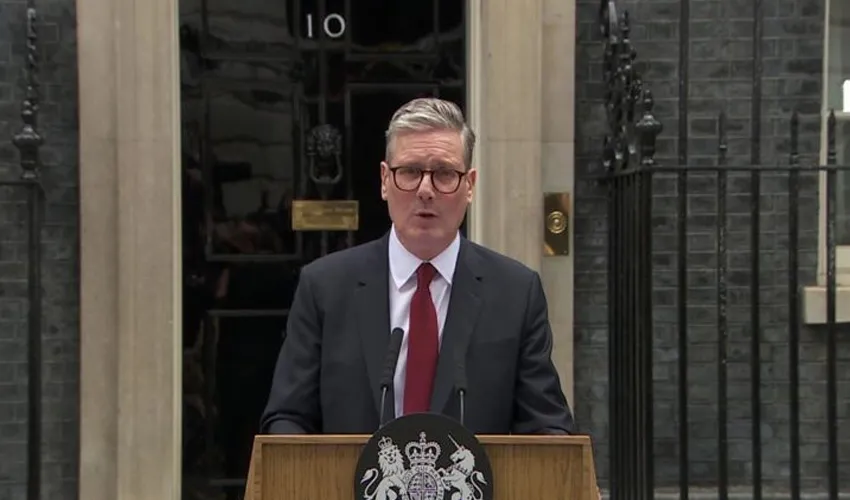
LONDON – British Prime Minister Keir Starmer has unequivocally ruled out deploying UK troops to Iran, declaring that Britain will not be drawn into the escalating conflict despite mounting pressure from the United States and rising global tensions.
“This is not our war, and we’re not going to get drawn into it,” Starmer said, reaffirming his government’s position as Washington weighs further military escalation in the Middle East.
The prime minister emphasized that the United Kingdom will continue to act defensively — protecting British lives, national interests, and regional allies — but will avoid any direct participation in offensive operations on Iranian soil.
UK Defensive Operations Underway
Starmer revealed that British forces have already been active in a defensive capacity. Shortly after the conflict began, UK pilots were deployed to safeguard British nationals and support allied assets in the region.
In parallel, the British government is continuing diplomatic and maritime efforts to help reopen the Strait of Hormuz, a critical global oil chokepoint whose disruption has triggered economic instability worldwide.
Growing Tensions With President Trump
The UK’s refusal to join the war has created friction with US President Donald Trump, who publicly criticized Starmer, calling him “no Churchill”. The rebuke followed Britain’s initial refusal to allow US forces to use British military bases for strikes on Iran.
Although London later permitted limited and defensive US operations from its bases, the strategic divergence between the two long-time allies remains stark.
Reports suggest Washington is now considering ground operations in Iran, including a possible attempt to seize Kharg Island — a vital hub for Iran’s oil exports. Thousands of US troops, including sailors and marines aboard the USS Tripoli, have already been deployed to the Middle East.
UK Focuses on Diplomacy and National Interest
Downing Street confirmed that Britain remains in close contact with the United States at all levels regarding the conflict. However, officials declined to provide ongoing commentary on US military operations, stressing that the UK’s focus remains firmly on its own national security and economic interests.
The conflict has already caused major disruptions to shipping through the Strait of Hormuz. In response, Starmer is scheduled to meet energy and business leaders to discuss reopening the route and managing the economic fallout for British households and businesses.
He will also chair a Cobra emergency meeting to assess the broader impact of the crisis on the United Kingdom.
Starmer Fires Back at Opposition, Sees Poll Boost
Speaking during a Labour campaign event in Wolverhampton, Starmer used the situation to criticize opposition parties, warning that alternative leadership could leave Britain either “in a war with no plan” or “weak and exposed.”
Despite Trump’s criticism, Starmer’s firm stance appears to have resonated with the British public. Polls show a 26-point increase in his popularity when voters are reminded of his disagreement with the US president.
‘Clear Difference’ in Leadership
Starmer reiterated that his decision is based on principle and will not change under external pressure.
“There is a clear difference” between his approach and that of Donald Trump, he said, adding that Britain will stand by its values regardless of circumstances.
As the conflict intensifies and Washington weighs further military action, Starmer’s refusal to commit British troops to Iran marks one of the most significant UK-US policy rifts in recent memory — and a defining test of his leadership on the world stage.
