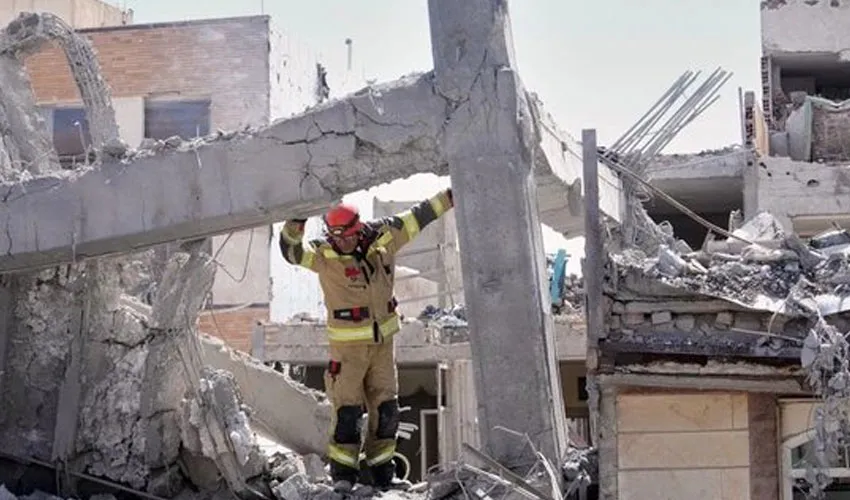
PRINCE SULTAN AIR BASE, Saudi Arabia – At least 12 U.S. service members were injured Friday in a coordinated Iranian attack on Prince Sultan Air Base, a strategic installation in central Saudi Arabia, marking a significant escalation in the widening conflict between U.S.-Israeli forces and Iran.
The assault, which utilized ballistic missiles and unmanned aerial vehicles (UAVs), occurred just hours after Israeli airstrikes targeted key nuclear facilities deep inside Iranian territory. According to official reports, two U.S. personnel sustained serious injuries, while ten others were treated for concussions.
The attack also caused substantial damage to several U.S. aerial refueling aircraft, raising immediate concerns regarding operational readiness at the base, a crucial hub for coalition air power in the region.
Regional Strikes and Proxies
Iranian state media claimed the strike on the Saudi facility was part of the 84th wave of what the Islamic Revolutionary Guard Corps (IRGC) designates as Operation Promised Sadiq IV. Tehran asserted that the operation concurrently targeted American assets along the Dubai coast and at a hotel, though details regarding those specific strikes remain unverified.
The scope of the Iranian retaliation appeared to extend across the Persian Gulf. Iranian media outlets reported attacks on six U.S. tactical ships at Shuwaikh port in Kuwait, alleging that three warships were sunk and three others left ablaze. In a separate axis of the conflict, Russian outlets reported that high-rise buildings in Tel Aviv were struck by Iranian projectiles, triggering widespread sirens and sending Israeli civilians scrambling into bomb shelters.
Israeli Preemptive Strikes on Nuclear Infrastructure
The attack on the Saudi air base was a direct response to Israeli military action carried out hours earlier. In a significant blow to Tehran’s atomic ambitions, Israeli warplanes struck the Shahid Khondab Heavy Water Complex in Arak and the Ardakan yellowcake production plant in Yazd Province.
Iranian officials confirmed that the strikes targeted these critical nodes of the nuclear fuel cycle but reported no casualties or radiation leaks. Yellowcake is a concentrated form of uranium ore essential for enrichment, while heavy water is a moderator used in specific types of nuclear reactors designed to produce weapons-grade material. Israeli defense officials characterized the operation as a major disruption to Iran’s nuclear program.
Casualties and Escalating Toll
In the aftermath of the Prince Sultan Air Base attack, military medics confirmed that the injured American service members were inside a structure that took a direct hit from the combination of missiles and drones. While two remain in serious condition, the ten others suffered concussive injuries from the blast.
The incident adds to a mounting toll for U.S. forces since the outbreak of hostilities. Earlier in the conflict, seven Army reservists lost their lives in a drone attack at Port Shuaiba in Kuwait, and six airmen were killed in a non-combat KC-135 crash in Iraq. Pentagon sources indicate that more than 300 U.S. service members have been wounded since the war began, though the majority have been able to return to duty.
Diplomatic Fallout
Iranian Foreign Minister Abbas Araghchi issued a stark warning following the Israeli strikes on Iranian soil, vowing that Tehran would exact a “heavy price” for the assault on its nuclear facilities. The coordinated nature of Friday’s attacks—spanning Saudi Arabia, Kuwait, and Israel—suggests a significant expansion of the conflict beyond the traditional borders of Iran and Israel, drawing in Gulf states hosting U.S. assets and threatening to destabilize the region further.
As of Saturday morning, the Pentagon has not yet issued a formal response regarding potential retaliatory measures, though defense officials confirmed they are assessing the damage to the damaged refueling fleet and the security posture at Prince Sultan Air Base remains elevated.
