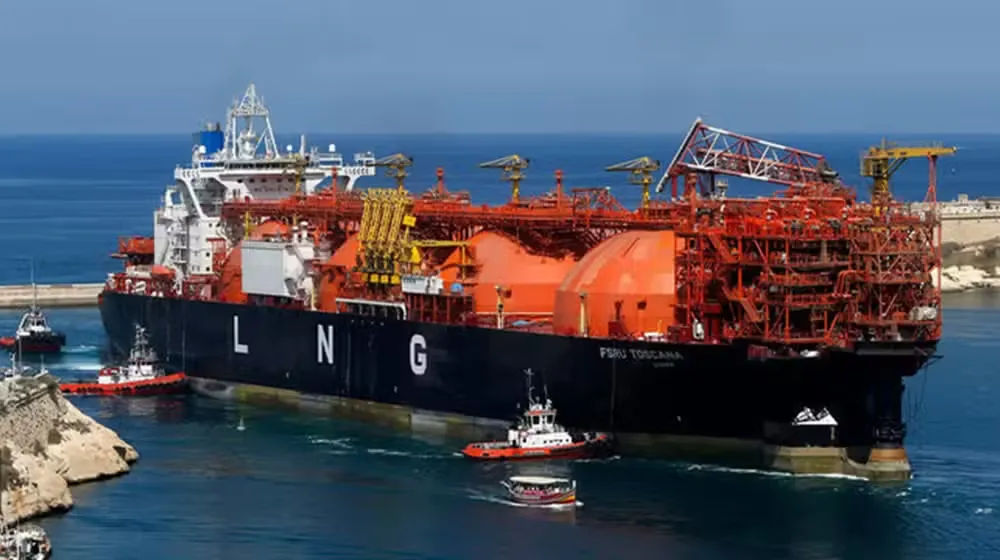
Pakistan is confronting a rapidly worsening energy crisis as global liquefied natural gas (LNG) supplies tighten following the war in the Gulf, severely disrupting shipments from key suppliers and exposing the country’s heavy reliance on imported fuel.
The Financial Times reported that Pakistan is among the most vulnerable economies affected by the disruption, given its near-total dependence on LNG imports from the Gulf, particularly Qatar.
Nearly 99% of Pakistan’s LNG imports last year came from Qatar, industry data show. While the country entered 2026 with surplus LNG due to weak domestic demand, the situation deteriorated rapidly after production disruptions linked to the regional conflict.
LNG Terminals Operating at Reduced Capacity
Supply interruptions have already strained Pakistan’s gas infrastructure. Both LNG import terminals are now operating at a fraction of their normal capacity, according to officials familiar with the matter.
One terminal is expected to exhaust available LNG stocks within days unless new cargoes are secured, while operations at the second terminal could be suspended entirely by the end of the month, the officials said.
Islamabad had earlier asked QatarEnergy to redirect 24 LNG cargoes and sought to reschedule shipments from other suppliers, including Eni. Those efforts have since faltered as global supply conditions tightened sharply following the outbreak of war involving Iran.
Prices Surge, Alternatives Prove Elusive
Emergency attempts to source LNG from Europe, the United States, Oman, Azerbaijan, and African suppliers have so far failed, largely due to sharply higher prices and limited availability.
Spot LNG prices have climbed to around $23 per million British thermal units (MMBtu)—nearly double pre-conflict levels—while higher shipping costs and longer delivery routes have added further pressure.
Power Sector at Risk
If LNG shortages persist, Pakistan may be forced to increase reliance on furnace oil and other expensive fuels to sustain electricity generation, potentially worsening fiscal pressures and driving up power tariffs.
Executives at Pakistan GasPort have warned that the country could face “a very difficult year followed by two or three difficult years” unless global LNG supply conditions improve.
