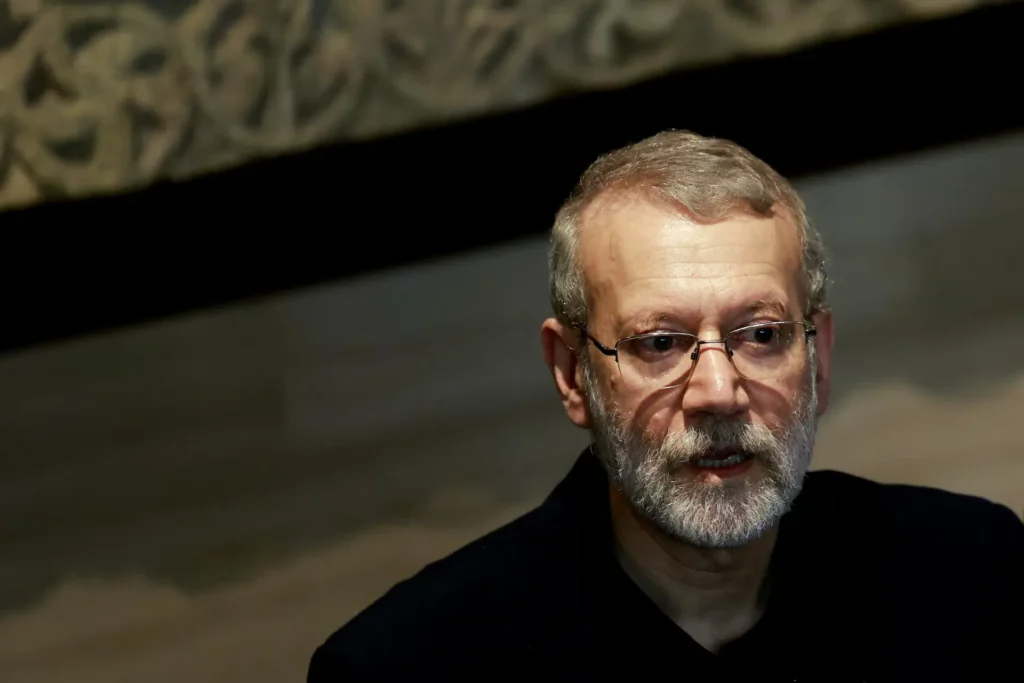
Israel said it has killed two of Iran’s most senior security figures, Ali Larijani and Gholamreza Soleimani, in a series of airstrikes near Tehran, marking a major escalation in the ongoing regional conflict.
Iranian authorities later confirmed the deaths, stating that Larijani was killed along with his son and bodyguards, while Soleimani, who led the paramilitary Basij force, also died in the strikes.
The Israeli operation follows the earlier killing of Iran’s Supreme Leader, Ayatollah Ali Khamenei, during the opening phase of joint US-Israeli strikes on February 28—an event that triggered a wider war across the Middle East.
Power vacuum deepens after Larijani’s death
According to the Israel Defense Forces (IDF), Larijani had emerged as a central figure in Iran’s leadership following Khamenei’s death, effectively coordinating military and strategic responses against Israel.
In a statement, Israeli Defence Minister Israel Katz said the operation targeted key figures linked to Iran’s military and political command structure.
Iran’s Supreme National Security Council confirmed Larijani’s death, describing him as a lifelong servant of the Islamic Republic.
Larijani, a former Revolutionary Guards commander and ex-parliament speaker, had long played a prominent role in Iran’s political and security apparatus, including serving as a nuclear negotiator and senior adviser to the leadership.
Basij commander killed amid crackdown role
The death of Soleimani is also seen as significant. The Basij, a volunteer militia under the control of the Islamic Revolutionary Guard Corps (IRGC), has been instrumental in suppressing domestic protests.
Israeli officials said Basij forces under Soleimani were heavily involved in internal crackdowns, particularly during recent waves of anti-government demonstrations.
Iranian state media confirmed his death, though provided limited operational details.
Conflict spreads across the region
The killings come as the conflict between Israel and Iran expands beyond direct strikes. Iran has launched missile and drone attacks targeting Israel and US-linked sites across the region, raising fears of a prolonged war.
The escalation has disrupted global energy markets, particularly through the strategic Strait of Hormuz, where attacks and production halts have pushed oil prices higher.
Gulf states have reported temporary shutdowns in oil production and exports amid security concerns.
Rising casualties and regional impact
Iranian officials say more than 1,300 people have been killed in Israeli and US strikes since the conflict began, including women and children. In Israel, authorities report at least 12 deaths from Iranian missile attacks.
The conflict has also had international repercussions. In the United Arab Emirates, debris from an intercepted missile reportedly killed a Pakistani national in Abu Dhabi.
With senior leadership figures eliminated and retaliatory attacks continuing, analysts warn that the conflict risks entering an even more volatile and unpredictable phase, with no immediate path to de-escalation.
