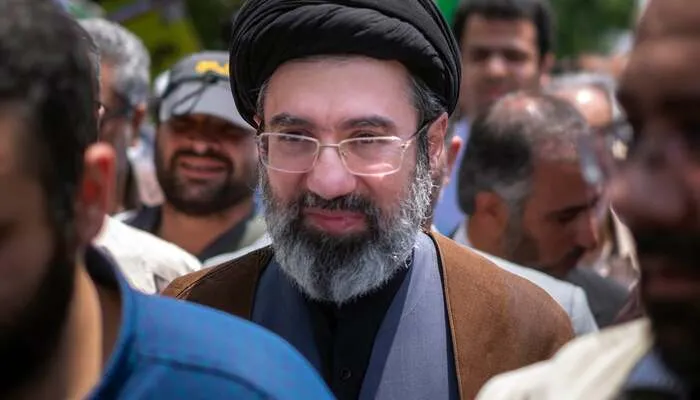
Mojtaba Khamenei, the son of the late Iranian supreme leader Ayatollah Ali Khamenei, has been officially named as Iran’s new supreme leader by the Assembly of Experts, following his father’s death in last week’s US-Israel airstrikes.
The 56-year-old cleric survived the recent US-Israel attacks that killed his 86-year-old father, Ayatollah Ali Khamenei, marking a historic leadership transition in Iran.
The Assembly of Experts, Iran’s top clerical council, confirmed the appointment shortly after midnight on Monday.
Mojtaba Khamenei has long been a senior figure in Iran’s political and security apparatus, with close ties to the elite Islamic Revolutionary Guard Corps (IRGC).
Known as his father’s “gatekeeper”, he played a key role in managing Iran’s security forces.
According to analysts, Mojtaba’s influence within the IRGC, particularly among younger officers, gives him substantial leverage across Iran’s domestic and foreign policy decisions.
He opposes reformist factions seeking engagement with the West and has consistently supported Iran’s nuclear program, which Tehran says is for civilian purposes only.
Born in 1969 in Mashhad, Iran, Mojtaba Khamenei served in the Iran-Iraq War and trained under conservative clerics in Qom, earning the rank of Hojjatoleslam.
He has never held a formal government post but has been active in loyalist rallies and clerical networks, maintaining a low public profile.
US Sanctions and International Reactions
Mojtaba was sanctioned by the US Treasury in 2019 for acting in an official capacity on behalf of his father and supporting the IRGC and Quds Force.
His appointment has drawn warnings from Israel, with officials stating that the new supreme leader and anyone involved in selecting him would remain targets of Israeli security operations.
The transition comes at a volatile time, as the US and Israel continue airstrikes across Iran, and Tehran retaliates with missile and drone attacks targeting regional allies and US forces.
Analysts suggest Mojtaba’s leadership could consolidate conservative control while facing domestic pressure from Iranians demanding greater freedoms.
Other contenders for Iran’s top post had included clerics Alireza Arafi, Mohsen Araki, and even Hassan Khomeini, grandson of the Islamic Republic’s founder. Mojtaba’s selection reflects the regime’s preference for continuity, conservative governance, and strong ties with the military elite.
Mojtaba Khamenei inherits the supreme leadership role with full authority over Iran’s state affairs, including foreign policy, military strategy, and the nuclear program, at a time of unprecedented regional tension and global scrutiny.
