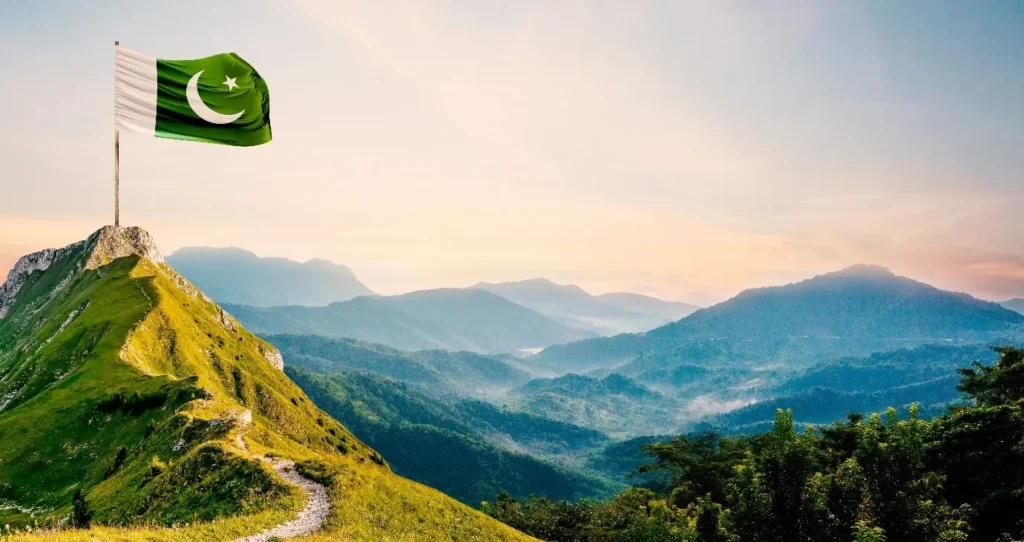
Not too long ago, the mountains of the Karakoram and the Hindu Kush were more than just a destination; they were a sanctuary. To reach these high valleys, one had to be a seeker, approaching the landscape with a quiet reverence for a world that was as resilient as it was fragile. Today, witnessing this geography through the eyes of a traveller, an operator, and a student of public policy, I am struck by a profound sense of urgency. While official reports celebrate a “tourism boom”, those of us on the ground are witnessing an ecological and cultural recession. We are currently trading our long-term natural capital for transient, short-term profits, and the cost of this exchange is becoming unbearable.
The most visible victim of this mismanagement is our frozen peaks. Pakistan is home to over 13,000 glaciers (with some estimates ranging between 7,000 and 13,032), containing the largest concentration of glacial ice on Earth outside the polar regions. These glaciers are primarily located in the northern Gilgit-Baltistan and Khyber Pakhtunkhwa regions, covering over 15,000 square kilometers and feeding the Indus River system. Yet, the data from recent years suggests a grim trajectory. In regions like Chitral and Gilgit-Baltistan, nearly a third of our glacial cover has vanished in just three decades. While global climate shifts are the primary drivers, our local footprint is acting as a dangerous catalyst.
When unregulated transport fleets and open-air waste burning release clouds of soot, that black carbon settles on the pristine white surface of the ice. On glaciers like Shisper or Ghulkin, the ice no longer reflects the sun; it absorbs it. This dark coating accelerates melting, leading to the devastating frequency of Glacial Lake Outburst Floods (GLOFs) that threaten downstream communities. As tour operators, every time we prioritize a cheaper, non-compliant vehicle over environmental standards, we are essentially participating in the slow destruction of the very wonders we sell. We have transitioned from being stewards of the mountains to being their unintended executioners.
The root of this crisis lies in the rise of a hollowed-out tourism industry. We are seeing a surge in “logistics broker” operators who understand the mechanics of booking a room but possess no comprehension of the “spirit of place”. Driven by the pursuit of social media engagement and viral aesthetics, they market the North as a shallow backdrop rather than a living, breathing ecosystem.
The consequences are most evident in the unplanned urbanization of Naran and Kaghan. What were once alpine retreats have been transformed into gridlocked concrete corridors, suffocated by plastic waste and noise pollution. These operators promote a “volume-over-value” model, packing travelers into buses for whistle-stop tours that leave the local environment depleted and the local community exhausted. This is not sustainable tourism; it is an extraction industry that treats our natural heritage as a resource to be mined until it is spent.
Our cultural fabric is suffering a similar erosion. In the Kalash Valley and the hamlets of Hunza, the “Aatish”, the true internal fire and dignity of the people, is being commodified. Because many operators fail to provide even basic cultural orientation, travellers often treat these ancient, resilient communities as spectacles for a lens. When we walk into private spaces or photograph sacred rituals without permission, we transform a proud host into a frustrated victim. We are eroding the traditional “Mehman” relationship, replacing it with a transactional voyeurism that strips our heritage of its sanctity.
The evidence of this failure is everywhere. At Fairy Meadows, ancient forests are being thinned to provide city-style comforts in a wilderness zone. At Lake Saif-ul-Malook, the legendary silence has been replaced by the roar of unregulated engines and the stench of neglect.
As someone who aspires to serve in the bureaucracy, I believe the solution requires a radical shift in our administrative mindset. We must move toward a “Value-Based Tourism” framework. First, we need stringent institutional regulation; if an operator lacks the literacy to explain the history and ecology of the Silk Road, they should not be licensed to lead others through it. Second, we must implement scientific “carrying capacity” limits. Not every meadow is meant for a hotel; some landscapes find their greatest value in remaining difficult to reach. Finally, as operators, we must reclaim our role as the bridge between the traveler and the terrain. We must educate our guests that they are entering a home, not a theme park.
If we continue to treat our mountains as disposable products, we will soon inherit a geography of silence and dry stone. The glaciers are weeping, not merely from the heat of the sun but from the weight of our collective apathy. We must decide now: will we be the generation that presided over the sale of the North’s soul or the one that had the courage to save it?
