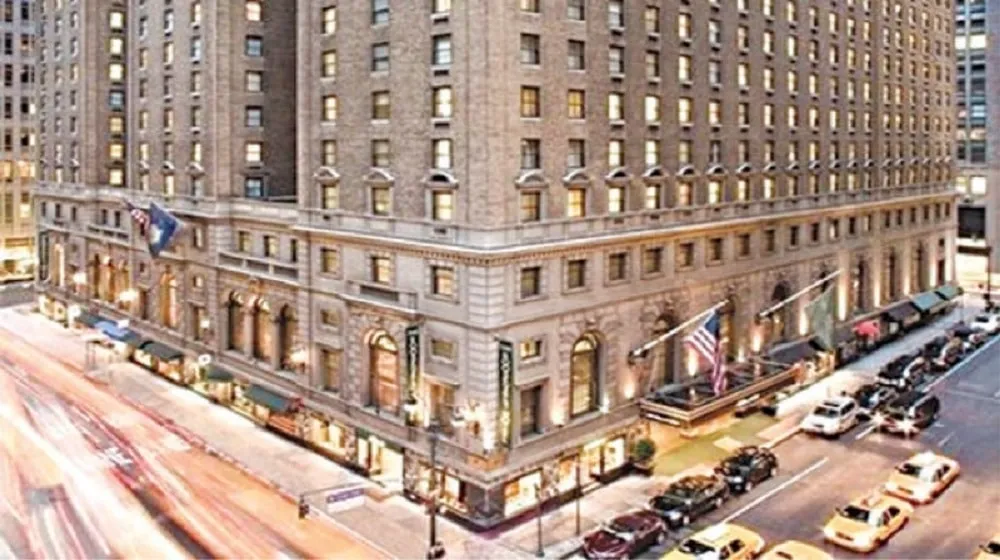
Pakistan is aiming to attract between $4 billion and $5 billion in joint investment to redevelop the iconic Roosevelt Hotel in New York, as the government moves closer to appointing a financial adviser to structure the high-profile transaction.
Speaking to reporters in Islamabad, Muhammad Ali, adviser to the prime minister on privatization, said the government expects to finalize the appointment of a financial adviser by early next month.
The adviser will be tasked with designing a comprehensive redevelopment and financing framework for the Manhattan-based property, one of Pakistan’s most valuable overseas assets.
Ali explained that Islamabad does not intend to sell the hotel outright. Instead, the government plans to retain ownership while partnering with an investor who would arrange financing and oversee the reconstruction of the property.
The goal, he said, is to ensure sustainable, long-term economic returns rather than a one-time asset sale.
“The focus is on generating enduring value for Pakistan, not divesting a high-value asset under short-term pressure,” Ali said.
He added that the final transaction structure, including investment mechanisms and timelines for financial closure, would be determined once the adviser completes its assessment.
When asked about the possibility of a memorandum of understanding with the administration of Donald Trump, Ali said any such engagement would depend on the redevelopment model recommended by the financial adviser.
The Roosevelt Hotel, owned by Pakistan International Airlines Investment Limited, has long been central to Islamabad’s efforts to monetise or redevelop state-owned assets.
Previous attempts have gained renewed urgency as Pakistan continues to face fiscal challenges and seeks innovative ways to unlock value from its international holdings.
Meanwhile, Deputy Prime Minister and Foreign Minister Ishaq Dar said Pakistan is reshaping its foreign policy through what he described as “tailored cooperation” with key global partners.
Addressing the same forum, Dar noted that relations with China have strengthened under the second phase of the China-Pakistan Economic Corridor (CPEC), while engagement with the United States is expanding across trade, technology, and investment sectors.
Dar also revealed that Pakistan is actively engaging both Washington and Tehran in an effort to ease rising tensions between the US and Iran. He said he has held several discussions with US Secretary of State Marco Rubio and Iran’s foreign minister, stressing the importance of diplomacy to prevent regional escalation.
At the Pakistan Governance Forum, Planning Minister Ahsan Iqbal highlighted the country’s long-term economic crossroads.
He said Pakistan could reach a $600 billion economy by 2035 if it continues on its current trajectory, but warned that accelerated reforms, stronger governance, and policy consistency would be required to achieve the more ambitious $1 trillion economy target within the same timeframe.
