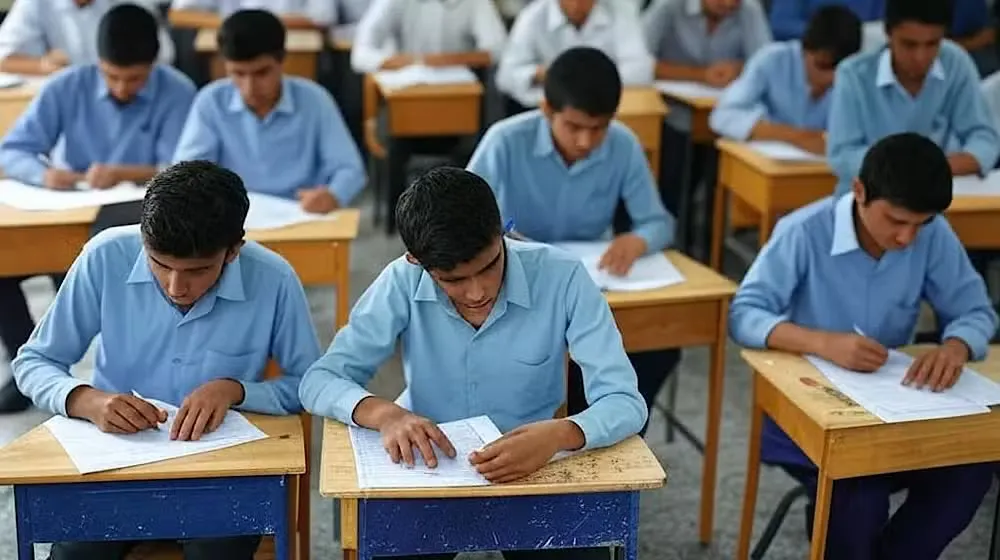
The Sindh government has officially ended the traditional marks-based evaluation system and approved a new grading-based assessment framework for matriculation and intermediate board examinations across the province.
The decision aims to modernize the education system and bring student assessments in line with international academic standards.
New Policy Replaces Numerical Marks with Grades
Sindh Minister for Universities and Boards Ismail Rahoo announced that students will now be evaluated through grades instead of numerical marks. However, raw marks will still be used internally to calculate grades.
Under the new policy:
Students scoring below 40% will be declared failed
Grades will reflect performance bands rather than exact percentages
The system is designed to reduce unhealthy competition and pressure
The minister said the reform will promote fairer and more transparent academic evaluation.
Phased Implementation Starting in 2026
The grading system will be introduced gradually to ensure smooth implementation across educational boards.
Implementation Timeline
2026: Class 9 and Class 11 annual examinations
2027: Class 10 and Class 12 annual examinations
This phased rollout will allow boards, schools, and teachers to adjust academic planning and assessment methods accordingly.
Official Grading Scale Announced
The Sindh government has approved the following grade brackets:
A++: 96% – 100%
A+: 91% – 95%
A: 86% – 90%
B++: 81% – 85%
B+: 76% – 80%
B: 71% – 75%
C+: 61% – 70%
C: 51% – 60%
D (Emerging): 40% – 50%
Fail: Below 40%
Officials said the grading terminology reflects competency levels rather than just score differences.
Objective: Align Sindh Education with Global Standards
Ismail Rahoo stated that the reform is part of a broader effort to improve academic quality, assessment credibility, and international compatibility of Sindh’s education boards.
He added that grading systems are widely used across developed education systems and help students focus on learning outcomes rather than just numerical rankings.
Impact on Students and Colleges
Education experts say the move could:
Reduce stress linked to narrow score margins
Improve compatibility with foreign education systems
Shift focus toward conceptual understanding
However, successful implementation will depend on teacher training, updated exam design, and transparent moderation systems across all boards in Sindh.
