US President Donald Trump has renewed controversial claims about acquiring Greenland, with the White House confirming that all options remain under consideration, including military force.
While officials stress that economic and diplomatic avenues are also being explored, the idea of one NATO member using force against another has alarmed defense analysts and raised fears of a serious rupture within the NATO alliance.
Trump has repeatedly described Greenland as vital to US national security, citing strategic competition in the Arctic and alleging, without presenting evidence, increased Russian and Chinese maritime activity near the island. Greenland is an autonomous territory of Denmark, which is a long-standing US ally and NATO partner.
Strategic Importance of Greenland in Arctic Security
Greenland occupies a critical position between North America and Europe and plays a growing role in Arctic geopolitics, missile defense systems, and satellite tracking. The United States already operates the Pituffik Space Base in northwestern Greenland, which has been active since World War II and remains central to early-warning radar and space surveillance.
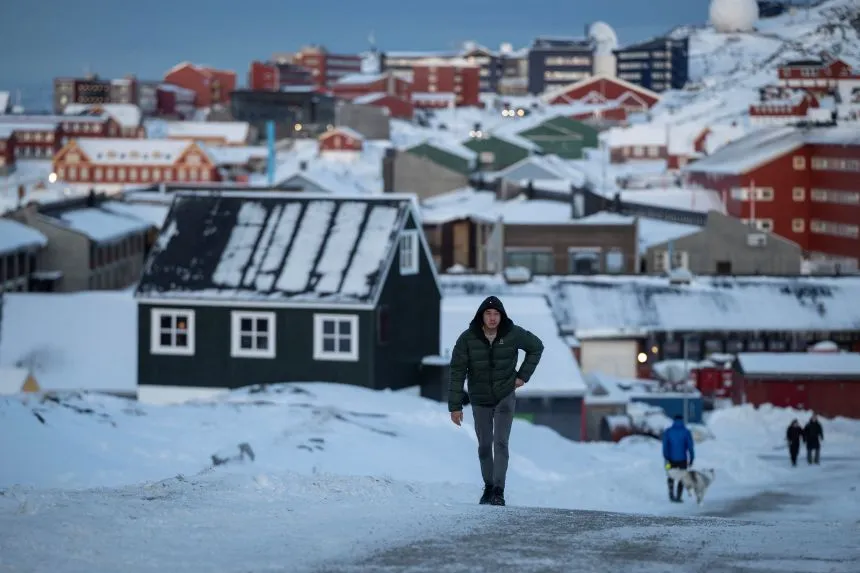
Although Greenland is the world’s largest island, its population is only about 58,000, with nearly one-third living in the capital, Nuuk. The vast majority of settlements are concentrated along the western coast, while large regions of the interior remain uninhabited.
Denmark is responsible for Greenland’s defense, but its military presence is limited. Large areas are patrolled mainly by the Sirius Patrol, a specialized Danish unit operating with dog sleds in extreme Arctic conditions.
Though, Denmark has increased defense spending in Greenland and the North Atlantic over the past year in response to rising security concerns.
Military Action Seen as Technically Possible but Politically Catastrophic
Defense experts say a rapid US military operation to seize Greenland would be technically feasible due to America’s overwhelming airlift and naval capacity. Analysts suggest that Arctic-trained units, including brigades from the Alaska-based 11th Airborne Division, could be deployed quickly using airborne and helicopter-supported operations.
Despite this, former US officials and NATO security experts describe military action as highly unlikely because of its legal and diplomatic consequences. Any attack on Greenland would violate international law, undermine NATO’s collective defense framework, and potentially trigger the most severe crisis in the alliance’s history.
Former Pentagon and intelligence officials argue that such a move would face immediate opposition from Congress, where lawmakers could invoke the War Powers Act to block unauthorized military engagement. The political backlash at home and abroad would likely outweigh any perceived strategic gain.
Buying Greenland Faces Legal and Political Barriers
The idea of purchasing Greenland has also resurfaced as a potential option, with US officials reportedly signaling that diplomatic acquisition would be preferred over force. However, both the Danish government and Greenland’s leadership have publicly stated that Greenland is not for sale.
Any legal transfer of sovereignty would require approval by the US Congress, ratification by two-thirds of the Senate, consent from Denmark, and participation from Greenland’s own elected authorities under international self-determination principles. The European Union would also likely play a role in reviewing any such agreement.
Experts say that even if negotiations were theoretically possible, the financial cost could reach into the hundreds of billions, a figure that could face resistance among US voters, particularly within Trump’s political base focused on domestic priorities and reduced foreign spending.
Influence Campaigns and Economic Incentives Viewed as More Likely Strategy
While military action and territorial purchase appear improbable, analysts believe the United States could intensify diplomatic and economic engagement to encourage closer political alignment with Greenland. This could involve infrastructure investment, development funding, and expanded trade opportunities aimed at increasing US influence in the region.
Opinion polls show that many Greenlanders favor greater independence from Denmark, but there is little support for becoming part of the United States. Intelligence reports suggest that Washington has increased monitoring of Greenland’s independence movement to identify political figures who might favor stronger ties with the US.
Some experts suggest that the US could pursue arrangements similar to existing Compact of Free Association agreements with Pacific nations such as Palau and Micronesia, which grant Washington defense access in exchange for economic support and migration privileges.
However, such partnerships would not provide the US with ownership of Greenland’s vast mineral resources, which are becoming increasingly valuable as Arctic ice melts.
Mineral Wealth and Climate Change Add to Geopolitical Tensions
Greenland is believed to hold significant reserves of rare earth minerals, uranium, and strategic metals, which are critical for renewable energy technologies, defense manufacturing, and advanced electronics. As climate change reduces ice coverage, access to these resources is becoming more feasible, intensifying international competition in the Arctic.
This economic dimension adds to Greenland’s strategic importance, particularly as global powers race to secure supply chains for future technologies. Though, Greenland’s political leadership has remained firm in rejecting external control and has prioritized environmental protection alongside economic development.
Future Outlook: Independence More Likely Than US Control
Danish security analysts argue that any attempt to bring Greenland under US control without local consent would fail politically and socially. Greenland’s political parties are focused on long-term autonomy and economic self-sufficiency rather than integration into another nation.
Experts note that political timelines differ sharply between Washington and Nuuk. While US administrations change every four years, Greenland’s strategic planning is framed around generations. Many analysts believe Greenland is more likely to deepen cooperation with Europe or re-engage with the European Union than shift toward US sovereignty.
As geopolitical rivalry intensifies in the Arctic, Greenland will remain a central strategic asset. However, international law, local political will, and alliance stability continue to place firm limits on how far any major power can go in attempting to control the island.
