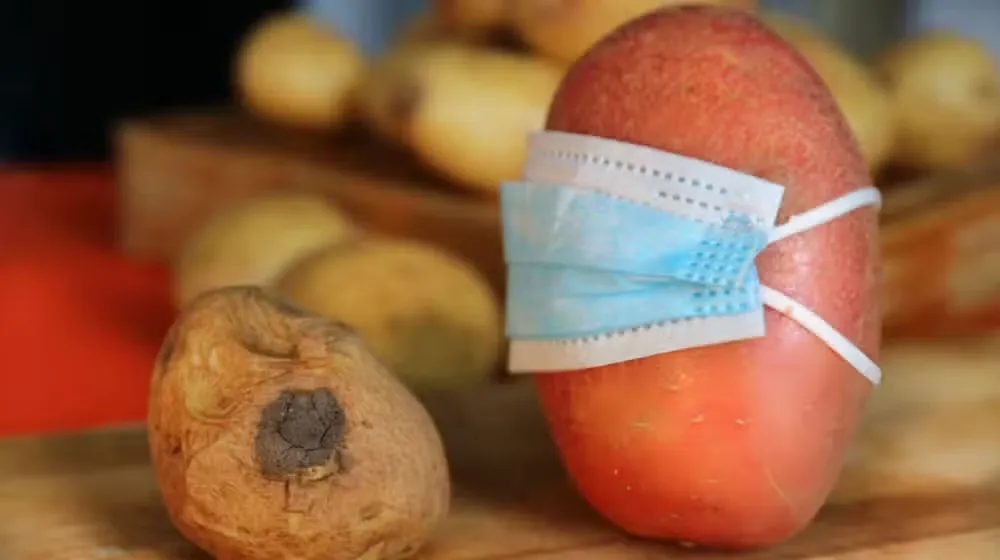
Researchers at the Potato Research Institute (PRI) in Sahiwal are developing new potato varieties designed to withstand smog and fog, as worsening air pollution and climate change continue to impact crop productivity in Punjab.
According to the Punjab Agriculture Department, potatoes are grown on nearly one million acres across the province, producing around nine million tons annually. However, fluctuating weather patterns and increasing smog levels have begun to significantly reduce yields.
Speaking on the issue, PRI Director Dr. Syed Ijazul Hassan said smog and frost pose serious threats to potato crops.
“Smog disrupts photosynthesis, increases vulnerability to diseases such as blight, and ultimately affects tuber quality,” he explained, adding that the institute is currently testing several smog-tolerant potato lines to counter declining production.
Also read: Why anti-smog guns failed in Punjab?
He noted that rising temperatures, irregular rainfall, and water shortages have further compounded the problem. In addition to smog-related stress, potato crops in Punjab are also affected by diseases such as Potato Leafroll Virus (PLRV), Potato Virus Y (PVY), mosaic virus, early blight, brown leaf spot, Rhizoctonia, common scab, and black leg.
Dr. Hassan said PRI has already introduced 12 high-yield, fog-resistant potato varieties and has now shifted its focus toward developing lines that can tolerate prolonged smog exposure. Locally bred varieties include PRI-Red, Ruby, Sadaf, Sahiwal Red, Sahiwal White, Ravi, Punjab, Sutlej, Kashmir, Sialkot Red, Ijaz-22, and Cosmo.
Among these, Ijaz-22 has shown strong resistance to smog under Punjab’s growing conditions. Despite this progress, farmers continue to rely heavily on imported seed varieties, such as Constance, Kuroda, Rudolph, Fabula, Franceline, Frisia, Desiree, and Diamant, due to the limited availability of certified local seed in large quantities.
This year, PRI produced around 60 tons of potato seed, but only 4.55 tons were distributed to farmers. Dr Hassan said the shortage of quality local seed remains a major challenge, increasing production costs and dependence on expensive imports.
He stressed that adopting integrated pest management and sustainable farming practices could help reduce the negative impact of smog on crops.
Also read: Inhaler prices doubles amid smog
Meanwhile, Chaudhary Maqsood Ahmad Jatt, Vice Chairman of the Potato Growers Cooperative Society, said most seed potatoes are imported from the Netherlands, making cultivation increasingly costly.
He also pointed out that the suspension of trade with Afghanistan has hurt potato exports, leading to oversupply in domestic markets. “Cold storage facilities are full, while fresh potatoes have already entered the market,” he said.
Jatt added that Pakistan has the potential to export potatoes to at least 37 countries, with China emerging as a key market between January and April. He emphasized the need for value addition, suggesting that exporting potatoes in processed forms such as starch, powder, and chips could help control surplus, stabilize prices, and reduce losses for farmers.
