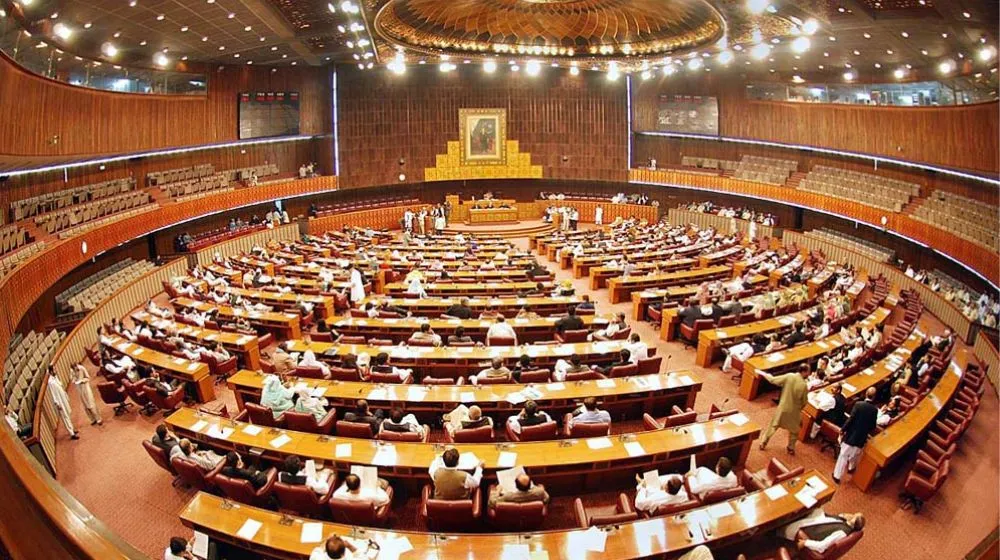
The National Assembly on Thursday passed the Domestic Violence (Prevention and Protection) Bill 2025, introducing a comprehensive legal framework to curb domestic abuse in the Islamabad Capital Territory.
The bill, moved by PPP MNA Sharmila Farooqui, seeks to provide protection, relief, and rehabilitation for women, men, children, transgender persons, and other vulnerable individuals facing domestic violence. It will become law after approval by the Senate.
Important Features of the Bill
The legislation defines domestic violence as physical, emotional, psychological, sexual, or economic abuse within a domestic relationship. It sets out preventive measures, access to legal support, and strict penalties for offenders.
The bill cites Pakistan Bureau of Statistics data showing that one in three women in Pakistan suffers domestic abuse in her lifetime.
Punishments and Legal Procedure
- Offences not covered under the Penal Code will carry six months to three years’ imprisonment and a fine of up to Rs100,000.
- Failure to pay the fine may result in an additional three months’ imprisonment.
- Anyone who aids or abets domestic violence will face the same punishment.
Also read: ‘Rick and Morty’ actor faces trial on domestic violence charges
Courts must:
- Fix the first hearing within seven days,
- Decide the petition within 90 days,
- Issue interim orders at any stage if necessary.
The bill allows the aggrieved person to continue living in the shared household or move to a shelter home.
Protection Orders
If the court finds prima facie evidence, it may:
- Restrict the respondent from contacting or approaching the victim,
- Order the respondent to leave the house in severe cases,
- Prevent the respondent from disturbing the victim’s possession of the home,
- Require a security bond to deter further violence.
Protection Committee
The legislation also proposes forming a Protection Committee, comprising:
- A representative from the Family Protection and Rehabilitation Centre,
- A representative of the National Commission on the Status of Women,
- A doctor, psychologist, or psychosocial worker,
- A law officer,
- A police officer (preferably female),
- A Protection Officer serving as secretary.
Opposition Reaction
JUI-F lawmakers criticized the “hasty” passage of the bill, but the National Assembly approved it along with four other legislative proposals.
