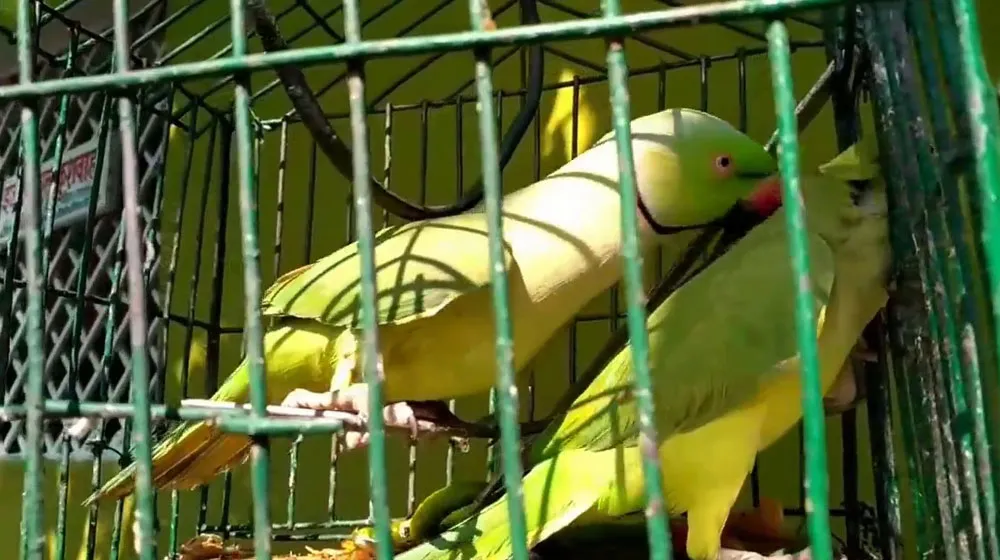
Punjab announces parrots license registration fee.
The Punjab Wildlife and Parks Department has launched a licensing system that allows citizens across the province to legally keep certain species of parakeets native to Pakistan. Until recently, the possession of these local parakeets—such as the rose-ringed variety—was strictly prohibited.
Under the new framework, the department has approved the legal captivity of four parakeet species through licensing and registration. These include:
- Rose-ringed parakeet (Psittacula krameri)
- Alexandrine parakeet (Psittacula eupatria)
- Plum-headed parakeet (Psittacula cyanocephala)
- Grey-headed parakeet (Psittacula finschii)
The regulation does not apply to exotic parrots such as African greys, macaws, or cockatiels, which remain outside this licensing system.
Fee Structure and Categories
For individuals keeping parakeets as pets, the license fee has been fixed at Rs 1,000 per bird per year. Breeders, however, will fall into two categories:
- Small cottage breeders (with farms ranging from 3 marlas to 1 kanal): Rs30,000 annually
- Large cottage breeders (with land over 1 kanal): Rs50,000 annually
Also read: Price of legal markhor hunt reaches record $370,000
All licensed or registered birds will be ringed with a unique identification code provided by the department.
Officials have highlighted that wild populations of these species remain fully protected under Schedule 3 of the Punjab Wildlife Act. Capturing or trapping parakeets from their natural habitats is strictly prohibited.
The department has already notified the possession fee, while a more detailed implementation mechanism will be released soon.
Parakeets important for ecosystem
Parakeets are considered an important part of the ecosystem, playing a vital role in biodiversity. Their presence in the wild reflects a healthy ecological balance.
Globally, there are over 400 species of parrots, with several exotic varieties—such as the African grey and macaw—remaining highly popular among bird enthusiasts.
