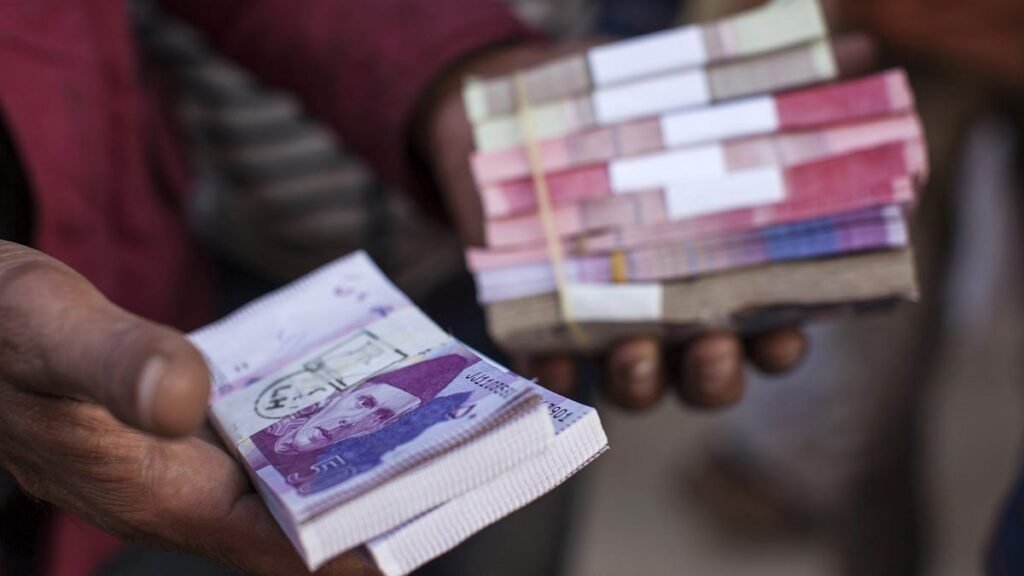
FBR denies slapping 20.5% Tax on cash transactions of Rs. 200,000.
The FBR Member has strongly rejected the claim of a 20.5 percent tax on cash sales transactions above Rs. 200,000, stating that such reports are incorrect and no such tax has been imposed.
The clarification comes amid confusion following the introduction of a new amendment in the Finance Bill 2025, which disallows 50 percent of the claimed expenditure related to any sale where payment exceeding Rs. 200,000 is received in cash or through any mode other than a banking channel or digital means, per single invoice.
Federal Board of Revenue (FBR) Chairman Rashid Mahmood Langrial said that the government cannot withdraw the new legislation, disallowing 50 percent of expenditure attributable to cash sales exceeding Rs. 200,000 per transaction.
Also read: FBR unfreezes PIA accounts
He told the Senate Standing Committee on Finance that the law has been approved by the National Assembly Standing Committee on Finance and could only be changed in the next Finance Bill (2026-27).
We have an understanding that the law has also been cleared by the Standing Committee on Finance. The legislators have approved the law and not the FBR, Langrial clarified.
PPP against this law
Senator Sherry Rehman stated that the PPP party is against this law, which is a draconian law.
On the conclusion of the committee, a senior member of the FBR told ProPakistani that the FBR has not declared cash transactions above Rs. 200,000 as high risk.
It is only a documentation measure on the income tax side to encourage transactions through banking channels, the FBR Member added.
Ashfaq Tola, a Karachi-based tax expert, stated that various sections have been introduced or amended by the Finance Act 2025, which are affecting businesses.
Disallowance of Business Expenditure – Section 21(s)
The Finance Act, 2025 has inserted a new clause(s) in Section 21 of the Income Tax Ordinance, 2001, which pertains to “Deductions Not Allowed”.
The newly inserted clause reads as follows:
Fifty percent of the expenditure claimed in respect of a sale where the taxpayer received payment exceeding two hundred thousand rupees otherwise than through a banking channel or digital means against a single invoice containing one or more than one transaction of supply of goods or provision of services.
This amendment disallows 50% of the claimed expenditure related to any sale where payment exceeding Rs. 200,000 is received in cash or through any mode other than a banking channel or digital means, in relation to a single invoice, regardless of whether it includes one or multiple transactions for the supply of goods or services.
He said that it is understood the disallowance will apply to expenditure related to sales, such as freight, carriage, commission, and other distribution-related expenses.
Example 1 (Below Threshold – No Disallowance):
A taxpayer sells goods worth Rs. 199,999 through a single invoice and receives the amount in cash. Since the payment does not exceed Rs. 200,000, no disallowance will apply.
Example 2 (Above Threshold – Disallowance Applies):
A taxpayer makes a sale of goods amounting to Rs. 200,001 through a single invoice and receives the payment in cash. Since the transaction exceeds the prescribed threshold of Rs. 200,000 and the payment is not made through a banking channel or digital means, 50% of the claimed expenditure related to such sale shall be disallowed under the relevant provision.
Also read: PM praises FBR over 35% growth in November revenues
For instance, if the taxpayer has claimed Rs. 30,000 as expenditure directly attributable to such a sale, Rs. 15,000 shall be disallowed.
It is important to note, however, that there is no prescribed method, ratio, or formula under the law to determine what portion of expenditure is “directly attributable to such sale”.
This creates significant ambiguity, as the FBR has no mechanism to assess which amount of expenditure pertains specifically to sales made through invoices exceeding Rs. 200,000 with cash payments.
Consequently, due to such ambiguity, taxpayers may argue that a low amount of directly attributable expenditure has been made for these sales to mitigate the impact of disallowance, which could defeat the entire purpose of this amendment and lead to a revenue loss for the exchequer.
Moreover, individuals are under no statutory obligation to have their accounts audited by an auditor.
Likewise, AOPs falling below the prescribed turnover threshold of Rs. 300 million are not legally required to undergo an audit. This may lead to significant practical challenges in certifying expenditure attributable to sales.
