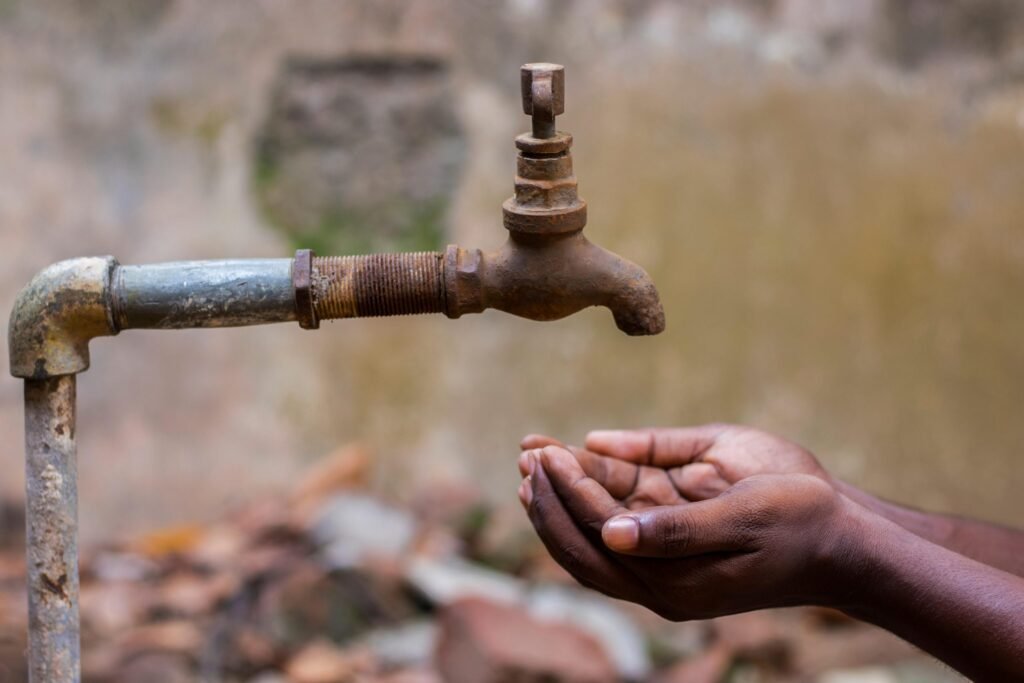
Khanpur Dam holds just 25 days’ worth of usable water.
As June’s heatwave grips Pakistan, the country faces a huge water crisis that threatens both agriculture and drinking supplies.
With temperatures soaring and rainfall scarce, water levels in key reservoirs have plummeted.
Khanpur Dam facing water shortage
The Khanpur Dam, a crucial source of irrigation and drinking water for Khyber Pakhtunkhwa and Punjab, is facing a critical water shortage, with only 9.67 feet of usable water remaining above its dead level.
Recent reports indicate that the dam’s water level has dropped from 1982 feet to 1919 feet, dangerously close to the dead level of 1910 feet.
Currently, the dam holds just 25 days’ worth of usable water.
The irrigation supply to Punjab and Khyber Pakhtunkhwa has already been halted, resulting in dried-up canals and parched orchards in the Khanpur area.
The Capital Development Authority (CDA) of Islamabad and Rawalpindi is receiving a reduced supply of 50 cusecs, which is expected to dwindle to zero if the inflow, currently at a mere 25 cusecs, does not improve.
The dam is releasing 103 cusecs of water, creating a net deficit that is rapidly depleting its critically low reserves.
Water experts warn that without timely rains, a severe drinking water shortage could engulf Rawalpindi and Islamabad, impacting millions.
“This is not just an environmental concern. This is an emergency,” stated a senior water management official.
The agricultural economy in the Khanpur region is already suffering, with fruit orchards and crops at risk of irreparable damage from the ongoing drought.
