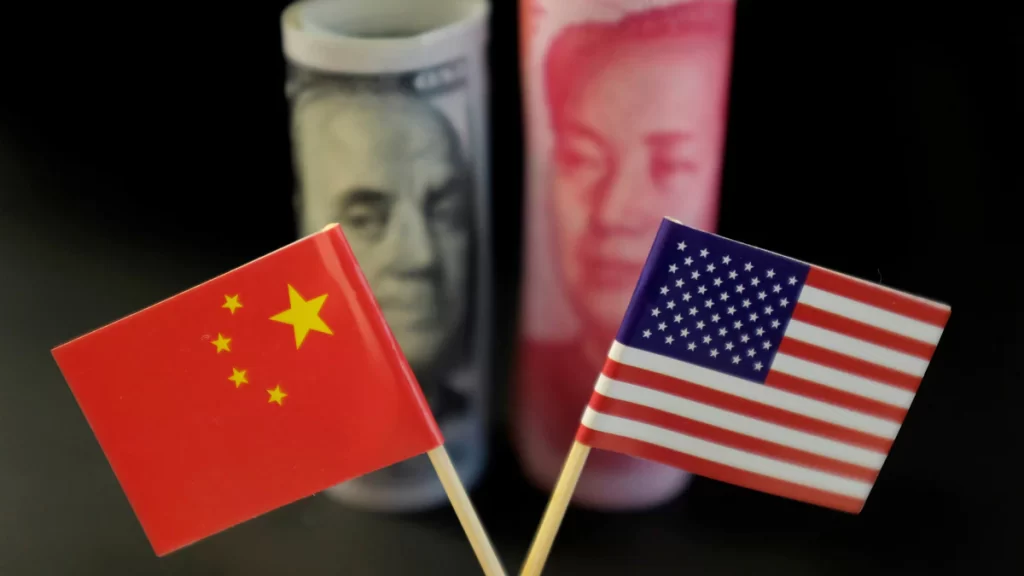
Just when it seemed the storm had passed, the clouds began to gather once more. The U.S.-China trade war that shook the foundations of global commerce back in 2018 has returned—and this time, it’s more intense than ever. Adding fuel to the fire, Europe has now entered the fray, turning what was once a bilateral struggle into a full-blown, three-way confrontation with far-reaching consequences. The origin of the conflict dates back several years when the United States accused China of unfair trade practices, resulting in a volley of hefty tariffs on Chinese exports. This tit-for-tat exchange triggered a prolonged trade standoff, marked by uncertainty and economic tension across global markets.
Although the situation appeared to stabilize through negotiations and tentative deals, the year 2025 has ushered in a fresh wave of friction. Tensions have escalated sharply due to stricter American restrictions on high-tech exports, China’s resolute defiance, and Europe’s growing frustration with cheap Chinese imports undermining its domestic industries. With the world’s major economies locking horns, the ripple effects are being felt everywhere, shaking investor confidence, disrupting global markets, and putting smaller economies in a tight spot.
Surprisingly, the unfolding trade conflict may present Pakistan with a unique opening. As U.S. imports from China dwindle under the weight of tariffs, American companies are actively scouting for alternative trade partners. Positioned at a strategic geographic crossroads and offering cost-competitive manufacturing, Pakistan stands out as a viable option for trade diversification. Additionally, China, facing increased barriers in Western markets, may redirect its investment interests toward more receptive economies. With a longstanding bilateral relationship and deep-rooted economic cooperation, Pakistan could become a preferred destination for Chinese capital and exports. This could result in a surge of affordable Chinese goods, such as electronics, industrial machinery, and raw materials, into the local market, potentially lowering costs for businesses and consumers.
Furthermore, Pakistani exporters have an opportunity to tap into markets that are actively seeking alternatives to Chinese suppliers. Sectors like textiles, leather products, and surgical instruments—already recognized internationally—could see increased demand from Western buyers looking to diversify supply chains. In this scenario, Pakistan may find itself in a favorable position to grow its export base and expand its footprint in global trade, positioning itself as an agile and valuable player in a fragmented commercial world.
However, the situation is far from risk-free. Global supply chains are already under immense strain, and Pakistan’s industries, many of which depend on imported components and raw materials, could be vulnerable to disruptions. Sectors like textiles and electronics may experience delays and cost overruns, making it difficult to meet international orders efficiently. Moreover, tighter trade regulations introduced by the U.S. and Europe may add layers of complexity for Pakistani exporters. Compliance with higher quality standards, additional documentation, and potential tariff barriers could increase operational costs, placing small and medium enterprises under pressure and potentially diminishing their competitiveness. Another pressing concern is the broader economic slowdown that often accompanies global trade conflicts.
Reduced consumer demand in major markets could cause export orders to dry up, weakening the external sector at a time when Pakistan needs steady foreign exchange inflows. Investor sentiment might also wane, with foreign direct investment retreating in response to global instability, further constraining economic growth. In essence, while new opportunities may emerge, the accompanying challenges could be equally significant. Navigating this uncertain landscape will require a measured and strategic approach rooted in resilience and preparedness.
To truly benefit from the shifting global dynamics, Pakistan must adopt a proactive and calculated response. Strengthening domestic supply chains should be a priority. Upgrading infrastructure, streamlining customs procedures, and bolstering local industries to reduce dependence on foreign inputs will be critical in enhancing resilience and reliability. Expanding trade partnerships beyond traditional allies must also form a core part of the strategy. Regions such as Africa, Central Asia, and Southeast Asia offer promising avenues for exports, investment, and economic collaboration.
Diversifying markets not only reduces dependency but also mitigates the impact of regional trade disruptions. Equally important is maintaining diplomatic agility. Aligning too closely with one global power could compromise relationships with others. A balanced foreign policy that encourages economic cooperation with all sides, without getting entangled in their rivalries, will be essential. Careful diplomacy and smart trade negotiations could allow Pakistan to walk the tightrope and emerge as a reliable partner to multiple players in the global economy, thereby securing its place in the new economic order.
While the current trade war presents serious risks, it also offers a rare chance for countries like Pakistan to carve out a more prominent role in international trade. Success will depend on readiness, adaptability, and the ability to capitalize on shifting trends without becoming entangled in the geopolitical web. Opportunity may be knocking louder than ever, but whether it becomes a stepping stone to economic growth or a pitfall of missed chances hinges on the choices made today. For Pakistan, the moment to act wisely has arrived—and the world is watching.
The views expressed in this article are the author’s own and do not necessarily reflect The Asian Mirror’s editorial stance.
