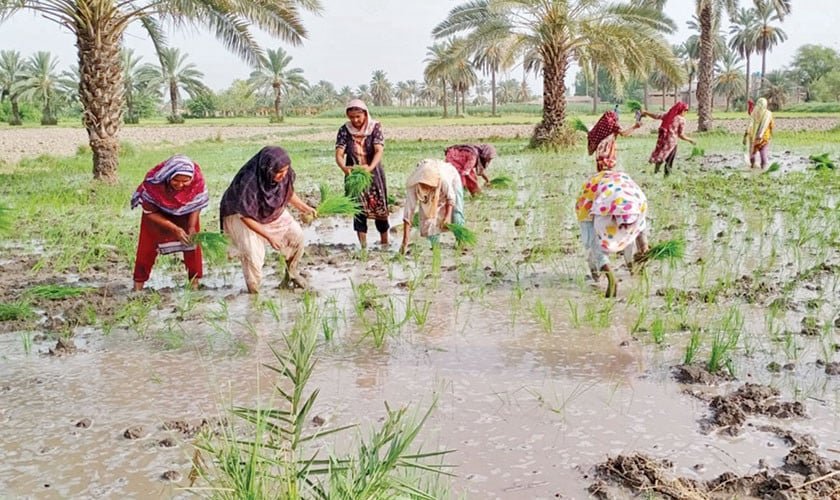
In many villages, particularly in developing nations, the image of women working in fields or industries is commonplace. These women, many of whom come from disadvantaged areas, confront structural challenges such as a lack of education, healthcare, and economic prospects. This lack of access frequently forces people into low-wage, precarious, and physically demanding professions. What is frequently concealed from everybody’s awareness is the horrible exploitation they face, as well as the incredible resilience they display.
Meet Saira, a 30-year-old lady from the little town of Khurrianwala, nestled in the centre of Faisalabad, one of Pakistan’s most important manufacturing hubs. Saira’s day starts before dawn. She gets up at 5 a.m. to prepare meals for her partner and four kids. Saira left her modest residence at 7 a.m. and travelled to a neighbouring textile plant, where she worked for twelve hours a day sewing garments for some of the world’s most well-known companies.
Although the hard labour and long hours, her pay are pitiful—barely enough to meet her family’s basic requirements. Saira gets no financial assistance, lacks health coverage, and has no say in policies that influence her life. This is what happens for many women, including Saira, on Faisalabad’s rural margins. These women work primarily for their families but also for the worldwide financial system, which feeds on their low-wage, unrecognised labour.
Saira’s history isn’t unusual. Women in Faisalabad, like those in many rural communities throughout Pakistan, are trapped in an endless supply of inexpensive labour, since they are anticipated to endure for extended periods for inadequate wages and with few opportunities for progress. Most of these women work in farming, textile production, or producing goods, where the job is extremely hard, and the pay is insufficient to raise their level of life.
But why are women, particularly in rural places like Khurrianwala, generally limited to low-wage jobs? The explanation is deep-rooted gender discrimination, which exists in many regions of the world. In rural areas, males are historically seen as the major breadwinners, while women are expected to do household responsibilities. Women keep on adding to family income, despite the fact that their job is underestimated, whether or not in the professions, industries, or at home (UNICEF, 2020).
In Faisalabad’s textile factories, the situation is similarly exploitative. Women are often hired to perform repetitive tasks like stitching or packaging. While the work is physically demanding, the pay is insufficient to meet even the basic needs of their families. Employers often prefer hiring women because they are perceived as more compliant and easier to control, and they are typically paid less than their male counterparts for the same work (Ghosh & Chandrasekhar, 2013).
The exploitation of rural women like Saira is not confined to the borders of Pakistan. It is part of a global economic system that thrives on cheap labour. Companies looking to cut costs often outsource production to countries like Pakistan, where the workforce is cheap and labour laws are less stringent (Kabeer, 2005).
The scenario is just as unethical in the textile mills of Faisalabad. Women are frequently employed to carry out monotonous jobs like repackaging or embroidery. Even though the work is strenuous, the remuneration is not enough to cover their household’s basic expenses. While women are generally paid less than men for doing the same task and are seen as more obedient and controllable, employers frequently favour hiring them.
Being used as cheap labour has a devastating physical and psychological impact. The repetitious and mentally taxing nature of their jobs causes muscle injuries, back discomfort, and joint disorders in many women like Saira. Fatigue, dehydration, and occasionally severe heatstroke are caused by working endless hours amid hot, cramped workplaces or in the blazing sun on agricultural land.
Furthermore, because of overwork, unstable finances, and limited access to quality treatment, these women frequently suffer from mental health conditions such as anxiety, depressive disorders, and stress. Women frequently avoid seeking medical attention for their illnesses of the body or mind in rural regions like Khurrianwala because there are insufficient hospitals, which exacerbates their health issues.
Education is the first step in ending the vicious process of victimization. Opportunities for learning and development that can lead to better prospects must be available to women like Saira. Education gives women the confidence to question the gender norms that keep them employed in low-paying occupations and gives them the information and abilities they need to pursue higher-paying careers.
These initiatives not only give women the means to bargain for improved compensation and conditions of employment, but they also empower them to actively participate in their local economies and confront the inequitable structures that sustain their mistreatment.
In conclusion, it’s time for a change. Saira and other rural women are being exploited; this is a systematic problem that needs immediate attention. Policies that guarantee rural women better salaries, working conditions, and access to healthcare and education must be developed in collaboration with governments, corporations, and civil society. Women like Saira, who put forth a lot of effort to provide for their family, shouldn’t be viewed as disposable, low-cost labor. They ought to be rewarded for their efforts and given the chance to prosper.
It’s time to make sure that rural female employment is no longer concealed or underappreciated in cities like Faisalabad. Their fight cannot continue to benefit the world economy. Justice, respect, and proper reward must be accorded to their fortitude, tenacity, and diligence.
