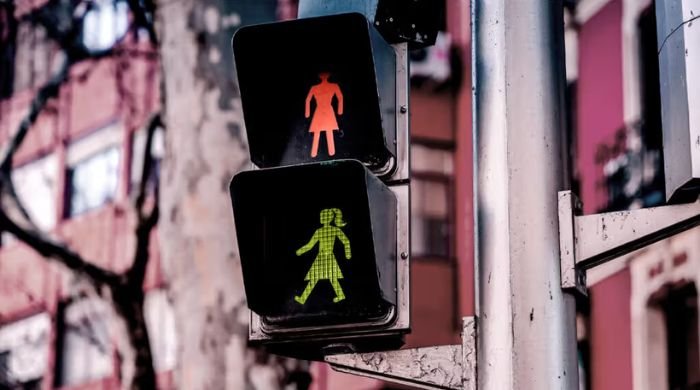
Gender stereotypes play a vital role in shaping career choices and opportunities in Pakistan. Traditional societal norms have created these stereotypes, deeply influencing individuals’ aspirations and professional pathways. Boys and girls are socialised early to fit into these defined roles, which confines them to limited educational and career opportunities. Boys are mostly encouraged to pursue professions in science, engineering, or business because those fields are perceived as domains of leadership and problem-solving. Conversely, girls are often directed toward teaching, healthcare, and other caregiving professions, mirroring societal expectations of nurturing and compliance.
The stereotypes ingrained in students are perpetuated by the education system in Pakistan, which indirectly influences the educational trajectories of new students. As a result, boys typically become more dominant in fields such as science and mathematics, while girls are often encouraged to pursue more traditional subjects that align with societal gender roles assigned to them. Such influences create poor conditions and limit young women’s job opportunities, resulting in uneven distributions in both professional and commercial sectors.
The effects of gender stereotypes are evident in the labour market. Women are under-represented in high-paying and leadership-intensive sectors such as technology, construction, and politics. Male-dominated fields continue to marginalise women not only through systemic hiring biases but also through workplace cultures that discourage women’s participation. Even in traditionally female-orientated sectors such as education and healthcare, women often face barriers such as pay inequities and limited opportunities for advancement.
Societal expectations increase the problem, particularly in rural and semi-urban areas of Pakistan. Cultural modesty and family honour keep women from moving around and from professions that require communication with male colleagues or travel. These restrictions discourage many women from taking up careers outside their areas, hence reducing their economic contributions and limiting their professional development.
Family dynamics are one way in which such stereotypes are upheld. In Pakistan, for example, women carry the heaviest domestic burdens regardless of whether they work or not outside their homes. The two loads compel many women to continue working part-time or join less stressful jobs that often make them delay their professions. In contrast, men have to handle professional and domestic roles; hardly often are career opportunities surpassed by gender-based inequalities.
Many of these biases in the workplace against women usually have very profound effects. Commitment to work and leadership among women are often in question when a woman gets married or has children. These prejudices usually reflect hiring, promotions, and available leadership opportunities, making the environment very difficult for a woman to break the glass ceiling. A lack of visible female role models in leadership does not encourage younger women to strive for such a position.
Despite all this, improvements exist in urban cities in Pakistan because more and more people are becoming aware of those issues and efforts to educate women and provide vocational training. Therefore, both the government as well as NGOs have recently initiated steps to promote female participation in nonconventional sectors of employment that still hold much hope for conquering those long-standing prejudices and biases prevalent within society.
Media representation also contributes to either reinforcing or challenging the stereotypes. In Pakistan, it is a common phenomenon for the main media to depict women in traditional roles, thus strengthening the notion that their central role is in the family. Such depictions curtail the scope of ideal career aspirations for women, thereby further entrenching gender norms. On the other hand, positive media depictions of successful women in non-traditional professions tend to inspire change and nudge women to challenge their societal expectations.
Socioeconomic factors combine with gender stereotypes to intensify the existing disparities. Women from low-income backgrounds face multiple challenges: access to quality education and vocational training remains restricted, and so does their career advancement. Constraints are added to this with their inability to move beyond the traditional roles into either informal or low-paid occupations without much security or potential for advancement.
Though men appear to be privileged, strict roles affect them negatively. The pressure placed on men to be the provider alone forces them into high-paying jobs that have little to do with their interests or talents. This rigid view of manhood not only suppresses individuality but also gives rise to stress and frustration, hence the need to change societal perceptions of gender roles.
Religious and cultural interpretations make the issue even more pronounced in Pakistan. The tenets of Islam emphasise women’s equality with men on educational and economic participation premises, but the cultural interpretation often distorts these practices to justify restrictive norms about women. It is also very important to bridge that gap between religious principles and distorted cultural practices to foster gender equity in career opportunities.
The existing policy gaps further exacerbate the challenges women face in the workplace. It does not have infrastructure support such as affordable child care, paid maternity leaves, safe workplaces, and so forth that cater to working women. Such inefficiencies make it impossible for many women to pursue professional ambitions and continue in cycles of gender-based inequality at work.
Addressing gender stereotypes requires multi-pronged efforts. This can be achieved through educational reforms that encourage co-educational learning, mentorship, and exposure to diverse career paths that break early stereotypes. In the workplace, employers must adopt inclusive workplace policies that reward talent and potential irrespective of gender to create a culture of equity and fairness.
Equally, men should also actively participate in shattering gender stereotypes. Contributing to helping men carry out some of the home workloads and smashing the existing gender-perceived concepts of masculinity can better balance society. Healthy culture and economy result, as such cultural transformation suits women and relationships alike.
In conclusion, gender stereotypes happen to be one of the major barriers to equal careers in Pakistan. Even when some progress has been realised in urban areas, on the other hand, the pervasive influence of traditional norms and even systemic biases continue to act as barriers to the professional life of women. Thus, gender equality can be realised only through collective efforts in creating an environment where people select their careers based on passion and ability, rather than societal expectations.
