
Maulana Tariq Jamil has criticized CII’s ruling on VPNs as ‘narrow-mindedness’.
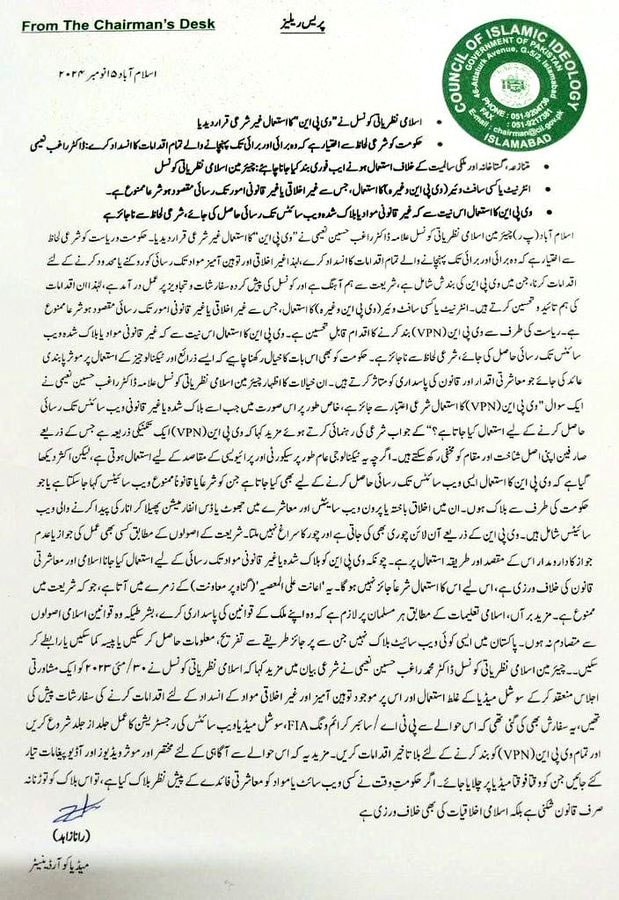
The Council of Islamic Ideology (CII) in Pakistan has recently announced the use of Virtual Private Networks (VPNs) as un-Islamic, highlighting their potential for accessing illegal and blasphemous content.
The decision has ignited widespread debate, with many questioning its implications.
In a statement, CII Chairman Allama Raghib Naeemi emphasized that technology facilitating access to prohibited material violates Islamic principles.
He stated, “The use of VPNs for unlawful purposes, such as bypassing restrictions to access immoral or blasphemous content, is against Shariah.”
The council further supported government efforts to block VPNs, considering it a measure to safeguard societal values.
Meanwhile, the declaration has been denounced by many quarters, including prominent religious scholar Maulana Tariq Jamil.
Maulana Tariq Jamil criticizes CII’s ruling on VPNs
In a televised interview, Maulana Tariq Jamil called the decision as “narrow-minded,” arguing, “By this logic, even mobile phones should be banned because they provide access to objectionable material without a VPN.”
He rejected the ruling as impractical and overly restrictive.
Public reaction on social media has also been critical, with users questioning whether government officials and policymakers, who reportedly use VPNs for accessing restricted platforms, will adhere to the new guidelines.
VPNs, or Virtual Private Networks, are widely used to ensure online privacy and access restricted websites.
While authorities argue that VPNs are exploited for illegal financial transactions and terrorist activities, critics believe banning them overlooks broader societal and technological realities.
The decision has intensified debates in Pakistan over balancing religious principles with modern technology and individual freedoms.
