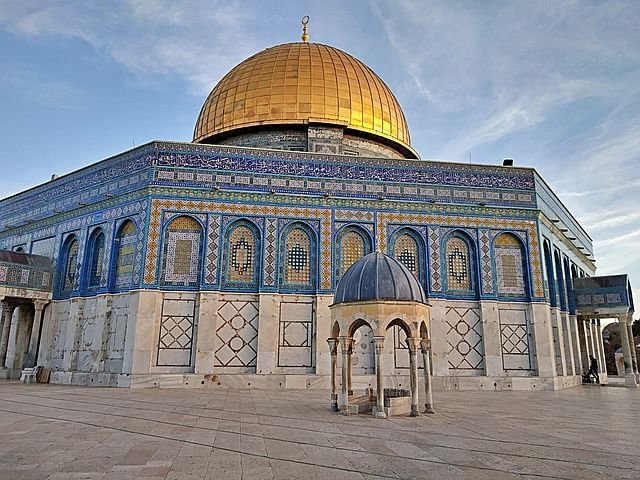
The story of Haikal-e-Sulemani (Temple of Solomon) and Taboot-e-Sakina (Sacred Ark) has been told for many centuries. It connects two major faith communities, Muslims and the people of Bani Israel. Both traditions describe it as a story of divine guidance, sacred relics, and faith in God.
The people of Israel were the descendants of Hazrat Yaqoob (A.S), also known as Israel. One of his sons was Yahuda, whose lineage became known as the Yahoodis (Jews). After a period of hardship, the followers of Hazrat Musa (A.S) and Hazrat Yusha (A.S) traveled to Palestine. Their journey was meant to establish a community based on faith and divine instruction.
Over time, three great leaders rose among them: Hazrat Taloot (A.S), Hazrat Dawood (A.S), and Hazrat Suleman (A.S). These prophets played a key role in guiding their people and protecting their spiritual legacy.
Also check: Daily Gold Rate in Pakistan – Live 24K, 22K, 21K & 18K Prices
The Sacred Chest Known as Taboot-e-Sakina
The Taboot-e-Sakina is often described as a sacred chest that carried spiritual and historical relics. It is said to have been passed down from Hazrat Adam (A.S) through generations of prophets until it reached Hazrat Dawood (A.S).
According to religious accounts, the Taboot contained:
- The Lauh-e-Qurani and the staff of Hazrat Musa (A.S)
- The original version of the Torah
- Planks from Mount Sinai, where the commandments were revealed
- A heavenly utensil used to collect Man-o-Salwa, the food sent by Allah
The Holy Quran also mentions the Taboot in Surah Al-Baqarah (2:248) According to Sahih International:
And their prophet said to them, “Indeed, a sign of his kingship is that the chest will come to you in which is assurance from your Lord and a remnant of what the family of Moses and the family of Aaron had left, carried by the angels. Indeed in that is a sign for you, if you are believers.”
The Taboot symbolized peace, divine approval, and unity for the people of Israel. It was kept with great care and used as a direction of prayer before the construction of Masjid-e-Aqsa.
The Construction of Haikal-e-Sulemani
When Hazrat Dawood (A.S) became ruler, he wished to build a temple to protect the Taboot and other sacred items. Although he began the construction, the building was completed during the reign of his son, Hazrat Suleman (A.S).
The completed structure became known as the Haikal-e-Sulemani or the Temple of Solomon. It was considered a center of worship, learning, and guidance for the followers of that time.
Later, the Babylonians (People of Babul) attacked and destroyed the temple. Many believe they took the Taboot with them, while others say it was taken to the heavens by divine command. The temple was rebuilt years later, but the Romans destroyed it once again and built a Christian church in its place.
The Time of Hazrat Umer (R.A) and the Birth of Masjid-e-Aqsa
Many years later, when Hazrat Umer Farooq (R.A) visited Palestine, the remains of Haikal-e-Sulemani could not be found. He prayed at a nearby location, and Masjid-e-Aqsa was built there. This mosque became one of the holiest places in Islam.
Masjid-e-Aqsa holds great importance because it is believed to be the place from where the Prophet Muhammad (PBUH) ascended to the heavens during the event of Miraj.
Modern Beliefs and Continuing Disagreements
Today, some members of the Jewish faith believe that rebuilding the Haikal-e-Sulemani is essential to complete their religious prophecy. They consider the area around Masjid-e-Aqsa as the site of the original temple. This belief has become a point of ongoing tension in the region.
According to Jewish traditions, a future leader will appear from a gate near the remains of the old temple. They believe that when this leader arrives, the dead will rise behind him. In Islamic belief, this leader is recognized as Dajjal, the false messiah who will appear before the Day of Judgment.
Lessons from the Legend
The legend of Haikal-e-Sulemani and Taboot-e-Sakina continues to inspire curiosity and reflection. It highlights the shared roots of faith among Abrahamic religions and the importance of respecting sacred history.
The ongoing disputes over the holy land reflect both historical complexity and human emotion. Many scholars agree that peace in this region will require justice, patience, and mutual understanding.
The story serves as a reminder that while faith can divide people, it can also unite them through shared belief in a single Creator and a common history.
