Nigeria is the hub of resource-based conflict in Africa. Agricultural land and crude oil are the main resources in Nigeria around which conflicts revolve. Since 1999, percentage of violent conflicts occurring in Nigeria entails 95% of resource-related conflicts. Nigeria is largest oil producing country in Africa reaching 73.9 million metric tons of oil production in 2023. Almost 80% of Nigeria’s capital and recurrent expenditure 90% of forex earning is oil based. Despite enormous oil wealth, Niger Delta Region has been suffering from what Richard Auty calls ‘Resource Curse’.
Genesis of Oil Conflict in Niger Delta Region
The conflict is between federal government, militant groups, oil companies and oil host communities over control of crude oil. Repeated armed clashes has embroiled the whole region. The crises mainly erupted in 1990s known as Ogoni crises which eventually led to drastic situation in 2000 as the conflict disrupted export sector of state sporadically and took many lives. Conflict over ownership of resources, land and oil bearing sites and environmental degradation exacerbated the situation. The land from where oil is exported or has been discovered is claimed by various groups. The reason behind this was the belief that central government would show keen interest and attention towards possession of oil enriched land and dispense development benefits for community owning oil enriched land. Non-actualization of this belief inevitably resulted into recourse to violence.
Moreover, people of Niger Delta region assert that crude oil resources should be under their dominant control because it is being extracted from their soil. Additionally, a demand is presented by them regarding sharing formula or increase in derivation. The lands have been lost by these communities as a result of exploration of oil and lack of MNOCs-Multinational Oil Companies’ compensations.
Four dimensions of Oil Conflict in Niger Delta
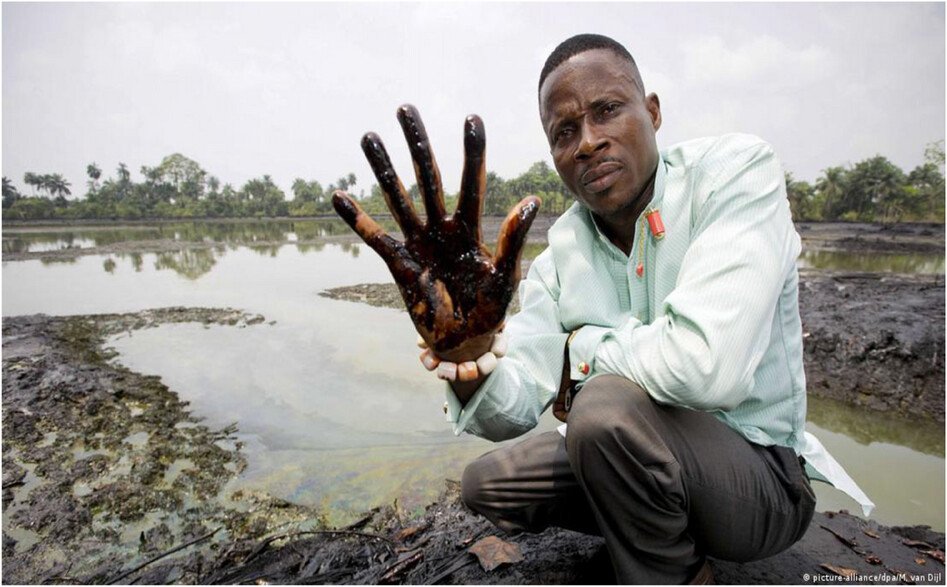
The first aspect of oil conflict is pursuit for resource control between the federal government and oil host communities. Oil host communities put forward demand for 50% derivation, but federal government agreed to merely 13% derivation. Second aspect implies conflict between oil host communities, and international oil firms & federal government. Over exploration of oil along with environmental degradation has led to animosity between conflicting sides. Oil spillage and gas flaring done by international oil companies in Niger Delta have caused environmental degradation affecting fishing and farming (traditional people’s occupation). This combines with lack of development and basic amenities has led to recurrent sabotaging of oil facilities.
Third aspect signifies confliction between oil companies/federal governments against Niger Delta militants. According to United Nations Development, poverty and miserable living conditions have flamed the conflict. High unemployment and idle young generation has led to regions’ restiveness. Widespread belief among region’s people is that government along with country’s people living in other parts are united in discriminating indigenous people of Niger Delta.
This perception and mass marginalization has led to the formation of various militant groups. The militant groups includes NDLF (Niger Delta Liberation Front), NDPVF (Niger Delta People’s Volunteer Force), MEND (Movement for the Emancipation of the Niger Delta), and NDV (Niger Delta Vigilante). Fourth aspect is hostilities between and within oil host communities. This struggle is due to the lack of agreement over oil well’s ownership, development projects’ location by oil companies or government, and oil rents sharing formula. Limited resource to meet needs of people have exacerbated conflict. Inter-communal conflicts and inter-group crises have resulted due to scramble for development projects and perks.
Oil installations bombing and military deployment
Various militant groups bomb the oil installations and also kidnap foreign oil workers and keep them as hostages. The state has deployed military due to recurrent abduction of staff and attacks on oil companies. This military deployment aims at protecting the oil companies, staff as well as family members. In 1990, the deployment of military began. Special Task Force was also constituted for Ogoni region’s security. Late 1990s witnessed more protests which led the navy and army to carry out massive deployments and heavy armaments termed as Operations Hakuri 1 and 11. President Olusegun Obasanjo created Joint Task Force.
Operation Scorpion Sting, Operation Crocodile Smiles and Operation Octopus constitutes various military efforts but presence of military received criticism due to abuse of human rights. President O. Obasanjo ordered the military deployment in 1999 oil bearing community known as Odi in state of Bayelsa resulted into 2483 people deaths that were mainly children and women. Failed conflict resolution led government to propose a program in 2009 in which President Yar’adua put amnesty in place; however it failed and led to reemergence of militants mainly due to failure of the state to address the resource control, under-development, marginalization and neglect.
The hostilities in Niger Delta will remain prevalent unless all stakeholders alongside international community devise holistic conflict resolution mechanism addressing grievances of conflict parties. The structural and underlying causes of violent conflict in Niger Delta requires peacebuilding to bring about positive peace in region.
