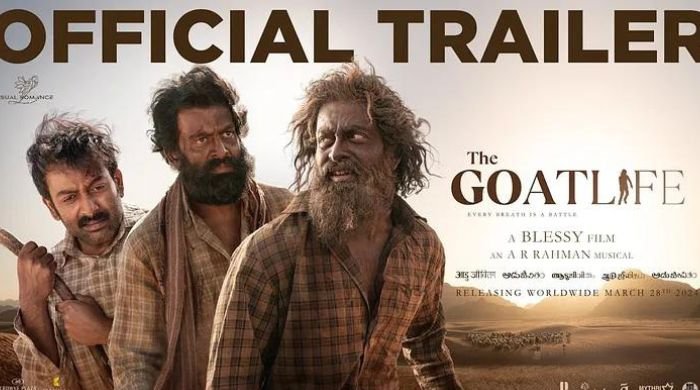
Aadujeevitham — a wonderful heart-wreaking, emotional, and true life story of a Malayali migrant worker.
It was published in 2008 and beautifully written by the Indian author Benyamin. The book is available in English with the Title “Goat Days”.
Now that it is made into a movie and was released in multiple languages in India. If you prefer watching the movie you can choose to view it with English subtitles as it is released only in Indian languages.
Before the book was turned into a movie,
I had the rare opportunity to read this book and feel the true essence of the life led by Najeeb.
As I read through it, my heart was aching and my eyes were filling up. The gripping and intriguing narrative by the writer offers a sharp reminder of the harsh realities faced by immigrant workers.
Narrated in first person, we will feel like he is talking to us about his turbulent journey. It feels so intimate that you will get disturbed from your core.
Every word written clearly conveys the dehumanization that Najeeb, the other characters in the story, and innumerable others like him suffered, from the catastrophic surroundings of his labour camp to the cruel treatment inflicted by his bosses.
The journey of Najeeb begins like that of many others — a pursuit for a better life, and a yearning to provide for his family back home. However, what follows is a story of unimaginable hardship and resilience told in Najeeb’s own words that captivate the reader from the first page on.
“Goat Days” portrays the depths to which human brutality may go. I was horrified by the extent of Najeeb’s suffering as he was reduced to the position of a simple property and sent to tend to goats in the scorching desert.
It is quite amazing how he found comfort in the middle of despair, whether it was by talking to goats or appreciating the beauty of the desert. Being an expat, I sometimes find it hard to keep myself together in adversity or struggles.
Even in that adversity the unwavering faith and resilience Najeeb had must be marvelled. The unimaginable hardships he experienced, yet he never gave up hope or his trust in God.
As the story unfolds, the harsh truth about our privileges comes down like a ton of bricks; basic necessities we often take for granted, like food, shelter, and water, were luxuries that were out of reach for Najeeb. Perhaps the most profound lesson of “Goat Days” lies in its ability to make us question our perceptions of privilege and adversity.
The story has all the elements of an expat’s struggle and more. The sense of isolation that accompanies our journey. Be it in the UAE, the UK or any other part of the world, there is an overwhelming feeling of being invisible, of neither belonging here nor there. Even if we are in the middle of busy cities and teeming crowds. The longing for that one connection, for a sense of belonging, becomes a constant ache that eats away at the soul.
Outside of the book or the movie. if we look at the life of immigrants I feel that there are subtle forms of discrimination and prejudice that often lurk beneath the surface of society. Whether it is visible discrimination in the workplace or hidden biases in day-to-day interactions. All must navigate through a maze of social hurdles that threaten to destroy their sense of dignity and self-worth.
Ultimately, “Goat Days” serves as a reminder of human resilience and the pressing need for compassion and understanding in a society plagued with injustice and unfairness. It is a call to action to amplify the voices of the underprivileged and to strive more for a society that is more compassionate and just.
In this busy world, it is easy to overlook the stories of people who toil in silence, away from the comforts of home. The “GOAT DAYS” or “AADUJEEVITHAM (Goat Life)— the story of Najeeb resonates deeply because it expresses the universal experience of striving for a better life while wrestling with the harsh realities of being a stranger in a foreign land.
I encourage everyone to either watch the movie or read the book. I personally prefer reading the book as it gives us the power to build the character by letting words portray the image of Najeeb that can be related to us. I am not sure if I have done justice in writing about this book or the movie. But I really hope someone will read or try to watch the movie.
