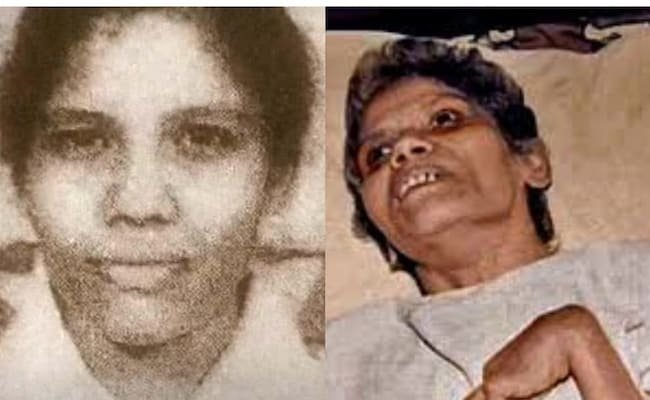
During the hearing the recent Kolkata rape-murder case today, Chief Justice of India DY Chandrachud made a reference to the 1973 Aruna Shanbaug incident.
CJI Chandrachud said due to deep-seated patriarchal biases, women doctors are targeted more and as more women join the workforce, the country cannot wait for another rape for things to change on the ground, quoting the Aruna Shanbaug case in particular as an example of violence against women in the medical profession.
Also read: The questions CBI asked Kolkata Hospital ex-head about doctor’s rape-murder
The Aruna Shanbaug Incident
Aruna was a 25-year-old nurse at KEM Hospital, the medical institution she had joined in 1967 in the surgery department.
She was engaged to Dr Sundeep Sardesai – a doctor at the same hospital – and was due to be married in early 1974.
However, on the unfortunate night of November 27, 1973, she was brutally attacked by a ward attendant, Sohanlal Bharta Walmiki, who sexually assaulted her and then strangled her with a dog chain.
The assault left Aruna with severe brain damage, turning her into a persistent vegetative state (PVS) where she remained for 42 years until her death in 2015.
The damage to her brain stem left her paralysed, unable to speak, and reliant on others for the most basic needs.
She was kept alive through force-feeding by the devoted staff for over four decades at KEM Hospital, who cared for her like family.
Aruna became the centre of a national debate when journalist Pinki Virani filed a petition in the Supreme Court in 2011, seeking permission for her euthanasia.
According to Pinky Virani’s book about Aruna, titled ‘Aruna’s Story’, Walmiki held a grudge against Aruna after she accused him of stealing food meant for dogs used in medical experiments at the hospital.
Aruna had threatened him that she would report him to the hospital authorities.
The legal trouble
Ms Virani’s petition maintained that Aruna, being in a state where she can’t feel anything, should be allowed to die with dignity.
This case brought forward the issue of euthanasia into public discourse in India.
The Supreme Court, in a landmark judgment delivered on March 7, 2011, denied the petition for active euthanasia, citing that Aruna was not brain dead and responded to certain stimuli, as observed by the hospital staff.
However, the Court allowed for the possibility of “passive euthanasia” – the procedure of withholding or withdrawing artificial life support to a patient.
The judgment stated that in cases where patients are in a PVS, life support can be legally withdrawn if the request comes from close family members or caretakers and is sanctioned by the courts.
Painful walk to death
Aruna left the world on May 18 in 2015 after contracting pneumonia.
Her attacker, Sohanlal Bharta Walmiki, was charged only for robbery and attempted murder, as “sodomy” was not classified as rape under Indian law at the time.
He spent a mere seven-year sentence and was released.
