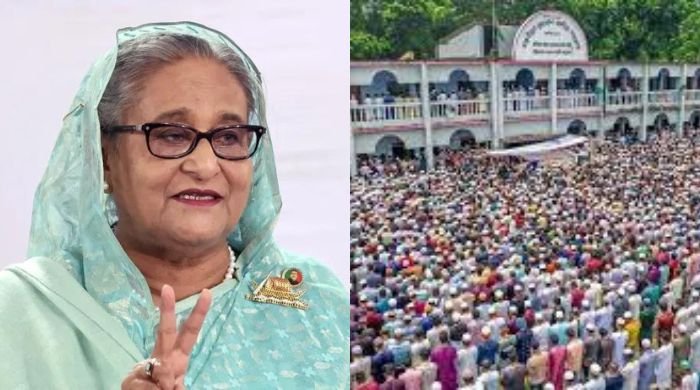
Bangladesh bans Jamaat-e-Islami following deadly job protests.
Bangladesh on Thursday has outlawed right-wing Jamaat-e-Islami party, its student wing Islami Chhatra Shibir and other associate organisations under anti-terrorism law amidst the deadly protests.
The ban came as Bangladesh has been witnessing huge student protests since last month, which have led to the death of at least 150 people.
The move, decried as “unconstitutional and illegal” by the Jamaat-e-Islami, comes after Prime Minister Sheikh Hasina accused it and the main opposition Bangladesh Nationalist Party (BNP) for violence that forced her to impose curfew.
Also read: Bangladesh government accepts SC ruling of 93% open merit in jobs amid student protests
In a statement issued earlier, the Jamaat had condemned the Awami League-led ruling alliance’s decision as “illegal, extrajudicial and unconstitutional”.
“Using state machinery, they are playing a blame game against Jamaat and other opposition parties,” said Shafiqur Rahman, chief of the party, which, along with the opposition, had rejected the government’s statement that they stoked violence.
Jamaat was effectively banned from contesting elections by a 2013 court decision that its registration as a political party conflicted with the South Asian nation’s secular constitution.
Bangladesh closed the internet services and ordered the army to impose a nationwide curfew as the protests spread after they began in universities and colleges in June.
Thousands were injured as security forces fired rubber bullets, tear gas and lobbed sound grenades to disperse tens of thousands of protesters who flooded into the streets.
Also read: Bangladesh declares two-day public holiday as curfew imposed to quell deadly protests
As Bangladesh bans Jamaat-e-Islami, the recent violence was the biggest test Hasina, 76, has faced since winning a fourth straight term in elections in January that were boycotted by BNP and also marred by deadly protests.
She first won election in 1996, serving one five-year term before regaining power in 2009, never to lose again.
