Bangladesh closes universities indefinitely after deadly protests.
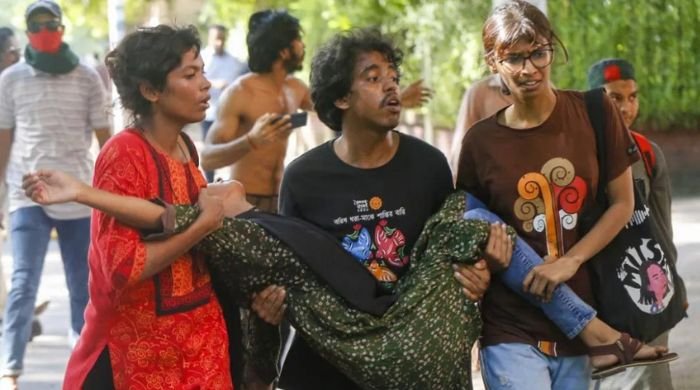
Bangladesh has indefinitely closed all public and private universities and collages in response to escalating protests against a controversial job quota system, which have left six people dead and many others injured.
The protests, led by students, have intensified over the past weeks due to frustrations with the system that reserves 30% of government jobs for the descendants of those who fought in the 1971 War of Independence against Pakistan.
This quota system has become increasingly unpopular amidst high youth unemployment rates, affecting nearly 32 million young people out of a population of 170 million.
Also read: Here’s how much per unit electricity costs in India, Bangladesh, Afghanistan
Prime Minister Sheikh Hasina’s refusal to meet the demands of the protesters, citing ongoing court cases, and her labeling of the protesters as “razakar”—a term for those who collaborated with Pakistani forces during the war—has further fueled the unrest.
Violent clashes erupted between the anti-quota demonstrators and the student wing of the ruling Awami League party, with police using rubber bullets and tear gas to disperse the crowds.
In a bid to restore order, the University Grants Commission has mandated the closure of all universities and instructed students to evacuate for their safety.
Security has been heightened with the deployment of riot police and the Border Guard Bangladesh paramilitary force across university campuses.
Amnesty International has called on the Bangladeshi government to ensure the safety of peaceful protesters and to provide proper treatment for the injured.
Despite the shutdown, student leaders, including Nahid Islam, have vowed to continue their protests.
A march is planned for Wednesday to honor those who died in the clashes.
University students protest against government job quota in Bangladesh. The terrorist Chhatra League attacked the students while they were protesting, injuring several people.#Bangladesh pic.twitter.com/hGZsJYAkXH
— ReConstruction (@authorHasan) July 15, 2024
Many students have already fled their dormitories due to attacks from members of the ruling party’s student wing, though some, especially men, remain on campus.
Adding to the tensions, police raided the headquarters of the opposition Bangladesh Nationalist Party (BNP) in Dhaka late Tuesday night, arresting seven activists and confiscating 100 crude bombs and several petrol bottles.
The BNP’s senior joint secretary, Ruhul Kabir Rizvi, denounced the raid, claiming that the items were planted to discredit the anti-quota movement.
Also read: Can Bangladesh meet commitment to Human Rights?
As Bangladesh closes universities indefinitely after deadly protests, this wave of protests marks the first major challenge to Prime Minister Hasina’s government since her fourth consecutive election victory in January, which the BNP boycotted.
Experts point to stagnant job growth in the private sector as a key factor behind the unrest, making government jobs—which offer regular pay raises and various privileges—highly desirable.
Currently, 56% of government jobs are reserved under various quotas, including 10% for women, 10% for people from underdeveloped districts, 5% for indigenous communities, and 1% for people with disabilities.
