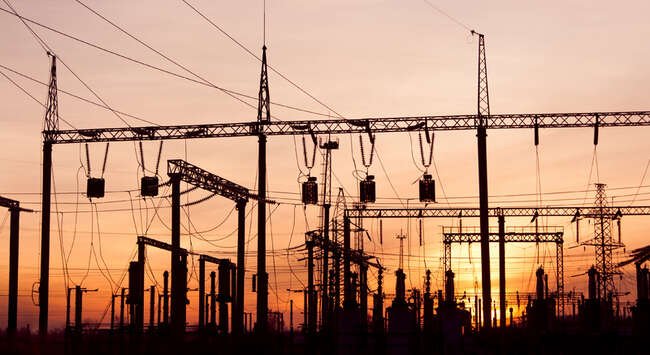
Sri Lankan authorities are enforcing rolling power cuts across the island nation as the country’s increasing financial crisis causes fuel shortages and puts the country’s electricity grid at risk.
After two hours of power outages on Monday and Tuesday, Sri Lanka’s Public Utilities Commission said that the country’s grid will be turned off for four and a half hours on Wednesday.
According to officials, electricity will be turned off in different regions on a rotating basis between 8:30 a.m. and 10:30 p.m.
The proprietor of a Sri Lankan workshop
During a power outage in Wattala, a suburb of Colombo, a Sri Lankan workshop owner pauses his work and waits. [AP photo/Eranga Jayawardena]
The Ceylon Electricity Board had requested approval for the cuts, according to the regulatory body, since fuel shortages had caused a loss of around 700 MW to the national system. Sri Lankans have been experiencing occasional power outages over the past few weeks.
The chairman of the Utilities Commission, Janaka Ratnayake, stated the “shortage of fuel” is the cause of the problem, adding that “we are suffering a fuel crisis, not an electricity crisis.”
Sri Lanka’s biggest economic crisis in decades is being fueled by depleted foreign funds. Fuel and other commodities, such as milk powder, cooking gas, and petrol, have been hampered by a financial crisis.
Many Sri Lankans have been forced to line for hours to get petrol for their motorcycles and vehicles in the capital city of Colombo and its environs in recent days. Some gas stations remained closed due to a lack of new supply.
“No Diesel,” says a placard was written in Sinhala.
During a power outage in Colombo, a sign states “No diesel” in Sinhala at a fuel pumping station.
The outbreak wreaked havoc on Sri Lanka’s economy, which is highly reliant on tourism and trade, with the government predicting a $14 billion loss over the last two years. According to the central bank, the economy decreased by 1.5 percent from July to September 2021. In December, inflation reached 12.1 percent.
Sri Lanka has taken on significant debt and must repay $12.5 billion in international sovereign debts. Officials have stated that the government is progressively restoring reserves in order to ensure that it can pay its debts.
According to the country’s central bank, the government settled $500 million in outstanding sovereign bonds in January, and total official reserves were at $2.36 billion at the end of the month.
Sri Lanka has foreign debt commitments of more than $7 billion in 2022, including the repayment of a $1 billion bond in July.
The country’s electrical situation has been exacerbated by falling water levels that power hydroelectric dams.
