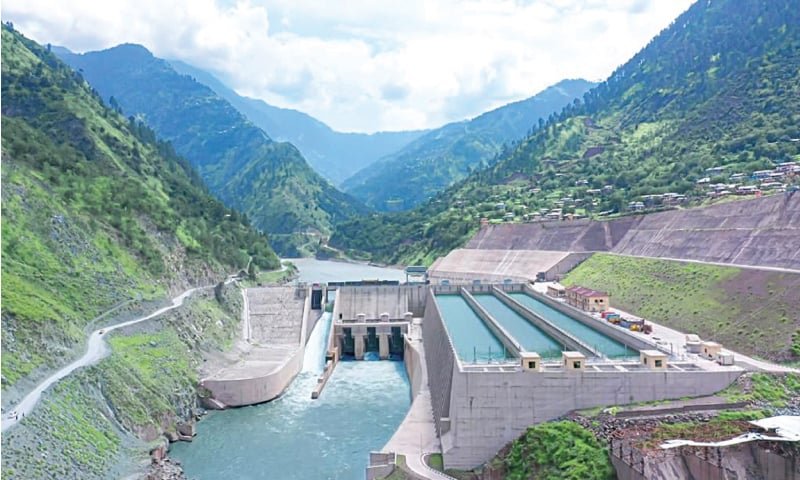
What is Neelum-Jhelum project? Situated in the picturesque region of Azad Kashmir, the Neelum–Jhelum Hydropower Plant stands as a testament to human ingenuity in harnessing the power of nature.
Designed to divert the waters of the Neelum River to a power station on the Jhelum River, this ambitious project has been a journey marked by perseverance, innovation, and challenges.
This project that will not only revolutionize energy consumption for the country, but also provide social and economic benefits to the local population.
What is Neelum-Jhelum project
The genesis of the Neelum–Jhelum project dates back to its approval in 1989. However, what was envisioned as a groundbreaking initiative faced numerous hurdles along the way.
From the seismic aftermath of the 2005 Kashmir earthquake to escalating costs and funding complexities, the road to realization was fraught with obstacles.
Despite these challenges, the project persisted, driven by a vision of ‘energy security’ and ‘sustainability’.
Chinese Consortium and Collaborative Efforts:
In 2007, a pivotal moment arrived with the awarding of the construction contract to a Chinese consortium, CGGC-CMEC.
This partnership heralded a new chapter in the project’s timeline, bringing together expertise and resources from across borders.
With determination and collaborative spirit, the consortium embarked on the monumental task of translating blueprints into reality.
Financing and Cost Escalation:
Financing such a colossal endeavor was no small feat. The initial cost estimates of $167 million soared to a staggering $2.89 billion over the years.
Funding was secured through a diverse array of channels, including loans from Chinese and Middle Eastern banks, bond offerings, and governmental allocations.
Despite the financial intricacies, the project persevered, buoyed by the belief in its transformative potential.
Operational Milestones and Setbacks:
Amid the backdrop of construction milestones and operational triumphs, the project encountered its fair share of setbacks.
Concerns arose about the impact of reduced water flow on downstream communities, while technical challenges, such as the shifting of the dam’s retaining wall, underscored the complexities inherent in such endeavors.
Nevertheless, these challenges were met with resilience and proactive measures to ensure the project’s integrity and functionality.
Geopolitical Dynamics and Regional Implications:
The strategic significance of the Neelum–Jhelum project extends beyond its engineering marvels.
Situated in a region marked by geopolitical complexities, the project’s completion highlights Pakistan’s commitment to harnessing its natural resources for socio-economic development.
Moreover, the project’s proximity to the Indian-administered Kishanganga project adds another layer of complexity, reflecting the intricate interplay between water, energy, and regional dynamics.
