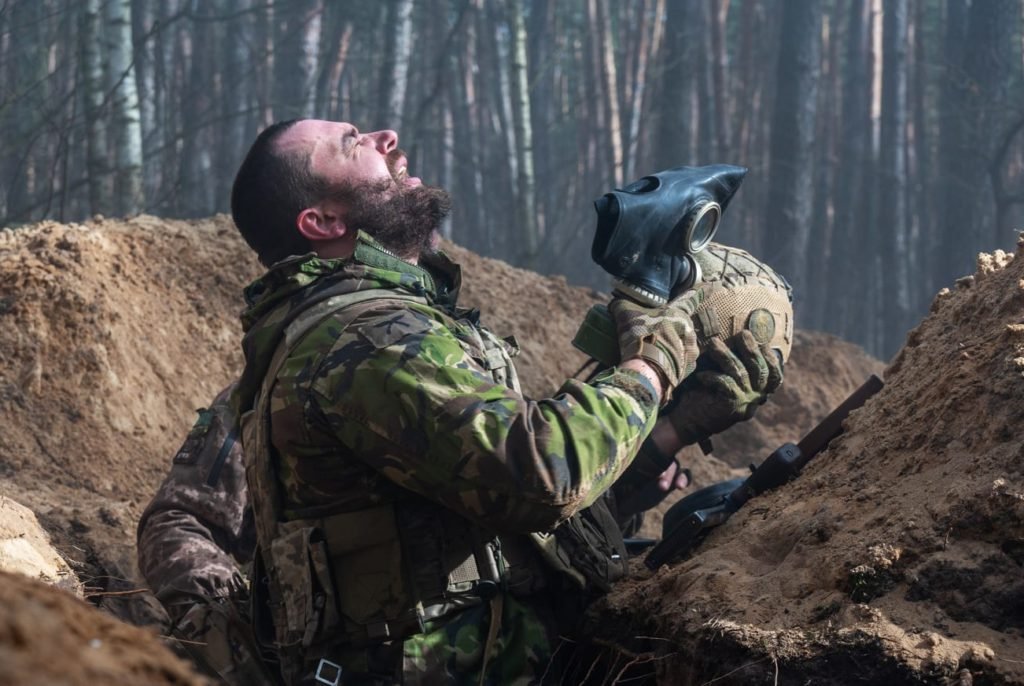
What is Chloropicrin? The United States has accused Russia of employing the banned choking gas Chloropicrin in its military operations in Ukraine.
The allegations, made by the US Department of State, suggest that Russia used Chloropicrin, also known as nitrochloroform, to dislodge Ukrainian troops from fortified positions, marking a concerning turn in the ongoing conflict.
Violation of International Agreements:
The accusations levied by the US assert that Russia’s purported use of Chloropicrin runs counter to the 1993 Chemical Weapons Convention (CWC), an agreement to which Russia is a signatory.
Russian forces are accused of “violating the international chemical weapons ban by deploying the choking agent chloropicrin against Ukrainian troops and using riot control agents ‘as a method of warfare’ in Ukraine.” https://t.co/ThfjuVMy20
— Kenneth Roth (@KenRoth) May 2, 2024
This alleged breach of international law has prompted condemnation from the US, which has labeled the actions as a violation of global prohibitions against the use of chemical weapons.
What is Chloropicrin?
Chloropicrin, originally developed as an insecticide, gained infamy during World War I when it was weaponized as a chemical agent to incapacitate soldiers.
The oily substance acts as a toxic irritant, causing severe effects upon exposure, including tearing, burning sensations, and respiratory distress.
Inhalation of Chloropicrin in significant quantities can lead to nausea and vomiting, posing grave risks to individuals lacking protective gear, such as soldiers in combat zones.
Also read: US blames Russia of using ‘chemical weapon’ in Ukraine
Past Incidents:
The US has drawn parallels between Russia’s alleged use of Chloropicrin and previous instances of chemical attacks, notably the poisoning of opposition leader Alexei Navalny in 2020 and former Russian spy Sergei Skripal in 2018.
International Response:
In response to the allegations, the US has imposed sanctions on three Russian state entities allegedly linked to Moscow’s chemical and biological weapons programs.
Additionally, the US Treasury has targeted three entities and two individuals involved in procuring items for Russian military institutes associated with chemical and biological weapons development.
These measures signal a concerted effort by the US to address and deter future violations of disarmament treaties through diplomatic and economic means.
International Cooperation:
The allegations of Chloropicrin use in Ukraine highlight the urgent need for international cooperation to prevent the proliferation and deployment of chemical weapons.
The potential consequences of such actions extend beyond the immediate conflict zone, posing risks to civilian populations and destabilizing regional security.
