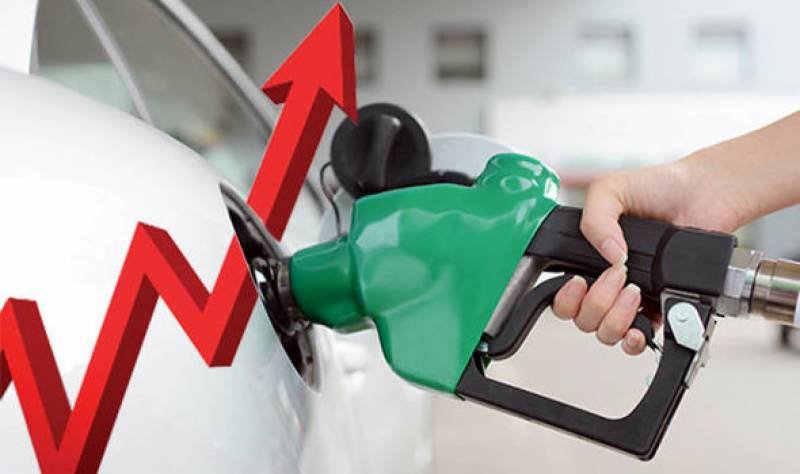
ISLAMABAD: Fuel prices in Pakistan may rise again as a result of global crude oil price variations caused by the Russia-Ukraine dispute.
Global oil prices surged from $85 to $94 per barrel amid international tensions. Crude oil reached a high of $96.16 a barrel, the highest level since October 2014, before settling at a lower level.
It’s worth noting that earlier this month, Pakistani customers suffered a partial weekly increase in oil costs.
The average crude oil price has been $94 a barrel for the past two weeks. In the meantime, the rupee gained 1.50 percent against the dollar.
Fuel prices are expected to rise by Rs12.33 per litre from February 16, according to sources, due to the rupee’s minor gain. The gasoline levy and general sales tax are included in this amount. However, this is contingent on the government’s policies, namely, whether it chooses to pass on the entire burden of rising oil costs to the general population.
If this scenario is approved, high-speed diesel might rise by Rs10.02 per litre, kerosene oil by Rs10.08 per litre, and light diesel oil by Rs9.43 per litre.
In the case of jet fuels, JP-1 is expected to rise by Rs6.07 per litre, JP-4 by Rs6.02, and JP-8 by Rs6.07 per litre. Airlines may be forced to raise passenger and freight fares as a result of this. Furthermore, furnace oil may become more expensive, with a potential increase of Rs1,397 per tonne.
It’s worth noting that the ex-refinery price of petrol has increased by Rs8.33 per litre, while high-speed diesel has increased by Rs6.02, kerosene oil has increased by Rs6.08, and light diesel oil has increased by Rs5.43.
The Oil and Gas Regulatory Authority (OGRA) will transmit a summary to the Petroleum Division for final approval after completing its calculations.
High-speed diesel is widely utilised in the transportation and agriculture sectors, and an increase in its price would have a significant impact on the general public due to the risk of inflation.
Petrol is utilised in cars and motorcycles, while compressed natural gas is the only option in the lack of electric vehicles in the country (CNG). Because liquefied natural gas (LNG) is not readily available in distant sections of the country, kerosene oil is regularly utilised for cooking. Pakistan’s security forces are also large consumers of kerosene oil in remote places, such as the country’s northwestern regions.
