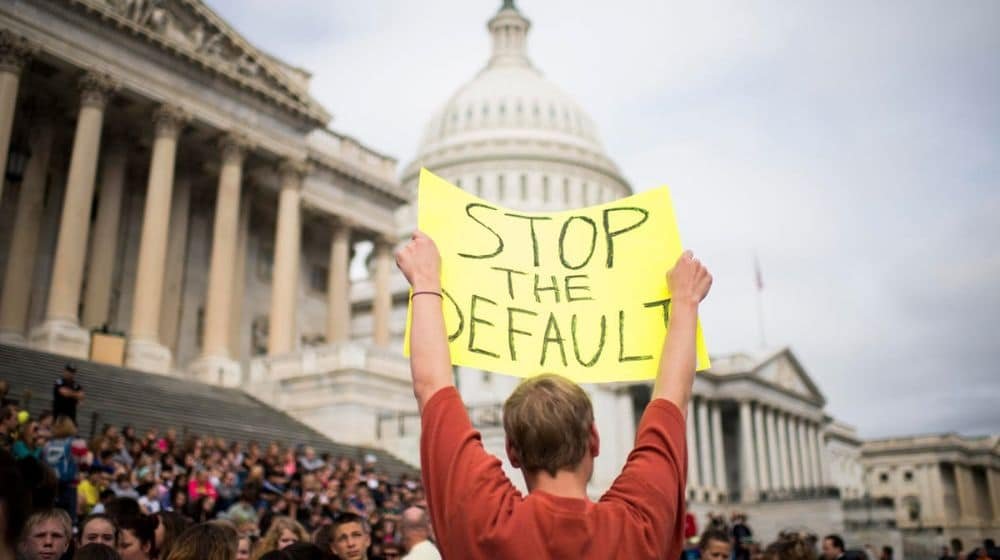
Congress approves debt deal. The United States Congress has approved a deal to increase the country’s borrowing limit, just days before the world’s largest economy is set to default on its debt.
A day after passing the US House of Representatives, the bipartisan bill breezed through the Senate by a vote of 63-36.
As Congress approves debt deal, President Joe Biden has stated that he will sign the bill into law.
His signature on the bill will keep the United States away from defaulting on its $31.4 trillion (£25 trillion) debt.
On Monday, June 5, the country is expected to exceed its current debt ceiling.
A default would make it more difficult for the government to borrow more money or pay all of its bills. It would also have a global impact, affecting prices and mortgage rates in other countries.
The bill was approved by 44 Democrats, 17 Republicans, and two independents during the session on Thursday night.
In a 100-seat chamber that Democrats only narrowly control, the measure needed 60 votes to pass.
Thirty-one Republicans voted against it, including John Barrasso, a member of the Republican leadership in the chamber.
Senators Bernie Sanders, John Fetterman, and Elizabeth Warren were among the four Democrats who voted no.
Senators proposed 11 amendments to the debt ceiling bill at first, but they were all quickly rejected, paving the way for a final vote.
If even one of the amendments had been approved, the entire bill would have had to be reintroduced to the House, leaving little time to ensure final passage of the bill before the United States fell off the fiscal cliff.
“America can breathe a sigh of relief, a sigh of relief because, through this process, we are avoiding default,” Democratic Majority Leader Chuck Schumer told the Senate.
Senate Republican Leader Mitch McConnell told reporters that he would be “proud to support it without delay” in a rare display of bipartisanship.
The deal easily cleared the House on Wednesday evening by a vote of 314-117. Some 165 Democrats joined 149 Republicans in approving it by the required simple majority.
With Republicans controlling the House and Democrats controlling the Senate and the White House, a deal remained elusive for weeks until Mr. Biden and House Speaker Kevin McCarthy reached an agreement last weekend.
The agreement suspends the debt ceiling, which is set by Congress and determines how much money the government can borrow, until January 1, 2025.
The legislation will save $1.5 trillion over a decade, according to the nonpartisan Congressional Budget Office.
Both right-wing Republicans and left-wing Democrats objected to the bill’s contents, but there were more than enough political centrists in both parties to get it passed.
The last time the US came this close to overshooting its debt ceiling, in 2011, the credit agency Standard & Poor’s downgraded the country’s rating, a move that has yet to be reversed.
Ahead of the Senate vote, US stock markets made gains, with the Dow closing 0.5% higher. The broader S&P 500 index rose by 1% and the tech-heavy Nasdaq ended the day 1.3% higher.
Also read: How rich is Congresswoman Ilhan Omar?
