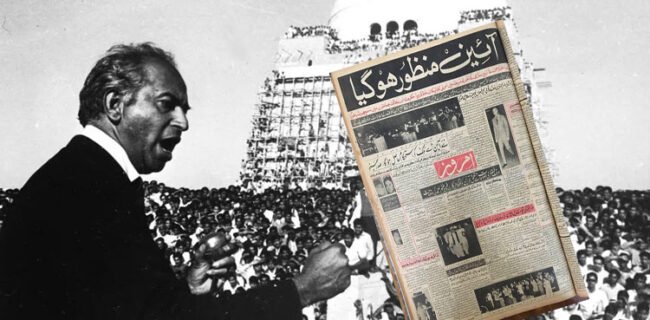
Pakistan’s constitution is a vital document that outlines the principles and guidelines for the country’s government and citizens. It was adopted on April 10, 1973, which means that as of April 10, 2023, Pakistan’s constitution is now 50 years old.
Over the past 50 years, the Constitution has undergone various amendments and changes to reflect the changing needs of the country and its people. The constitution outlines the fundamental rights of Pakistani citizens, including the right to freedom of speech, assembly, and religion, as well as the right to a fair trial.
The constitution also establishes the structure of Pakistan’s government, including the roles and responsibilities of the president, prime minister, and parliament. It outlines the distribution of power between the federal government and the provinces and establishes a system of checks and balances to prevent abuse of power.
Overall, the past 50 years have seen Pakistan’s constitution play a crucial role in shaping the country’s political, social, and economic landscape. It will undoubtedly continue to be an essential document as Pakistan moves forward into the future. Parliament celebrates 50 years of 1973 Constitution.
The 1973 constitution replaced the previous constitution of 1962, which was abrogated by the military government of Ayub Khan. The 1973 constitution was a result of a long process of political negotiations and consultations among various political parties, religious groups, and other stakeholders.
The constitution established Pakistan as the Islamic Republic, with Islam being the state religion. It guarantees fundamental rights to all citizens, including the right to freedom of speech, assembly, and religion. It also outlines the powers and responsibilities of the federal and provincial governments and establishes a system of checks and balances between the different branches of government.
The Constitution has undergone various amendments over the years, with the most significant changes being made during the military regimes of General Zia-ul-Haq and General Pervez Musharraf. However, the core principles and values of the Constitution have remained largely unchanged.
Despite the challenges and controversies that Pakistan has faced over the years, the 1973 constitution has remained an essential document in shaping the country’s political, social, and economic landscape. It continues to play a crucial role in defining the relationship between the state and its citizens and ensuring the protection of their fundamental rights and freedoms.
Also read: Mystery of delayed constitution
