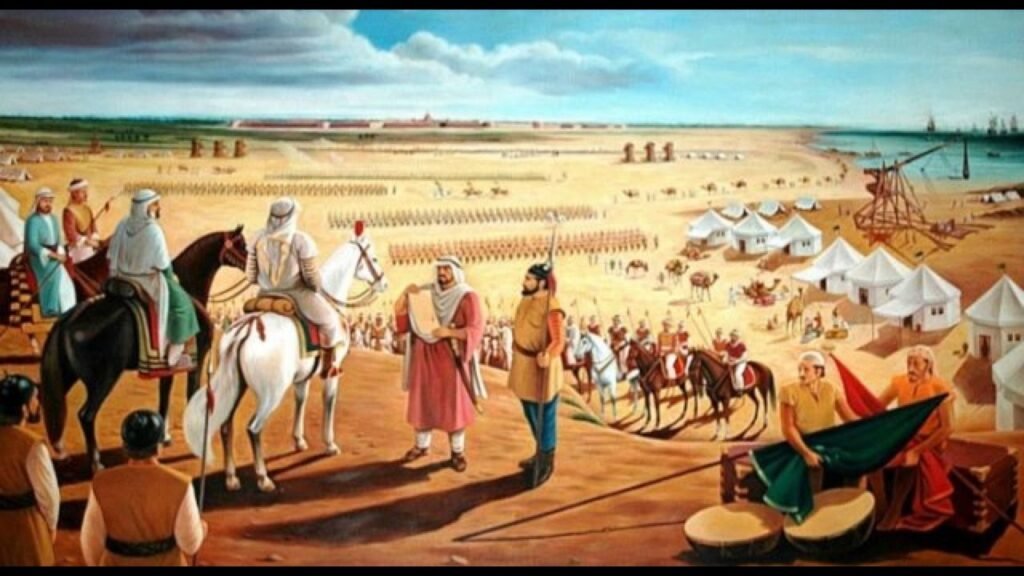
In the early 8th century, Muhammad bin Qasim, a young Arab general, led an army to conquer Sindh, a region located in present-day Pakistan. The conquest of Sindh marked the beginning of Muslim rule in the Indian subcontinent and paved the way for the spread of Islam in the region. How Muhammad bin Qasim conquered Sindh?
The conquest of Sindh was initiated by the Umayyad Caliphate, which sought to expand its territories beyond the Arabian Peninsula. In 711 CE, the Caliphate appointed Muhammad bin Qasim, a 17-year-old Arab general, to lead an expedition to conquer Sindh.
Muhammad bin Qasim landed with his army at the port of Debal, located near modern-day Karachi. He was met with little resistance from the local ruler, Dahir, who was unprepared for the invasion. Muhammad bin Qasim captured Debal and marched towards the capital city of Sindh, Al-Mansura.
On his way to Al-Mansura, Muhammad bin Qasim encountered resistance from the local population. However, his army was able to defeat the defenders and capture the city. Muhammad bin Qasim then proceeded to capture other cities in Sindh, including Aror and Brahmanabad.
One of the key factors that enabled Muhammad bin Qasim to conquer Sindh was his skillful use of alliances. He allied himself with local dissidents and rebels who were opposed to the rule of Dahir. He also used diplomacy to win over the support of local leaders and communities.
Muhammad bin Qasim was also known for his relatively tolerant approach toward the conquered population. He allowed Hindus and other non-Muslims to continue practicing their religion and allowed them to retain their property and social status.
This policy helped to win over the support of the local population and facilitated the spread of Islam in the region. The conquest of Sindh by Muhammad bin Qasim was a significant event in the history of the Indian subcontinent.
It marked the beginning of Muslim rule in the region and paved the way for the spread of Islam. Muhammad bin Qasim’s skillful use of alliances and relatively tolerant approach towards the conquered population played a key role in his success.
