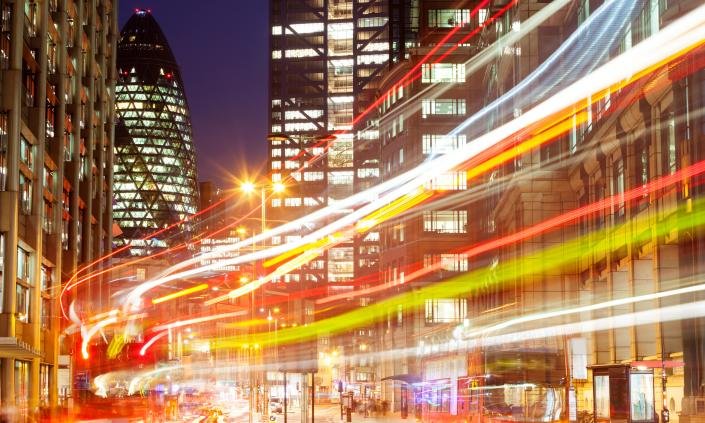
Skyscrapers in the City of London would be asked to dim their lights at night as part of proposals to reduce visual pollution and save energy. The City of London proposing to make skyscrapers dim their lights at night.
Under the proposal from the City of London Corporation, property owners across the Square Mile a 1.12 square mile zone in the centre of the capital whose boundaries stretch from the Temple to the Tower of London and from Chancery Lane to Liverpool Street – would be asked to switch off unnecessary building lights to create “brightness zones” governed by curfews.
City officials are concerned about energy wastage and light pollution caused by the unnecessary use of lights in office buildings that have few or no workers after a certain time of night.
“Over time, as new developments come forward that follow this guidance, we will transform the approach to lighting in the City,” the corporation said in a planning document setting out the proposal, the Financial Times reported.
Buildings would be asked to turn off or dim all external illumination other than that required for safety or crime prevention. It would require internal lights to be dimmed significantly, though buildings in business areas would be allowed to have brighter lights if they are required by workers.
The City proposes the creation of three types of “brightness zone” with slightly earlier curfews set at 10 pm for residential and heritage areas, 11 pm for cultural and tourist areas and midnight for commercial, retail, and transport hubs.
The corporation hopes the proposals will help it reach its target of achieving carbon net zero for Square Mile by 2040. City officials said efforts to tackle light pollution needed to be balanced with the fact that some people work through the night, especially when keeping international hours, while bars and restaurants are open until late.
“The City is a unique place in which 24/7 business districts and busy transport hubs rub up against historic buildings and residential neighbourhoods,” said Shravan Joshi, the chair of the City of London Corporation’s planning and transportation committee.
The corporation’s strategy “is aimed at ensuring an intelligent, sensitive approach to lighting, which ensures the City is safe and accessible, while protecting its historic character and the amenity of our residents”, he added.
The planning document, which was prepared with input from lighting architect Speirs Major, says that developments should “ensure all external and internal lighting is automatically turned off when not needed using [motion sensors] and/or time clocks or other automated control devices”.
Developers would have to agree to the plans during the planning process for new buildings. Owners of existing buildings would also be asked to follow the rules, although the local authority will have no legal power to enforce them so they would be asked to sign up for a voluntary charter.
The local authority will hold consultations on the planning document.
