Former finance minister Hafiz Pasha warned that Pakistan’s inflation can skyrocket to 70% in case of default. Even if the International Monetary Fund’s (IMF) loan is revived, inflation will still rise to at least 35%, owing to the lender’s strict conditions.
Addressing members of the Pakistan Industrial and Traders Associations Front (PIAF) on Tuesday, Pasha forecasted that Pakistan’s overall economy is likely to remain in severe stagflation in 2023.
“If the government implements the key reforms agreed with the IMF, including a Rs50 levy per litre on POL, an electricity tariff hike of 40%, doubling of the gas tariff, and shift to market-based exchange rate policy, the inflation rate could exceed 35%,” he cautioned. If the government does not implement the agreed reforms, he said, “It will lead to a termination of the IMF programme and will virtually dry-up the country’s capital.”
“Our reliance on expensive foreign loans has proven to be disastrous. In the first 65 years, the country’s debt was $65 billion. This jumped to almost $130 billion in the next seven years as we enhanced our reliance on high interest loans that are difficult to payback,” he highlighted. Pakistan’s inflation can skyrocket to 70%.
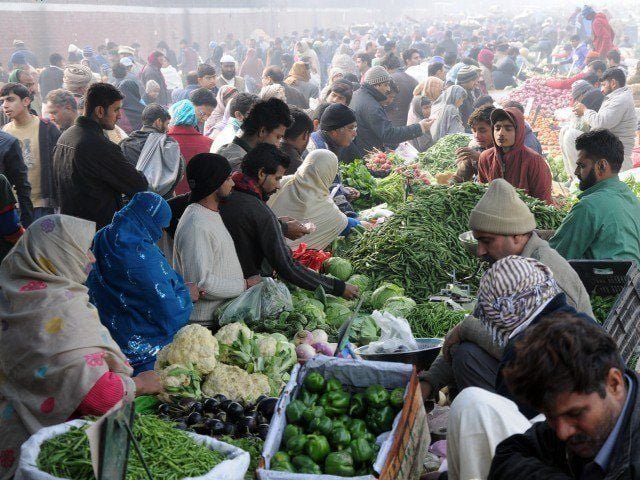
Annual inflation rate in Pakistan rose to 24.5% in December of 2022 from 23.8% in November. Food prices surged 35.5%, higher than 31.2% in the previous month, with onions (415%), tea (63.8%), wheat (57.3%), eggs (54.4), gram whole (53.2%) and rice (46.6%) recording the biggest increases. Other upward pressure came from cost of transport (41.2% vs 44.2%), namely motor fuel (49.45%), clothing and footwear (17.1% vs 18.6%) and housing and utilities (7% vs 9.9%). Compared to the previous month, the CPI increased 0.5%.
IMF says fragmentation to cost global economy up to 7% of GDP
