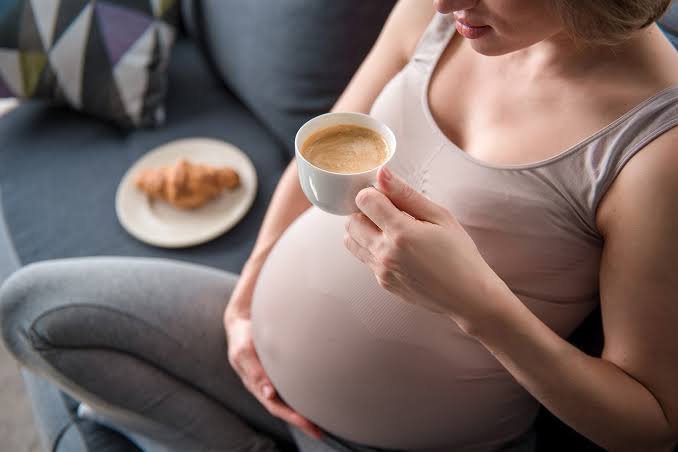
Drinking coffee during pregnancy shorten child’s height.
Whether it is advisable to drink coffee while pregnant is not a simple black-or-white decision.
Some people prefer their coffee black, while others prefer it white.
Numerous observational studies have recommended against drinking coffee (or any other caffeinated beverage) while pregnant.
More than moderate caffeine consumption during pregnancy has been linked in some studies to an increased risk of infertility, birth abnormalities, miscarriage, stillbirth, premature birth, foetal growth restriction, and cot death.
According to a recent study, just half a cup of coffee consumed during pregnancy is enough to shorten the child’s height.
The study focused on roughly 2,500 American boys and girls.
The authors said that their findings supported the notion that pregnant women should not drink coffee.
Our findings for height are comparable in magnitude to those of children whose mothers smoked during pregnancy, according to one of the study’s authors, Dr. Katherine Grantz from the Eunice Kennedy Shriver National Institute of Child Health and Human Development in Maryland, even though the clinical implications of an approximately 2-cm height difference are unclear.
12 creative coffee drinks for all coffee lovers! pic.twitter.com/b9F7TuJ0vY
— Tasty (@tasty) June 5, 2024
According to general recommendations, expectant moms should consume no more than 200 mg of caffeine per day, or around two cups of coffee.
The lowest levels, according to Grantz and her team, should be much lower than this value.
Shorter heights have been linked to an elevated risk of certain cardiometabolic disorders in both pregnant and nonpregnant persons, according to research.
Diabetes and obesity are cardiometabolic diseases.
Lower birth weight has also been linked to coffee intake.
The study found “shorter stature” in infants up to the age of eight in two pregnancy cohorts where there were “greater maternal caffeine and paraxanthine concentrations,” according to results published in the journal JAMA Network Open.
“Our results show that maternal caffeine use is linked to persistent reductions in infant height.”
The group followed the subjects into elementary school and analysed information from two distinct groups.
