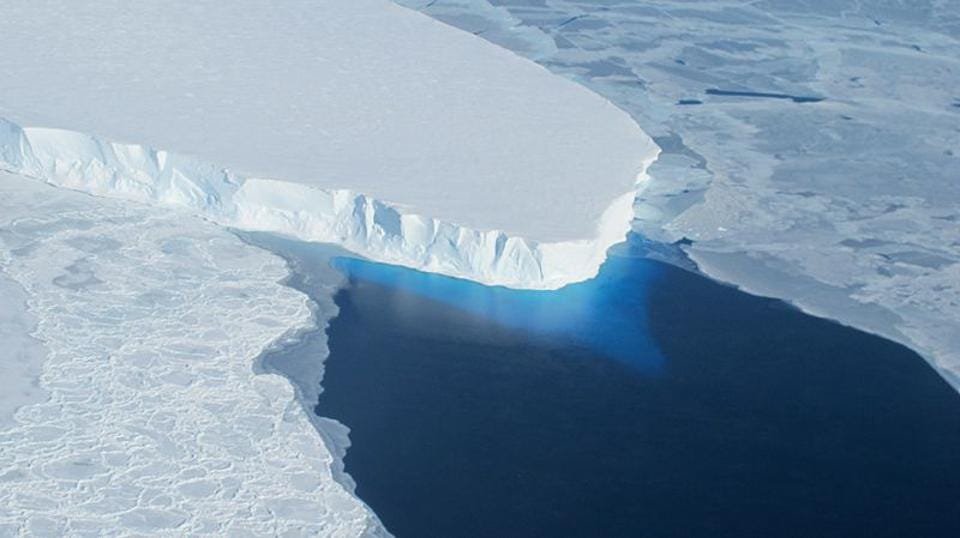
Antarctica’s Thwaites glacier rapidly melting: says scientists
The Thwaites Glacier which is known as doomsday glacier in Antarctica is melting faster than expected, scientists said in a new study published in Nature Geoscience. The melting, which scientists believe has occurred over the past six months, has caused the Thwaites Glacier to retreat at nearly 2.1 kilometers per year. This marks a merger event twice the expected rate.
Scientists have issued a strong warning, saying that one of the largest glaciers – the Thwaites of Antarctica – is barely standing and that attention must be paid to its disintegration.
https://twitter.com/vegix/status/1566877883402010624?s=21
The Thwaites Glacier in Antarctica is melting “twice as fast as the satellite observed in the fastest retreating part of the Earth’s zone between 2011 and 2019,” the scientists said. Also called the “doomsday glacier,” the collapse of the Thwaites Glacier in Antarctica could pose a major threat to global sea level, raising it by three or three feet. Melting glaciers could cause severe flooding in low-lying areas and inundate coastal areas, scientists warned in 2020.
The Thwaites Glacier in Antarctica is one of the glaciers most affected by climate change and global warming. The International Thwaites Glacier Collaboration said in an estimate published in 2020 that if the “doomsday glacier” completely dissolves, it will lead to four percent of the sea level rise caused by climate change. If and when the glacier collapses, the effects could be felt as far as New York, scientists had warned. “Our results suggest that Thwaites Glacier has undergone glaciation over the past two centuries and possibly into the mid-20th century.
