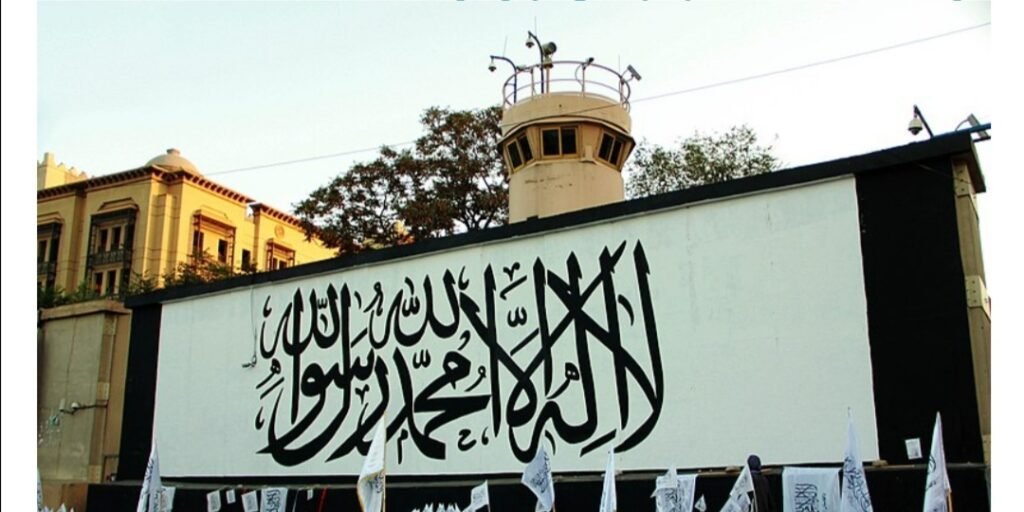
Afghan Taliban to create an inclusive government
The speakers urged the Afghan Taliban to create an inclusive government to accommodate diverse ethnic, sectarian and gender groups in order to gain international recognition and advance the war-torn country.
They spoke at a one-day conference entitled “Future prospects for Afghanistan and the region” organized by the Institute for Regional Studies (IRS) in Islamabad.
“Inclusive governance, as well as attention to ethnic, sectarian and gender inclusion, is important for the Afghan government to adjust its pace to developed and developing countries,” said ISSI Director General Aizaz Chaudary.
He said good governance and international recognition were a major challenge for the Taliban-led Afghan government. Pak Afghan Youth Forum Director General Salman Javed said there is an outraged mentality among Afghans towards Pakistan that Pakistan is a British heritage.
He said such propaganda hampered good relations between the two neighbors and it was imperative for them to clear up misunderstandings. He also said that Pakistan has increased its trade with Afghanistan, which is good for bilateral relations.
Highlighting the economic and humanitarian crisis in Afghanistan, veteran journalist Hassan Khan explained that people in the neighboring country are struggling to buy basic necessities, while women and children are specifically deprived of food, which will also affect the next generation.
He added that with the brain drain, people are also taking money out of the country, which leads to a shortage of cash in Afghanistan. CAMEA director at ISSI, Amina Khan, said that despite their claims, the performance of the Taliban was controversial, especially in the area of human rights. “The extraordinary situation of humanitarian crisis and weak institutions has been exacerbated by global financial sanctions,” she said.
Afghan Taliban to create an inclusive government
She also examined that the greatest threat to the region has been the presence of terrorist groups in Afghanistan. “The Taliban must fight terrorism, otherwise the frustration in the region, including Afghanistan and its immediate neighbors, would increase as the region has already expressed its unease about the militant activity there.”
Researcher at Quaid-e-Azam University Dr. Salma Malik said that SAARC, as a regional body, has become dysfunctional, not due to infrastructural deficiencies, but due to the fault lines residing in the region’s DNA as states they were unwilling to cooperate.
