Hadia Ahmadi, a 43-year-old teacher who lost her job after the Taliban took Afghanistan’s capital in August, sits by the roadside trying to make the equivalent of a few cents polishing shoes in the bitter cold of a Kabul autumn.
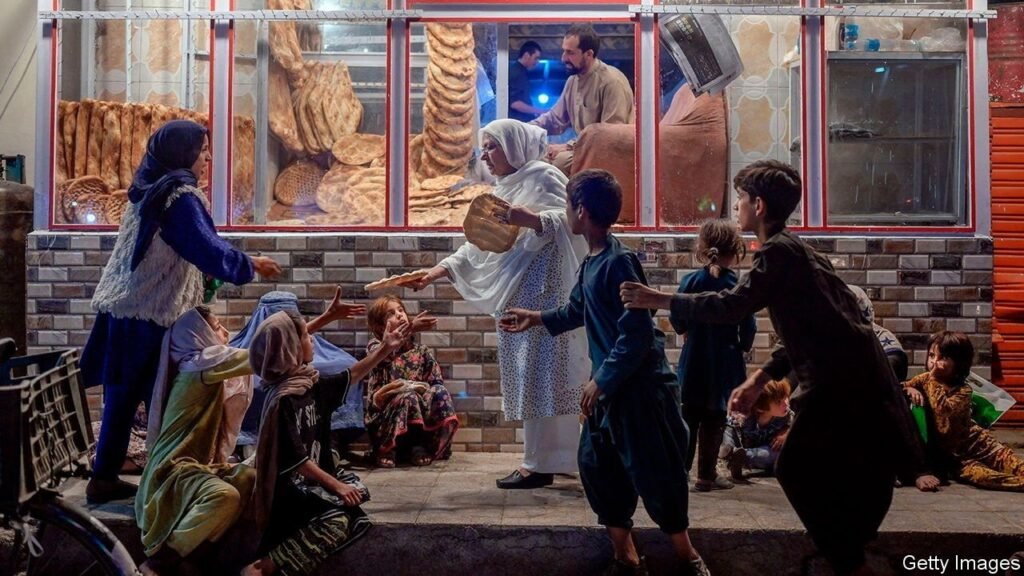
Following the Taliban takeover, foreign funding was abruptly cut off, sending Afghanistan’s frail economy into free fall, leaving millions hungry and impoverishing once-affluent middle-class families.
“I turned to polishing shoes when I saw that my kids were hungry,” said Ahmadi, a mother of five who did not want to give her family name.
The economy has long been on precarious ground, reliant on aid that has now vanished and with huge disparities between the Kabul elite and millions of people living on the edge of poverty.
They had a modest level of wealth after ten years of teaching, with a husband working as a cook in a private firm and a daughter working as a clerk at a government agency, but it was swept away in a matter of weeks.
Her employment was the first to go when girls’ schools were shuttered indefinitely, followed by her husband’s and then her daughter’s. When the family’s college fees became unaffordable, a son studying computer science was forced to drop out.
As households struggle to gather money to eat, roadside displays of home goods for sale have sprung up all around Kabul. They show how frequent Ahmadi’s experiences have grown, with people attempting hitherto unthinkable measures to stay alive.
“We are spending days in hunger right now, and for the time being, there is no one in our family who could financially support us all,” she said.
The United Nations has warned of a humanitarian calamity in Afghanistan and is attempting to gather $4.5 billion to help prevent it, but the economy has been strangled by a lack of cash, with foreign aid barred and the banking system on the verge of collapse.
When the Taliban was in charge from 1996 to 2001, they notably forbade women from working outside the home and severely limited women’s career prospects. However, for many people, like as Ahmadi, there is no other option.
“Some widows are the only food providers for their families, while some women want to financially help their husbands,” she said. “The Taliban must allow women to go to work. They must provide jobs for them, there is no employment right now.”
