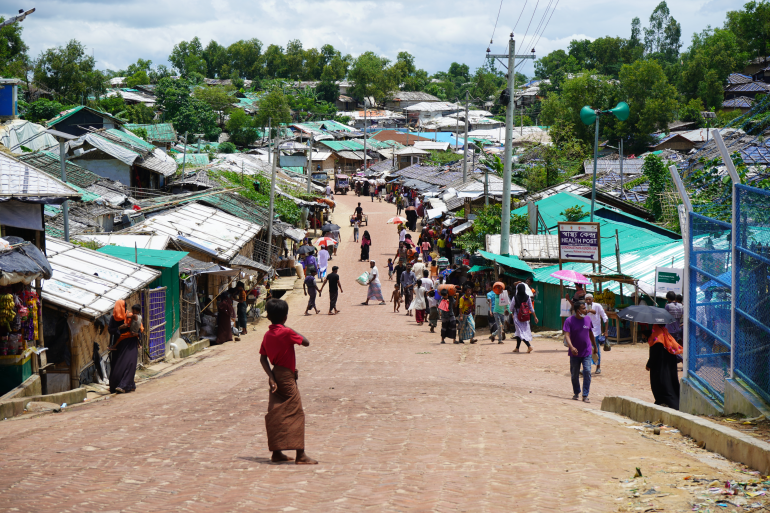
Rohingya have been subjected to persecution by the military, since Myanmar’s independence in the late 1940s.
The International Organization for Migration estimates that around 300,000 Rohingya people arrived in Bangladesh at that time. In 2012 and 2015, violent conflicts in Rakhine state persisted, forcing more Rohingya from their homes.
The military began an assault on Rohingya in October 2016 after an attack on some border police officers from Myanmar, blaming them for the uprising. As a result, about 87,000 Rohingya fled to Bangladesh in search of safety.
An armed Rohingya group attacked military outposts in Rakhine on August 25, 2017, sparking the most recent military action. Numerous Rohingya communities were reportedly set on fire by the Myanmar military, which also shot at men, women, and children who were not carrying weapons.
The military operation in Myanmar, according to the United Nations High Commissioner for Refugees (UNHCR), was “a textbook example of ethnic cleansing,” in September 2017.
The International Criminal Court authorized a prosecution request to look into alleged crimes against humanity committed by the Myanmar military in November 2019.
There are currently 980,000 Myanmar refugees and asylum seekers in the neighboring nations.
The Kutupalong and Nayapara refugee camps in Bangladesh’s Cox’s Bazar region are home to some 936,000 Rohingya refugees, making them some of the biggest and most crowded refugee camps in the world.
