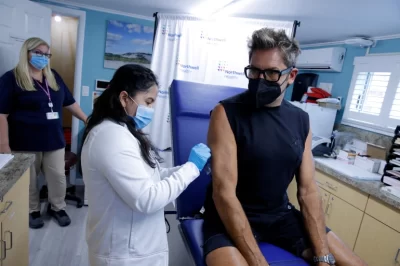
The outbreak of monkeypox in more than 70 countries has been deemed a “emergency of international concern” by the World Health Organization (WHO).
The WHO declaration of a “public health emergency of international concern” is intended to raise awareness that a globally coordinated response is required and may mobilize financing and international cooperation on the sharing of vaccinations and treatments.
Governments are urged to increase awareness among physicians and medical facilities, implement preventative measures in suspected cases, and instruct the populace on infection prevention.
Despite the fact that there was no agreement among the specialists on the emergency committee of the UN agency for health, WHO Director-General Tedros Adhanom Ghebreyesus decided to make the proclamation. It was the first time the head of the UN health organisation had done something like that.
Tedros acknowledged that the committee had been unable to come to an agreement, with nine voting against and six voting in favour of the declaration during a press conference in Geneva when he announced his decision to proclaim the health emergency.
According to Tedros on Saturday, “We have an outbreak that has spread swiftly over the world through new means of transmission about which we understand too little and that satisfies the criteria in the international health standards.”
He went on to say, “I recognise this has not been a smooth process and that there are different perspectives among the members.”
According to Tedros, there have been five fatalities and more than 16,000 recorded cases from 75 different nations and territories.
According to Lawrence Gostin, Director of the WHO Center on Global Health Law and Founding O’Neill Chair in Global Health Law at Georgetown University, “there are characteristic monkeypox rashes that [people] should be looking at, particularly if they’ve had sexual relationships or close physical contact with someone who might be ill.”
“To try and stop this in its tracks, contact tracing, broad testing, and a strategic vaccination programme should be implemented. However, the window for monkeypox containment is fast closing, and we worry that over the coming months, this disease could become endemic in Europe, North America, and other parts of the world. Gostin made this statement to Al Jazeera from Washington, DC.
The highest degree of alert according to WHO is a worldwide emergency, but this does not always imply that a disease is extremely contagious or deadly.
Dr. Michael Ryan, the head of WHO’s emergency response, said the director-general decided to include monkeypox in that group in order to make sure the global community takes the current outbreak seriously.
Monkeypox has been prevalent in some areas of Central and West Africa for decades, but until May, when officials discovered hundreds of infections in Europe, North America, and other places, it was not known to cause significant outbreaks outside of the continent or to spread significantly among people.
“Monkeypox is definitely a cause for concern. In five WHO regions of the world, monkeypox cases have increased exponentially, according to Gostin.
Deaths from monkeypox have only been documented in Africa, mostly in Nigeria and the Democratic Republic of the Congo, where the virus is currently spreading in its most severe form.
In Africa, rats and other wild animals carrying the virus normally do not cross international boundaries to infect humans during isolated epidemics. However, monkeypox is spreading among humans who have no links to animals and haven’t recently visited Africa in Europe, North America, and other places.
The WHO expert council met this week to reevaluate the situation after stating last month that the monkeypox outbreak did not yet qualify as a global emergency.
