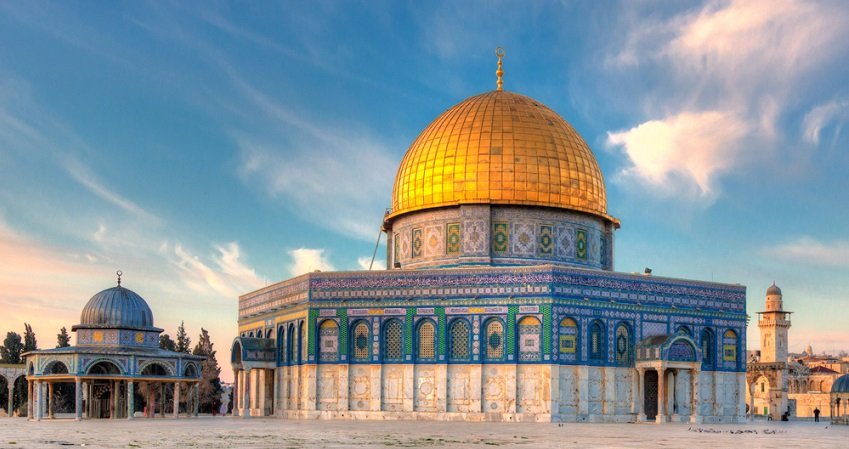
For Muslims, Al Aqsa Mosque is the world’s third holiest place. The region is known as
the “Temple Mount” by Jews, who claim it was formerly home to two Jewish temples. For decades, it has been a major flashpoint for Israeli-Palestinian violence. During Ramadan last year, weeks of protests and attacks on Al-Aqsa turned into an 11-day assault on the restricted Gaza Strip. The conflict claimed the lives of at least 260 Palestinians and 13 Israelis, as well as wreaking havoc on the already impoverished region. This year, Ramadan falls on the same week as the Jewish Passover festival and the Christian Holy Week, attracting thousands of pilgrims and other visitors to Jerusalem.
More than 150 Palestinians were injured last Friday at Jerusalem’s Al Aqsa mosque, which was bombed and broken apart while worshippers were savagely attacked. Israeli soldiers killed at least 12 Palestinians in the West Bank in the previous week, prompting Friday’s unrest. Alleged militants, a youngster accused of tossing a Molotov cocktail, and an unarmed woman were among that slain. Israeli police entered the Al-Aqsa Mosque compound on Sunday, which led to another round of clashes with Palestinians. Thousands of worshippers gathered in the mosque’s courtyards for prayer during Ramadan and Israeli police raided the mosque’s courtyards in force before daybreak. Rubber bullets, shock grenades, and assault were used against them, according to videos circulating on the internet. The security personnel used teargas as well. After four hours of continuous ambush, Israeli forces removed practically all attendees from the mosque’s Courtyards. They then moved in on worshippers inside the Qibli Hall who refused to leave and shut the doors.
Hundreds of worshippers were arrested as dozens of Israeli officers invaded the hall from the back entrance and fired directly at attendees hiding behind the pillars. A rubber-coated bullet was also used to hit a reporter in the head. Hundreds of people gathered outside the Al-Kalouti mosque, which is located near the Israeli embassy in Jordan, to show their support for Palestinians and Al-Aqsa Mosque. Pro-Palestine and anti-Hamas slogans were chanted by the demonstrators. Omer Barlev, Israel’s public security minister, who heads the police force, claimed that while Israel had “no interest” in violence at the holy site, police were obliged to combat “violent elements” who attacked them with stones and metal bars. He stated that Israel was devoted to religious freedom for both Jews and Muslims. According to the Waqf, the Islamic endowment that controls the site, the mosque was eventually reopened, and 60,000 people attended the major Friday services midday.
Thousands of Palestinians marched around the esplanade after Friday prayers, singing “with our souls, with our blood, we sacrifice for you, Al-Aqsa,” as well as pro-Hamas slogans. Similarly, many countries including Pakistan perform solidarity action for Palestine. The Palestinian presidency issued a statement in response to the developments, calling the Israeli police raid on the Al-Aqsa Mosque compound “a hazardous development” and a “declaration of war.” It went on to say that the Palestinians would not allow Israeli occupation forces and Jewish settlers to gain control of the sacred site and that the international world should “stop Israeli aggression.”
Ismail Haniyeh, the leader of Hamas’ political bureau in the Gaza Strip, declared that the Palestinian people would defend and safeguard Al-Aqsa Mosque at all costs. He went on to say that “intruders” had no place in Jerusalem. Hamas also urged Palestinians in the occupied West Bank and Israel to come together in support of Jerusalem and the Al-Aqsa Mosque.
Imagine sitting and praying in your religious space, finding your peace, then you
look down and a sound of a grenade explodes right in front of you and aggressive,
fully armed soldiers pull out their batons and start swinging at you. Unbelievable!
